
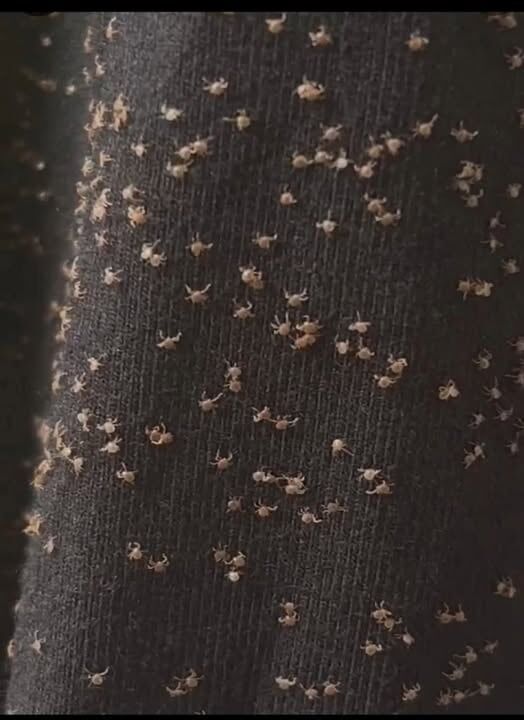
Why Tiny Seeds Stick to Your Clothes After a Walk in Nature
A Small Outdoor Mystery With a Fascinating Explanation
A simple walk through a park, field, forest trail, or grassy path can feel like a peaceful break from daily life.
It offers fresh air, movement, quiet thoughts, and a chance to step away from indoor routines. Yet when the walk is over, nature often leaves behind small reminders of where you have been.
Many people return home and notice tiny specks, burrs, or rough particles clinging to pant legs, socks, shoes, or even jackets. At first, these little objects can be confusing.
They may look like insects, dirt, thorns, or something that should be removed quickly without much thought.
In most cases, however, these tiny hitchhikers are plant seeds. They are not there by accident. They are part of one of nature’s most effective survival strategies.
These seeds are designed to attach to moving animals and humans so they can travel away from the parent plant and reach new places where they may grow.
Nature’s Quiet Strategy for Movement
Plants cannot walk, run, fly, or choose a new location once they are rooted in the ground.
Despite that limitation, they still need to spread their offspring across the landscape. If every seed simply fell beside the parent plant, young seedlings would have to compete for the same sunlight, water, soil nutrients, and space.
To solve this problem, plants have developed many methods of seed dispersal. Some use wind. Others use water. Some rely on animals eating fruit and later depositing seeds elsewhere.
Sticky and hooked seeds use another method. They attach to the outside of animals or humans and travel as temporary passengers.
This process is known scientifically as epizoochory. It describes external seed dispersal, where seeds cling to the outer surface of a living carrier rather than being eaten.
A person walking through tall grass can become part of this natural system without even realizing it.
How Hitchhiking Seeds Work
Hitchhiking seeds are built for contact.
They often have hooks, barbs, bristles, spines, or sticky coatings that allow them to grip fabric, fur, feathers, or skin. A passing animal or person only needs to brush against the plant for the seed to begin its journey.
The design must be strong enough to hold during movement, but not so permanent that the seed can never detach.
Eventually, the seed falls away or is brushed off. If it lands in a suitable place, it may germinate and begin a new plant life cycle.
This balance is important. A seed that falls too quickly may not travel far enough. A seed that clings too tightly may never reach soil.
Through long adaptation, many plants have developed structures that allow their seeds to grip effectively and release when conditions allow.
The Evolutionary Reason Seeds Need to Travel
Seed dispersal is essential for plant survival.
When seeds spread to new locations, the plant species gains several advantages. Young plants avoid direct competition with the parent, reach new soil, and increase the chance that some offspring will survive difficult conditions.
Dispersal also supports genetic diversity. When plants spread across wider areas, populations can adapt better to changes in climate, soil, and habitat.
For plants growing near trails, fields, forest edges, and roadsides, passing animals and people provide regular opportunities for movement.
Every walk through a seed-producing area can help transport plant life from one location to another.
What feels like a small annoyance on clothing may actually be part of a much larger ecological process.
Burdock and the Hooked Seed Design
Burdock is one of the best-known examples of a plant that uses hooked seeds for dispersal.
Its burrs are rounded and covered with stiff hooks that latch firmly onto fabric and fur. Anyone who has tried to pull burdock burrs from socks, pant legs, or a dog’s coat knows how persistent they can be.
The burrs grip because their tiny hooks catch on fibers. This allows them to travel with animals or humans until they are removed or fall away.
The design is so effective that it inspired one of the most famous human inventions based on nature.
The structure of burdock burrs helped inspire Velcro, a fastening system built on the same hook-and-loop principle.
This connection shows how a simple seed can reveal both biological efficiency and practical engineering.
Beggar’s Lice, Cleavers, and Other Common Hitchhikers
Many plants use attachment as a method of travel.
Beggar’s lice, also known as tick trefoil, produces flat, segmented seeds that often cling in clusters. These seeds can attach to jeans, jackets, socks, and pet fur.
Cleavers, also called goosegrass, have fuzzy stems and seeds that stick gently but persistently to passing surfaces.
Other plants use sticky coatings rather than hooks. Some rely on fine bristles that catch on textured fabric or animal hair.
Although these seeds may look similar when they end up on clothing, each species has its own method of attachment.
These differences reflect the specific environments in which the plants grow and the types of carriers they are most likely to encounter.
Seeds Found in Meadows, Fields, and Forest Edges
Meadows, fields, and forest edges are common places to encounter clinging seeds.
These environments often contain tall grasses, weeds, and flowering plants that grow close to paths used by people and animals.
Beggar’s lice is frequently found in these areas and is known for attaching to clothing in noticeable clusters.
Burdock may appear along trails, open land, and disturbed ground, where its larger burrs can catch firmly on anything that brushes against it.
Cleavers may also appear in these environments, using its soft, sticky surface to attach to passersby.
These plants benefit from being near movement routes. Trails and field edges act like natural highways for seed transportation.
Seeds Found in Dry or Sandy Places
Dry and sandy areas often contain other types of hitchhiking seeds.
Sandburs are small, spiny seeds that can be especially uncomfortable. They may puncture socks or embed in shoes, making them more painful than many softer clinging seeds.
Needle grasses use sharp-pointed seeds that can attach to fabric or fur and travel long distances.
These plants are adapted to environments where soil may be loose, dry, or disturbed.
Their seeds often need effective dispersal to find suitable conditions for growth.
Although they may be irritating to people and pets, these seeds are part of the plant’s survival strategy in difficult environments.
Why Trails Become Seed Highways
Trails, paths, and frequently used fields create ideal routes for seed movement.
People, dogs, wildlife, and livestock all pass through these areas, brushing against plants and carrying seeds from place to place.
A seed attached to a pant leg may travel only a few meters or several miles, depending on when it falls away.
Pets can carry seeds even farther, especially when burrs become hidden in fur and are removed later at home or during grooming.
In this way, human and animal movement influences where plants appear.
Without realizing it, walkers and pets help shape plant distribution across parks, fields, neighborhoods, and natural areas.
The Ecological Value of Clinging Seeds
Although clinging seeds can be annoying, they play an important role in ecosystems.
By moving into new areas, these seeds help promote biodiversity. A greater variety of plants can support more insects, birds, and small mammals.
Some of the plants that produce clinging seeds also help stabilize soil.
Pioneer plants such as sandburs and cleavers may grow in disturbed areas, holding loose soil in place and preparing the ground for other species.
Over time, this can help ecosystems recover after construction, seasonal disturbance, or natural damage.
What begins as a seed stuck to a sock can become part of a larger cycle of renewal and habitat formation.
Pioneer Plants and Ecosystem Recovery
Pioneer plants are among the first species to colonize disturbed ground.
They often grow in places where soil has been exposed, damaged, or loosened. These plants may not always be welcomed by gardeners or hikers, but they can serve an important ecological function.
By covering bare ground, pioneer plants reduce erosion and help create conditions that allow other plants to grow later.
Their roots can stabilize soil, and their leaves can provide shade and organic matter.
Some clinging-seed plants belong to this broader category of early colonizers.
Their ability to disperse efficiently helps them reach disturbed places quickly, supporting the first stages of ecological recovery.
Benefits for Wildlife
Plants grown from hitchhiking seeds can provide food and shelter for many forms of wildlife.
Insects may feed on leaves, flowers, or nectar. Birds may use the plants for cover or feed on seeds and insects found around them.
Small mammals may also benefit from the shelter created by dense growth near trails, fields, and edges.
Even plants that seem troublesome to humans can contribute to habitat structure.
They may form part of the lower vegetation layer that protects small animals and supports insect populations.
In this way, seed dispersal affects more than the plant itself. It influences the broader living community around it.
When Clinging Seeds Become a Problem
Despite their ecological value, clinging seeds can create practical problems.
They may irritate skin, damage fabric, or become tangled in pet fur. Some spiny seeds can cause discomfort or minor injury.
There is also a concern about spreading invasive species.
If seeds are carried from one place to another, they may help nonnative or aggressive plants move into areas where they are difficult to control.
This is why it is useful to remove seeds from clothing and pets after outdoor walks.
Doing so protects indoor spaces, reduces irritation, and may help limit the accidental spread of unwanted plants.
How to Remove Seeds From Clothing
Removing clinging seeds is easier when done soon after returning from a walk.
Lint rollers and adhesive tape can work well for small clusters of seeds that stick to fabric. They lift many tiny hitchhikers without damaging clothing.
For larger burrs, tweezers or a comb may be more effective.
Some seeds need to be picked off individually because their hooks are deeply caught in fabric fibers.
It is best to remove seeds outdoors when possible. This prevents them from falling inside the home, where they may spread to carpets, furniture, or pet bedding.
Washing clothing can help remove small hooks, dust, or sticky coatings that remain after the visible seeds are gone.
Protecting Pets After Outdoor Walks
Pets often become unintentional seed carriers.
Dogs, especially those with long or thick coats, can collect burrs and sticky seeds during walks through fields, trails, or tall grass.
If seeds remain in fur, they can cause mats, skin irritation, discomfort, or minor infections.
After outdoor activity, it is helpful to check the legs, belly, tail, ears, and paws of pets.
Gentle brushing or combing can remove many seeds before they become tangled.
Regular inspection keeps pets comfortable and reduces the chance of seeds being carried indoors or spread to other locations.
Clothing Choices That Reduce Seed Attachment
People who frequently walk in nature can reduce seed attachment by choosing clothing carefully.
Smooth fabrics tend to collect fewer seeds than textured, fuzzy, or velvety materials.
Loose fibers give hooks and bristles more places to grip, while smooth surfaces are harder for many seeds to attach to.
Long pants can still be useful for protecting the skin, but fabric choice matters.
Hikers and walkers may also choose footwear that is easier to clean after moving through seed-heavy areas.
These simple choices can make outdoor walks more comfortable while still allowing people to enjoy natural spaces.
Staying on Cleared Paths
Another way to reduce unwanted seed attachment is to stay on cleared paths.
Walking directly through tall grass, weeds, or trail-edge plants increases contact with seed-producing vegetation.
Cleared trails reduce that contact and lower the chance of seeds sticking to clothing or pets.
This practice can also protect natural areas by limiting trampling of plants and reducing accidental seed movement into sensitive habitats.
For hikers, staying on paths offers both practical and ecological benefits.
It helps keep clothing cleaner while reducing unnecessary disturbance to the surrounding environment.
Teaching Children About Sticky Seeds
Children often notice clinging seeds with curiosity.
They may wonder whether the specks are bugs, thorns, or dirt. This makes the experience a useful opportunity for learning.
Explaining that the seeds are using people and animals for transportation can help children understand plant survival in a simple and memorable way.
They can learn how to remove the seeds safely and why it is best not to scatter them indoors.
This lesson turns a small inconvenience into a basic introduction to biology and ecology.
It also encourages children to observe nature more carefully rather than ignore small details.
The Invention Inspired by Burdock
Hitchhiking seeds have not only influenced ecosystems. They have also inspired human innovation.
Swiss engineer George de Mestral invented Velcro in 1941 after studying how burdock burrs clung to his clothing and his dog’s fur.
By examining the tiny hooks on the burrs, he developed a fastening system based on similar principles.
Velcro later became widely used in clothing, equipment, household items, and specialized applications.
This invention shows how close observation of nature can lead to practical technology.
A plant structure evolved for seed dispersal became the model for one of the most familiar fastening systems in modern life.
Nature as an Engineer
The design of clinging seeds can seem almost engineered.
Hooks, bristles, sticky coatings, and sharp points all serve specific purposes. Each structure increases the chance that a seed will attach to a moving carrier and reach a new location.
Evolution does not plan in a conscious way, but natural selection can produce results that appear remarkably purposeful.
Seeds that attached effectively were more likely to spread and reproduce. Over time, the traits that helped them travel became more common.
This is why many hitchhiking seeds seem so efficient.
Their shapes are the result of countless generations of adaptation to movement, contact, and survival.
How Humans Become Part of Seed Dispersal
Every walk through nature can connect humans to a larger ecological network.
When a seed sticks to a pant leg or shoe, the person carrying it becomes part of the plant’s movement strategy.
The carrier may not notice the seed until much later, but by then it may have already traveled far from its original plant.
This means people are not separate from the natural systems around them.
Even ordinary movement through a park or field can influence where plants grow.
Human activity, pets, and wildlife all help create pathways for seed dispersal across landscapes.
The Larger Ecological Message
Finding seeds on clothing may seem trivial, but it points to larger ecological patterns.
It shows how distant habitats can be connected by movement. Seeds carried by animals and humans can link fields, trails, roadsides, gardens, and forest edges.
It also reveals the interdependence of species.
Many plants evolved specifically to use animal movement as a tool for survival. Animals, in turn, move through plant communities and shape them without intending to.
Humans are part of this process as well.
Every step outdoors can contribute to the spread of plant life, for better or worse.
Why Observation Matters
Small natural details often go unnoticed.
A seed stuck to a sock may be brushed away in irritation, but it can also become the starting point for understanding a complex survival strategy.
Observing these tiny structures encourages curiosity about how plants live, reproduce, and adapt.
It also shows that nature’s most interesting lessons are not always dramatic. Sometimes they appear as small burrs clinging to fabric after a walk.
By paying attention, people can gain a deeper appreciation for the living systems around them.
Even the most ordinary outdoor experience can reveal hidden biological design.
Simple Prevention Without Losing Appreciation
It is possible to appreciate hitchhiking seeds while still wanting to avoid bringing them home.
Choosing smooth clothing, staying on paths, checking socks and shoes, and grooming pets after walks can reduce unwanted seed attachment.
Removing seeds outside helps prevent accidental indoor spread.
These habits are practical, but they do not require viewing the seeds only as a nuisance.
Instead, they allow people to balance curiosity with care.
Understanding what the seeds are makes it easier to handle them responsibly while still recognizing their ecological importance.
A Walk Is Never Just a Walk
A walk through a park or field may seem simple, but it is part of a living system.
As people move through grass, brush, and trail edges, they interact with plants in ways that are easy to overlook.
Seeds attach, travel, detach, and sometimes begin new growth in a different place.
Pets, shoes, socks, pant legs, and jackets can all become temporary vehicles for plant movement.
This hidden exchange shows that outdoor activity is never completely separate from nature’s processes.
Each step can become part of an ongoing story of survival, adaptation, and ecological connection.
The Takeaway Behind the Tiny Hitchhikers
The next time small seeds cling to your clothes after a walk, they do not need to be seen only as a nuisance.
They are examples of plant adaptation, designed to travel without legs, wings, or conscious direction.
Their hooks, bristles, spines, and sticky coatings reflect survival strategies shaped over long periods of time.
These tiny hitchhikers help plants spread, support biodiversity, stabilize soil, and provide future habitat for other living things.
They can also remind people to clean clothing, check pets, and avoid spreading invasive species unintentionally.
What first looks like a minor inconvenience is actually a lesson in resilience, creativity, and interdependence.
Every clinging seed carries a quiet message from the natural world: life is always finding ways to move, adapt, and continue.