
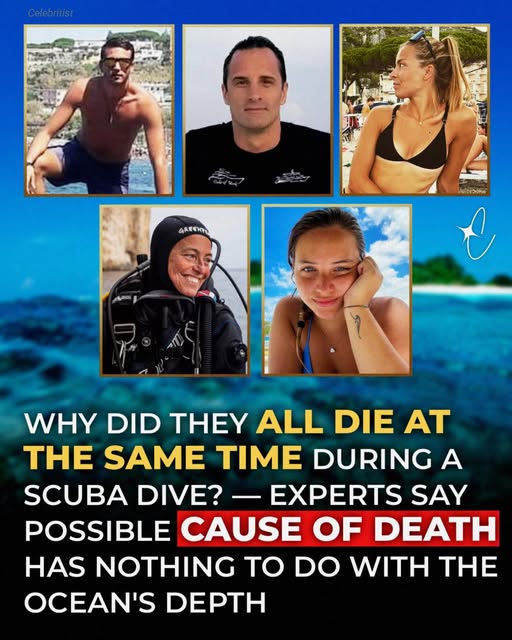
Five Italian Divers Die During Maldives Cave Expedition as Investigators Examine What Went Wrong Underwater
Five Italian divers disappeared beneath the waters of the Maldives during a trip that had been planned as a dream diving expedition. What began as a luxury journey through some of the region’s most admired underwater sites turned into a deadly mystery inside a deep cave system.
Days after the tragedy, investigators were still working to determine what happened below the surface. The case has drawn attention because the victims were not inexperienced tourists, but people with strong backgrounds in diving, marine science, and underwater activity.
At first, the disaster appeared to be linked to rough seas and difficult diving conditions. As the investigation developed, attention shifted toward another troubling possibility involving what the divers may have been breathing during the dive.
The case became even more striking after it emerged that a sixth Italian diver had been expected to enter the water with the group but remained on the vessel. That decision left her as the only direct survivor connected to the deadly expedition.
The Diving Cruise That Became a Disaster
The victims were traveling aboard the “Duke of York,” a 36-meter luxury liveaboard vessel used for diving cruises in the Maldives. The ship had departed from Malé on May 10 for a week-long expedition through popular diving locations in the region.
The group entered the water near Alimathaa in the Vaavu Atoll. The area is known among divers for caves, marine life, and deep underwater passages.
Authorities believe the divers may have been inside a cave approximately 60 meters below the surface when the fatal emergency occurred. The depth, the enclosed environment, and the changing conditions all became central elements of the investigation.
Before the dive, a yellow weather alert had been issued for the area because of rough seas and worsening conditions. Later, the zone was described as being at “extremely high risk.”
Coast Guard teams and special recovery equipment were deployed to support the operation. The recovery effort quickly became a complex and sensitive mission because of the underwater terrain and the depth involved.
The number of victims made the incident especially serious. The experience level of the group made it even more difficult to understand.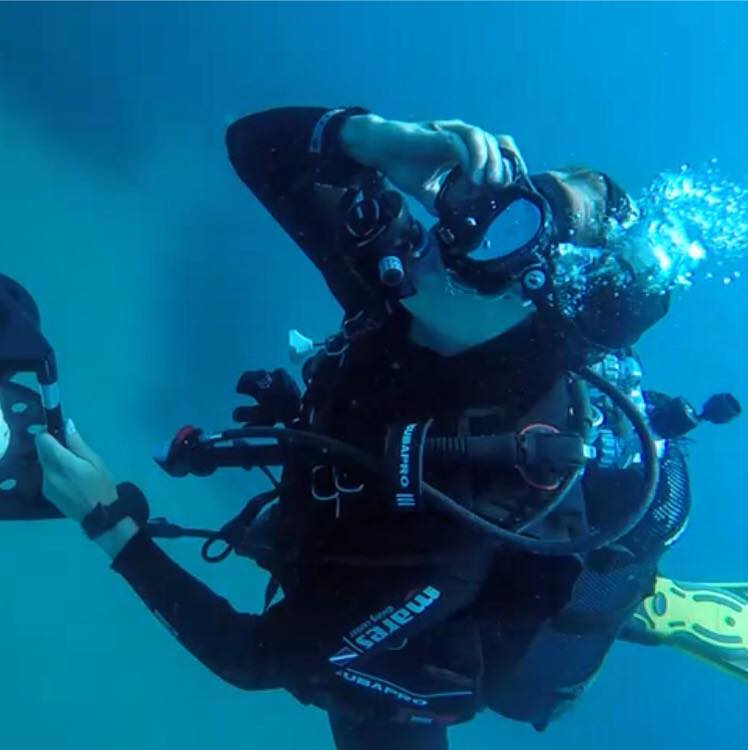
An Experienced Group Beneath the Surface
The tragedy deeply affected many in Italy because several of the victims were closely connected to marine research, conservation, and professional diving. Their backgrounds made the disaster particularly difficult for relatives, colleagues, and the wider diving community to process.
Monica Montefalcone, 51, worked as a researcher at the University of Genoa’s Department of Earth Sciences. Her 23-year-old daughter, Giorgia Sommacal, was also part of the group.
Muriel Oddenino, 31, was a marine ecology specialist. She had contributed to scientific work focused on protecting marine ecosystems.
Federico Gualtieri was a diving instructor and had recently graduated in Biological Sciences and Marine Biology from the University of Genoa. His experience linked both practical diving knowledge and academic training in marine life.
Gianluca Benedetti, originally from Padua, had previously worked for years in banking and finance. He later left that field to pursue scuba diving professionally.
The deaths of these five people caused grief beyond their families. Italy’s marine science community was also shaken, especially because several of the victims had dedicated their careers and studies to the sea.
Greenpeace Italy remembered Montefalcone’s environmental work and her involvement in marine conservation projects. The organization wrote, “We will immensely miss her professionalism and her advice,” and added, “And that special light she had in her eyes when she spoke of the wonders of the sea and the importance of protecting them.”
The First Questions After the Dive
As the recovery operation continued, the central question became harder to ignore. How could five experienced divers die during the same underwater excursion?
Early confusion also surrounded the identification of the first recovered body. Some initial information identified the victim as Montefalcone, while later reports suggested it was Benedetti.
Investigators began examining whether there had been possible violations connected to diving rules, weather warnings, or equipment used during the excursion. Each of those issues could be important in understanding how the emergency developed.
Family members also began speaking publicly as the mystery deepened. The grief was intensified by the lack of a clear explanation.
Carlo Sommacal, Montefalcone’s husband and Giorgia’s father, rejected any suggestion that the group had acted carelessly. He said, “My wife is experienced and never reckless,” then added, “Something happened down there.”
His words reflected the concern shared by many close to the victims. For those who knew the divers’ experience and caution, the idea of simple recklessness did not seem to explain the scale of the tragedy.
Sommacal also suggested that Montefalcone may have been wearing a GoPro camera during the dive. If footage exists, it could become important in helping investigators reconstruct the group’s final moments underwater.
Benedetti’s mother described the family’s grief as “unspeakable pain.” Her words captured the shock surrounding a loss that unfolded far from home, beneath waters known for beauty but also capable of danger.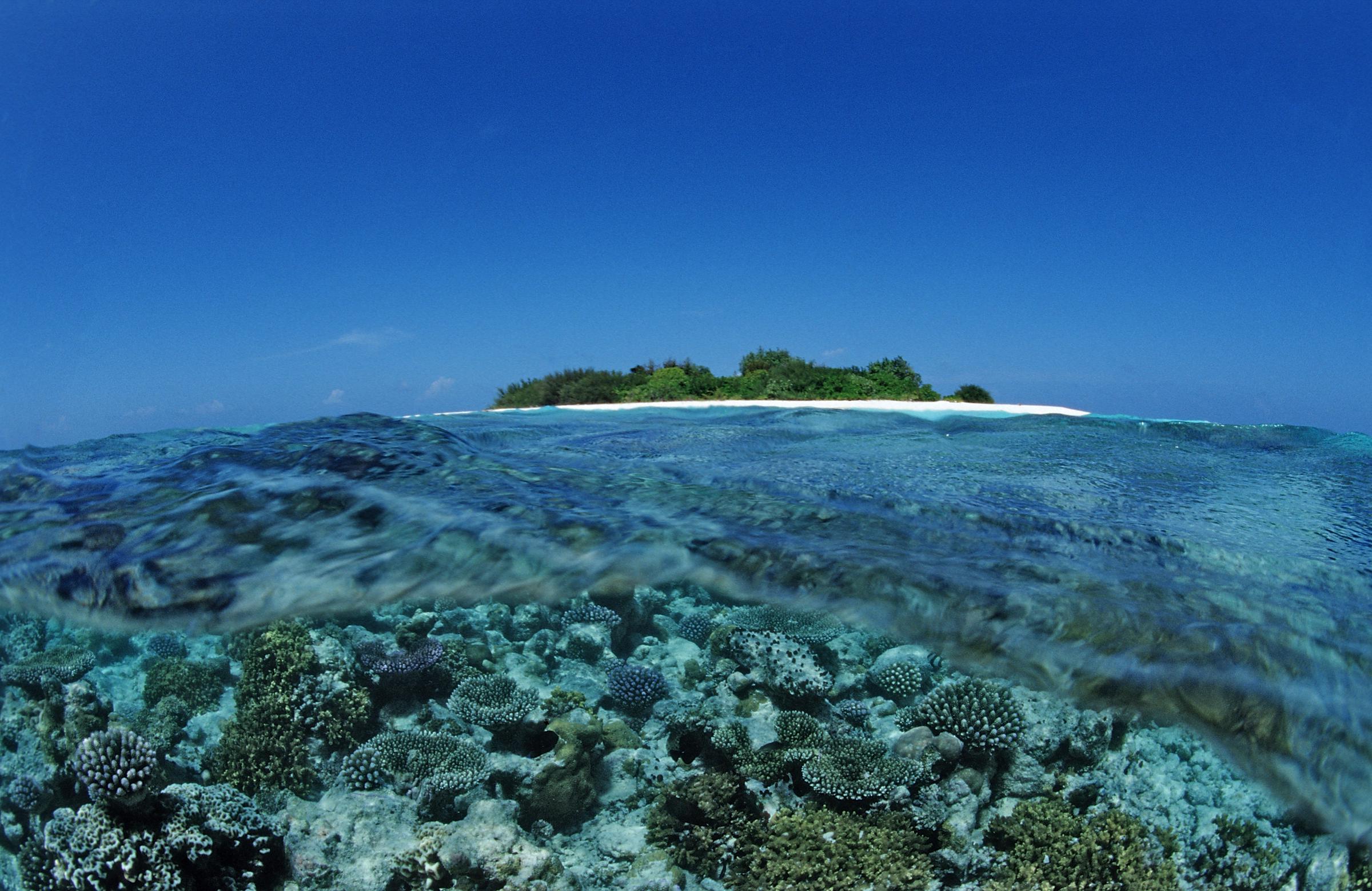
Why the Case Became More Disturbing
At the start, attention focused heavily on the sea conditions. Rough water, bad weather, and a difficult underwater environment can increase danger during any dive, especially around caves and deep passages.
However, specialists later began discussing a more disturbing theory. The deaths may have been connected to oxygen toxicity, also known as hyperoxia.
This condition can occur during deep dives when oxygen concentrations become dangerously high under intense underwater pressure. At depth, breathing gas that would normally seem manageable can become toxic if the mix is wrong or if exposure becomes excessive.
Pulmonologist Claudio Micheletto described this kind of emergency in severe terms. He said, “Death from oxygen toxicity, or hyperoxia, is one of the most dramatic deaths that can occur during a dive — a horrible end.”
Excessive oxygen exposure underwater can quickly affect the lungs and nervous system. The danger is especially serious because symptoms can develop in a setting where the diver has little time or ability to respond safely.
Possible symptoms include dizziness, chest pain, confusion, disorientation, altered consciousness, and severe neurological effects. Underwater, even a brief loss of control can become fatal.
Micheletto explained, “When you breathe in too high a concentration of oxygen, the gas becomes toxic to the body.” In an underwater cave, where movement is restricted and visibility may be limited, such a crisis could become deadly within moments.
Concerns About the Breathing Tanks
The fact that all five divers died during the same dive raised serious concern among specialists. If several experienced divers suffered a fatal event at once, the cause may have involved something shared by the group.
One possibility under review is the breathing mix used during the dive. At around 60 meters, the composition of the gas being breathed becomes especially important.
Micheletto said the tragedy suggested “not so much a problem with the depth, but rather with what they were breathing.” He added, “It’s likely that something went wrong with the tanks.”
That possibility places equipment, preparation, and filling procedures under close scrutiny. If the gas mixture was incorrect, contaminated, or unsuitable for the dive conditions, the consequences could have been catastrophic.
For investigators, the challenge is to determine whether the fatal chain of events began with weather, judgment, equipment, the environment, or the breathing supply. It may also involve more than one factor.
The investigation remains complicated because what happened occurred underwater, at depth, and possibly inside a cave. Those conditions make reconstruction difficult and make physical evidence especially important.
Another Possible Hazard Under Review
Other specialists have also discussed additional dangers that could have played a role. Alfonso Bolognini, president of the Italian Society of Underwater and Hyperbaric Medicine, said an “inadequate breathing mix” could potentially cause a hyperoxic crisis affecting the brain and nervous system.
He also warned about a separate hazard involving contamination. He said, “There have been cases of poisoning due to hydrocarbon contamination when the tanks are not properly filled.”
If tank contamination were involved, the divers may have been exposed to dangerous substances through the very equipment meant to keep them alive. That possibility adds another layer to the investigation.
Bolognini also highlighted the psychological and environmental risks of cave diving at great depth. Underwater caves can become dangerous quickly if a diver becomes distressed or if visibility suddenly changes.
Inside a cave, a single panicked movement can stir sediment from the seabed. Once that happens, visibility can cloud almost instantly, making it difficult for multiple divers to orient themselves or find the way out.
In such conditions, panic can spread quickly. A few seconds of confusion can lead to mistakes that are impossible to correct underwater.
Even so, direct evidence confirming exactly what happened has not yet been established. Specialists have raised possible explanations, but the final answer depends on the investigation.
The Role of the Underwater Cave
The location of the tragedy is one of the most important details. The divers are believed to have been inside a cave at a depth of roughly 60 meters.
Cave diving is different from open-water diving because the route to the surface is not direct. A diver inside a cave must navigate through passages before reaching open water.
That makes any emergency more dangerous. Problems involving breathing gas, visibility, disorientation, injury, panic, or equipment can be much harder to manage when the exit is not immediately above.
At depth, pressure adds further risk. The breathing mixture must be appropriate, and the diver must manage time, movement, and ascent carefully.
The combination of a cave environment and deep water helps explain why investigators are focusing on technical details. In such a setting, small errors or equipment problems can become fatal very quickly.
The Sixth Diver Who Stayed Aboard
One of the most striking details in the case involves a sixth Italian diver. She had originally planned to join the same excursion.
The student from Genoa was preparing to enter the water alongside the others. Before the dive, however, she chose to remain aboard the boat.
The reason for that decision remains unclear. It may have been linked to caution or to a temporary illness.
Shortly afterward, the dive turned deadly. Because she did not enter the water, she became the only direct survivor connected to the expedition.
Her account could become important for investigators. She may be able to describe the group’s preparations, the conditions on the vessel, the discussions before the dive, and any concerns raised before the divers entered the water.
Her survival also adds a haunting element to the tragedy. A single decision kept her from joining the group underwater during the fatal dive.
Authorities Continue Searching for Answers
The investigation continues under difficult circumstances. Officials are trying to piece together the divers’ final moments beneath the waters of one of the world’s best-known diving destinations.
They are examining weather conditions, the warnings issued before the dive, the level of risk in the area, the cave environment, the equipment used, and the possible composition or contamination of the tanks.
The experience of the victims remains one of the most important aspects of the case. Their backgrounds make it harder to accept a simple explanation based only on poor judgment.
For the families, the unanswered questions are especially painful. The loss of five people during one expedition has left relatives, friends, colleagues, and the diving community searching for clarity.
The possible presence of camera footage could help if it is recovered and usable. Any record from the dive may provide details about the moments before the emergency.
Until investigators determine what happened, the tragedy remains surrounded by uncertainty. What is known is that five experienced Italian divers entered the water during a luxury expedition in the Maldives and did not return alive.
A Dream Expedition Ends in Mystery
The Maldives are known for underwater beauty, marine life, coral environments, and diving routes that attract visitors from around the world. For this group, the trip was meant to be an extraordinary experience at sea.
Instead, the expedition became a fatal mystery centered on a deep underwater cave near Alimathaa in the Vaavu Atoll. The setting that drew divers to the area also became the focus of a major investigation.
The deaths of Monica Montefalcone, Giorgia Sommacal, Muriel Oddenino, Federico Gualtieri, and Gianluca Benedetti have left a deep impact in Italy. Their links to marine research, diving, and conservation made the tragedy especially painful for those connected to the sea.
Experts continue to weigh the possibility of oxygen toxicity, an inadequate breathing mix, tank problems, contamination, weather-related danger, and the risks of cave diving under pressure. None of these possibilities has yet replaced the need for confirmed findings.
The only Italian diver from the planned group who did not enter the water may become a key witness as the inquiry develops. Her decision to stay aboard the vessel spared her life and may help investigators understand what happened before the dive began.
For now, the central question remains unanswered. Somewhere beneath the waters of the Maldives, inside a cave at dangerous depth, something went catastrophically wrong, leaving five experienced divers dead and their families waiting for the truth.