
Mother Races to Secure Potential Gene Therapy for Son With Sanfilippo Syndrome
A Family Facing a Rare and Terminal Diagnosis
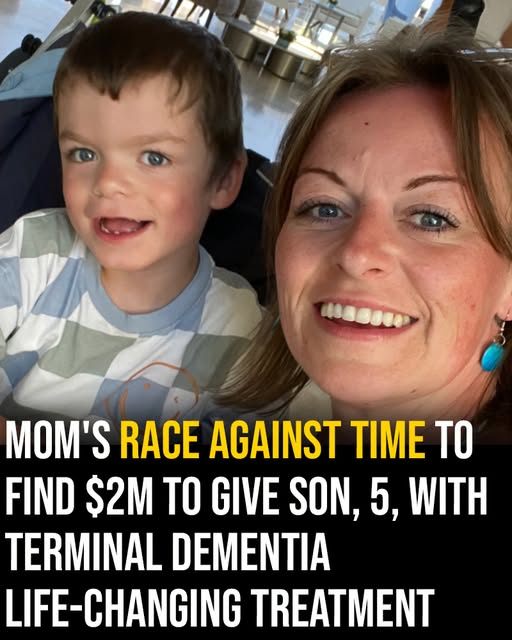
Thomasina “Tammy” McDaid is working urgently to obtain treatment for her young son, Tate, after he was diagnosed with Sanfilippo syndrome Type A.
The rare genetic disorder affects the central nervous system and causes a gradual loss of cognitive, behavioral, and physical abilities.
Tate was initially diagnosed with autism when he was 2 years old. Tammy continued searching for answers because she believed another condition might be affecting him.
After years of uncertainty, the family received the diagnosis that changed their understanding of his future.
“When he was 2, Tate was diagnosed with autism. I always felt there was more going on. Sadly, after years of searching for answers, we’ve recently received the devastating diagnosis of Sanfilippo Syndrome Type A — a rare, genetic, terminal condition often called childhood dementia,” the GoFundMe page Tammy launched reads.
The condition worsens over time and can lead to premature death.
For Tammy, the diagnosis brought both an explanation for her concerns and the devastating knowledge that her son could gradually lose abilities he currently has.
What Sanfilippo Syndrome Does to Children
Sanfilippo syndrome is a progressive disorder that primarily affects the brain and nervous system.
Children living with the condition may experience worsening problems involving learning, behavior, movement, communication, and physical health.
According to Cleveland clinic, “it causes a variety of cognitive (mental), behavioral and physical symptoms that get worse over time. These symptoms lead to premature death.”
The disease is sometimes described as childhood dementia because children may slowly lose skills they previously developed.
Walking, eating, communicating, and independent movement can all become increasingly difficult as the condition progresses.
Tammy described the impact in deeply personal terms.
“Children with Sanfilippo slowly lose all the skills they’ve learned — walking, eating, and eventually movement. Tate has never spoken a word, and now I know I’ll never get to hear his voice. That’s a heartbreak I can barely put into words.”
Tate has never spoken, and the diagnosis has forced his mother to confront the possibility that she will never hear him speak.
The emotional weight of that realization has become part of the family’s daily life as they search for a way to slow the disease.
The Disease Can Progress Unpredictably
Many people with Sanfilippo syndrome do not survive beyond their teenage years.
Tate, who will turn 6 in November, has not yet reached the most advanced stage of the condition.
However, Tammy says the disease can change quickly and unpredictably, making it difficult for the family to plan even a short distance into the future.
She has struggled to think about what life may look like in 2027 because no one can say exactly when Tate’s abilities may begin to decline more severely.
His fifth birthday brought both joy and fear.
“Tate turning 5 was bitter sweet. A lot can change within the next year and that’s why it’s vital to get awareness out there.”
The family is attempting to act while Tate is still considered young enough and healthy enough to potentially benefit from treatment.
Every month matters because a therapy that becomes available later may no longer be suitable if his condition has already progressed too far.
An Autism Diagnosis Made the Warning Signs Harder to Recognize
Tate’s condition was eventually identified through a brain scan.
Before that discovery, he had already been diagnosed with non-verbal autism at age 2.
That earlier diagnosis made it especially difficult to recognize some of the first signs of Sanfilippo syndrome.
Because Tate had never spoken, changes involving language or communication could not be identified in the same way they might be in another child.
Behaviors linked to the genetic disorder could also have been interpreted as part of autism.
Tammy’s belief that something more was happening led her to continue seeking answers.
The eventual diagnosis confirmed that his medical needs extended beyond the condition first identified when he was a toddler.
A Potential Treatment Brings New Hope
A gene therapy being developed in the United States has given families affected by Sanfilippo syndrome new hope.
The treatment is expected to be considered for approval on Sept. 19 after producing encouraging clinical trial results.
Tammy says children who received the therapy during trials have continued developing in ways that resemble children without Sanfilippo syndrome.
Some of those children are now 11 or 12 years old, an age when the disease would normally have caused significant deterioration.
Instead, they continue participating in sports, eating solid food, maintaining friendships, and enjoying a strong quality of life.
The results have created hope that the treatment could slow or interrupt the progression of the disease before children lose major abilities.
It is not officially described as a cure, but Tammy believes access to it could transform Tate’s future.
Approval Could Mark a Historic Moment
The therapy could become the first approved treatment available within the Sanfilippo community.
Tammy views the expected decision as an important moment for affected children around the world.
Speaking to LADbible, she said: “It’s going to be the first approved treatment in this in the Sanfillipo world so all the children around the world will eventually benefit from it. It’s a big point in history, but it’s just one of those things where unfortunately my kid is on the cusp.
“We could get it over here in about two years’ time on the NHS, but the chances are that he would have already deteriorated by that point anyway to the extent where he couldn’t get the treatment anymore.”
The possibility of access through the NHS in approximately two years offers little comfort because Tate may not remain eligible that long.
If his condition worsens significantly before the therapy becomes available locally, the opportunity could disappear.
That concern is driving Tammy’s effort to take him to the United States soon after approval.
The Cost Could Reach Millions of Pounds
No official price has been announced for the gene therapy.
However, Tammy says a Sanfilippo charity indicated that treatment could cost between £1.5 million and £3 million.
The enormous potential expense places the therapy far beyond what most families could pay without widespread public support.
Tammy launched a fundraising campaign in the hope of covering travel, treatment, and related costs.
Her goal is to be ready to move quickly once the therapy receives approval and distribution centers begin operating.
Waiting for the treatment to become available through ordinary local health systems could take too long.
For a progressive terminal condition, even a delay of several months could affect whether a child remains eligible.
Why the Family Believes Immediate Action Is Necessary
Tammy says the severity of Sanfilippo syndrome means families cannot afford to wait through long administrative or medical timelines.
She believes treatment must begin before significant deterioration occurs.
“Because it’s such a severe, terminal illness, time isn’t on the kids’ side, so the minute it gets approved, they’re going to have distribution centres ready. On the legal side of things, they can’t call it a cure yet, but the children in the trials are still presenting as if they don’t have Sanfillipo. They’re 11 or 12, they’re still in typical sports clubs, still eating solid foods, and have friendship groups. Their quality of life is amazing. Tate having this treatment, I believe would just stop things in its tracks,” she told LADbible.
The progress seen among trial participants has become a source of hope for Tammy.
She imagines a future in which Tate remains able to eat, move, participate in activities, and experience life without the severe decline normally associated with the condition.
Although the therapy cannot yet be described as a cure, the results have convinced her that it could preserve abilities Tate still has.
Treatment Could Restore a Sense of Future
Tammy had already adjusted her expectations after Tate was diagnosed with non-verbal autism.
She believed she was preparing to raise a child who might never speak but could still have a stable and meaningful future.
The Sanfilippo diagnosis replaced that expectation with the threat of progressive decline.
For Tammy, treatment would not simply address medical symptoms. It could allow her to imagine a future again.
“I was expecting a non-verbal autistic child anyway because he got diagnosed autistic at two. So having a treatment would bring me back to a world where I can go back to work, I can go back to living for the future again.”
The possibility of slowing the disease would give the family a chance to plan beyond the next medical crisis.
It could also allow Tammy to return to work and rebuild parts of her life currently dominated by uncertainty and caregiving.
Early Difficulties Have Already Appeared
Tammy describes Tate as having the energy of a “Duracell bunny.”
He remains active, but signs of difficulty have already begun to emerge.
Eating has become more challenging, creating concern that the disease may be starting to affect important daily functions.
Because progression differs between children, doctors and families cannot predict exactly which ability may be lost next or when that change will happen.
“We’re fighting against time because I can’t say for sure that in six months’ time he’s going to lose this or that,” she said.
That uncertainty makes every delay feel dangerous.
Tammy cannot know whether Tate will remain stable for a period or experience rapid deterioration.
The Most Difficult Part Is Not Knowing
Sanfilippo syndrome does not progress according to a schedule that families can reliably anticipate.
Some changes may happen slowly, while others may appear within a short period.
“The deterioration can happen extremely quickly, but that’s not always the case. That’s the ugly part about this disease, we cannot properly prepare because we just don’t know when things will come.”
The lack of predictability prevents families from making ordinary plans.
They cannot know how long a child will continue walking, eating independently, or participating in favorite activities.
For Tammy, the uncertainty strengthens the need to pursue treatment before further symptoms appear.
She is attempting to prepare financially and practically for a therapy that may become available while also caring for Tate’s present needs.
Raising Awareness About Possible Physical Signs
Alongside fundraising, Tammy wants more parents to become aware of Sanfilippo syndrome.
Families within the Sanfilippo community have noticed that many affected children share certain facial characteristics.
These may include a small “button nose” and coarse eyebrows.
Those features do not confirm that a child has the condition.
However, Tammy believes they could encourage parents to seek medical advice when combined with developmental, behavioral, or physical symptoms.
Early recognition may be especially important if treatment becomes most effective before major deterioration begins.
Tate’s own diagnosis came only after years of searching, partly because his existing autism diagnosis made the warning signs difficult to separate.
Public Support Begins to Grow
Tammy’s campaign has already raised more than £60,000.
The amount represents meaningful progress, although it remains far below the possible cost of treatment.
Welsh stars Rob Brydon and Michael Sheen have supported the family’s effort, helping bring additional attention to Tate’s condition.
Their involvement has helped spread the campaign beyond Tammy’s immediate community.
Each donation and public mention increases the possibility that the family could reach the United States quickly if the therapy receives approval.
The fundraising effort is also introducing more people to a disease that remains unfamiliar to much of the public.
A Race Against the Progression of the Disease
Tammy’s campaign is driven by the belief that Tate still has a window in which treatment could protect his current abilities.
The challenge is that no one knows how long that window will remain open.
Approval of the therapy on Sept. 19 could provide the first major opportunity for children living with Sanfilippo syndrome.
For Tate, access would depend on raising enough money, arranging travel, securing a treatment place, and reaching the United States before his condition advances too far.
The family is therefore preparing for a medical opportunity that has not yet received final approval but may represent their best chance.
A Mother Fighting for More Time
Tammy’s efforts are centered on preserving the life Tate has now.
She wants him to continue moving, eating, enjoying activities, and experiencing the world with the energy he currently shows.
The possible gene therapy offers hope that the progression of the disease could be slowed before those abilities disappear.
For Tammy, the campaign is not based on the promise of a complete cure.
It is a fight for time, stability, and the possibility that her son could reach adolescence without the severe deterioration usually associated with Sanfilippo syndrome.
As the approval date approaches, she continues raising funds and awareness while facing the uncertainty of how quickly Tate’s condition may change.
Her goal is to be ready the moment treatment becomes available, giving her son the strongest possible chance before time runs out.