
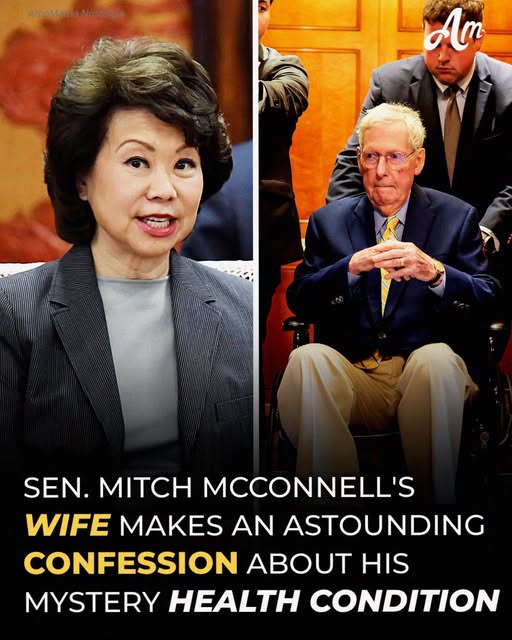
Mitch McConnell’s Hospitalization Raises Questions as Elaine Chao Explains China Trip
Limited Information Surrounds the Senator’s Latest Health Crisis
Sen. Mitch McConnell’s latest hospitalization has drawn renewed attention to the health of the longtime Kentucky Republican, particularly because few details have been released about what led to his admission or what treatment he has received.
McConnell entered a hospital on June 14, two days after his wife, Elaine Chao, departed for China on a trip her representative described as having been arranged well in advance.
More than three weeks after the hospitalization, the public still had not been told the reason for his admission. His office offered brief updates stating that he was improving and remained involved in official matters, but it did not provide a diagnosis or explain the circumstances surrounding the emergency.
The lack of specific information became more noticeable after emergency dispatcher communications from the morning of June 14 revealed references to an unconscious person, CPR, and cardiac arrest at McConnell’s Washington, D.C., address.
The individual receiving treatment was not identified in the communications, and there has been no official confirmation that the emergency involved McConnell.
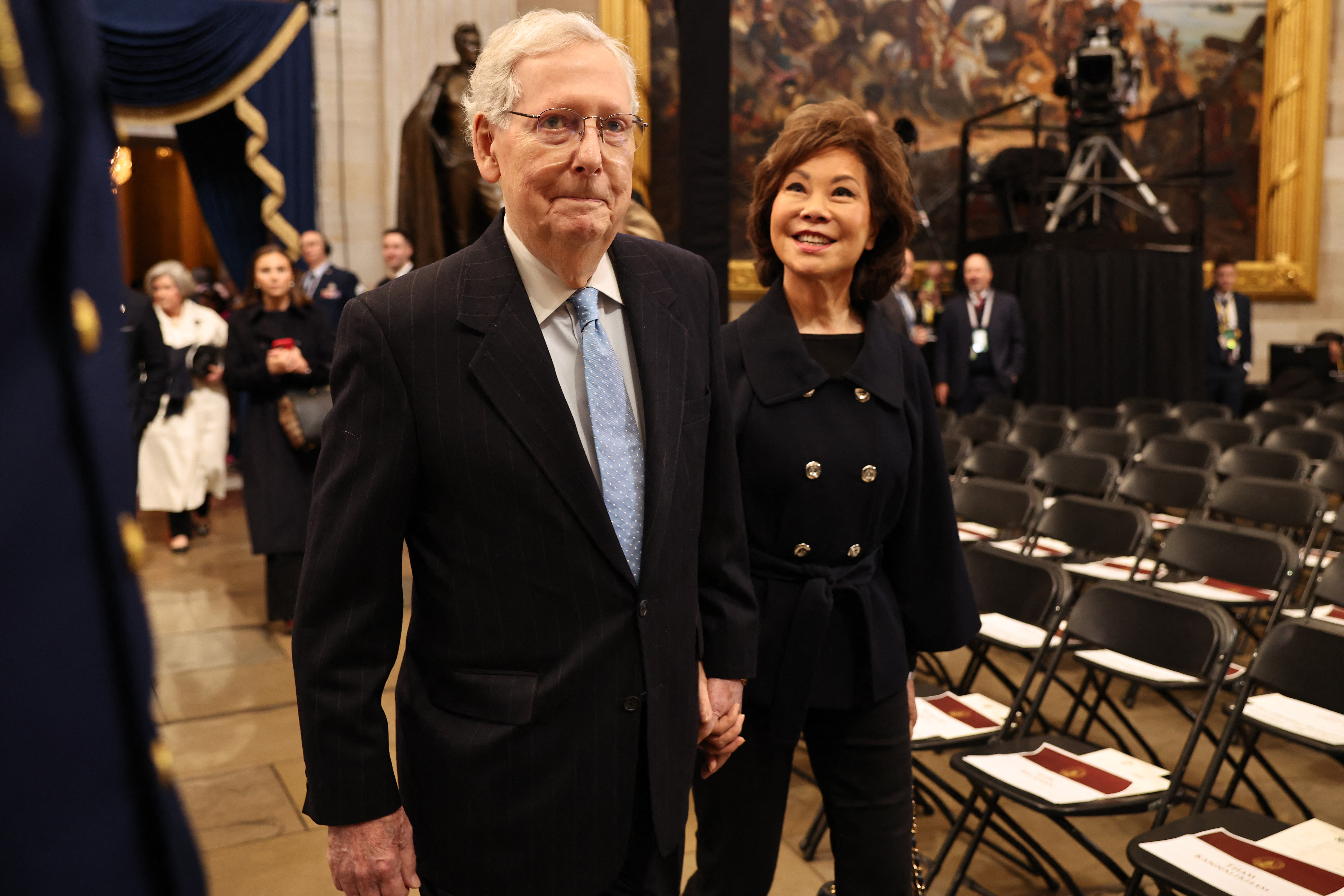
McConnell’s Final Senate Activity Before Hospitalization
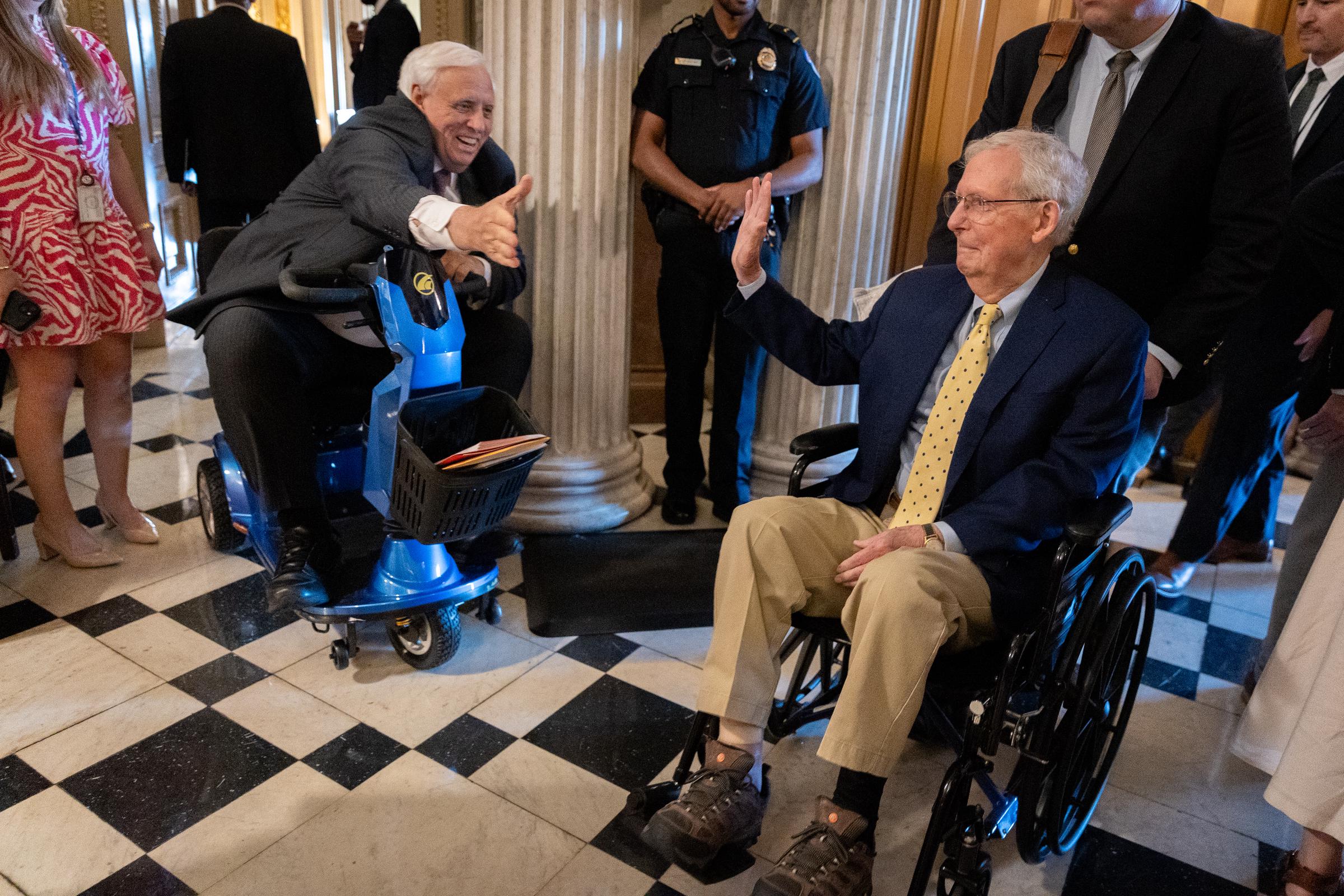
McConnell’s most recent Senate vote took place on June 11, three days before he was admitted to the hospital.
In the weeks leading up to the hospitalization, he had also been photographed using a wheelchair while moving through the Capitol.
His staff later said he continued to participate in work involving Kentucky and the Senate, even while receiving hospital care.
“Senator McConnell appreciates the outpouring of support he’s receiving while he continues his recovery in the hospital. The Senator continues to improve, and is working closely with his staff on Kentucky and Senate matters while the Senate is out of session.”
The statement offered reassurance but did not answer the most significant questions about his condition.
As the hospitalization continued, attention increasingly focused on what happened during a short period on the morning of June 14.
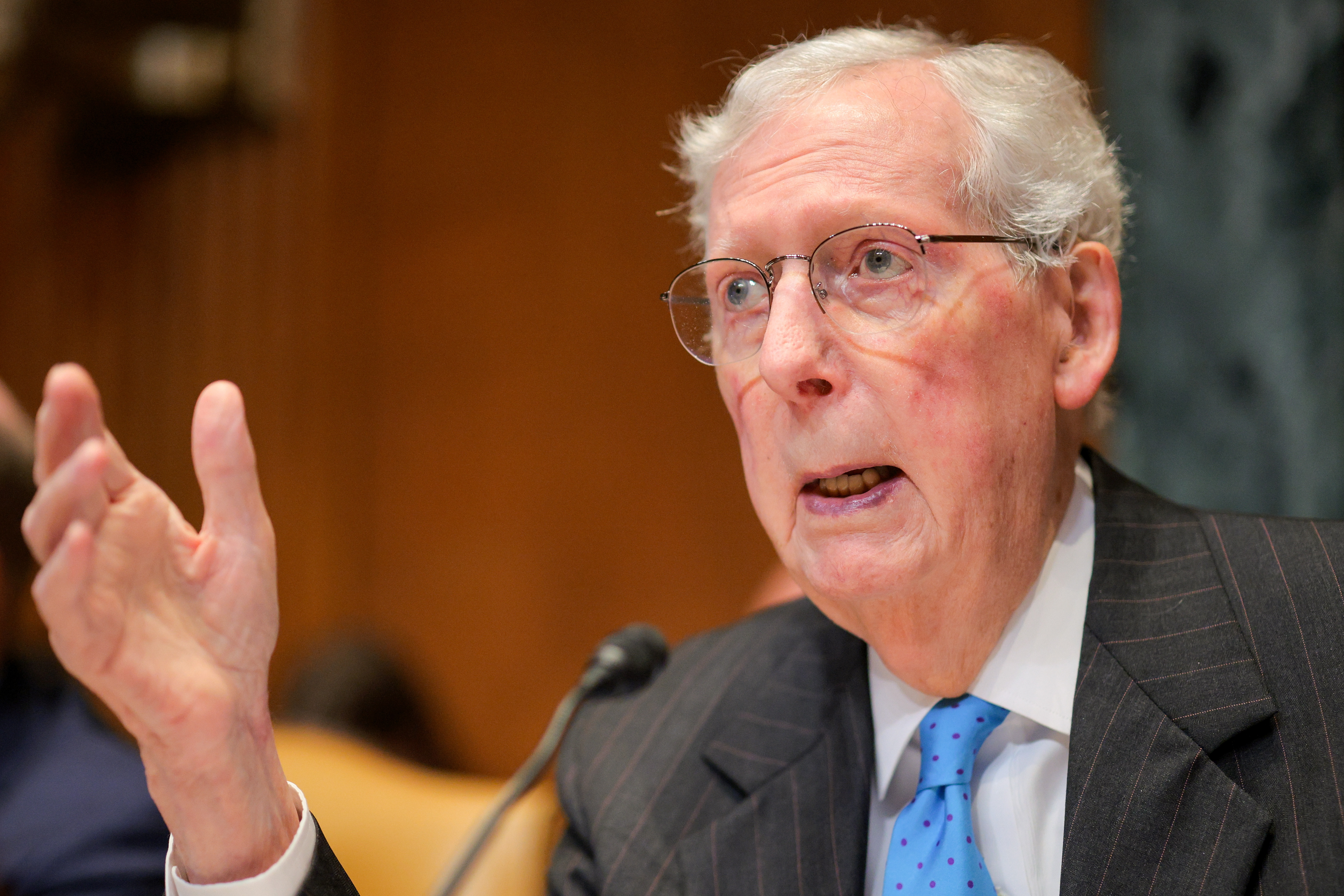
The Seven-Minute Emergency Window
Emergency dispatcher communications were recorded between 8:36 a.m. and 8:43 a.m. on the day McConnell entered the hospital.
At 8:36 a.m., medics were instructed to respond to a report involving an unconscious person at McConnell’s Washington, D.C., residence.
Six minutes later, a city Fire and Emergency Medical Services Department worker requested that a supervisor be notified of “CPR in progress.”
The communications also contained references to “cardiac arrest.”
Despite the serious language used in the calls, the person at the center of the emergency was never named.
McConnell’s office declined to comment on the recordings, leaving uncertainty over whether they were directly connected to his hospitalization.
Several senators and a former adviser to McConnell reportedly said they had spoken with him, suggesting that he remained able to communicate during his recovery.
However, without a fuller medical explanation, the dispatcher records continued to fuel speculation.
Elaine Chao Was in China When McConnell Was Hospitalized
Another part of the story attracted attention because Chao was outside the United States when her husband entered the hospital.
The former U.S. transportation secretary left for China on June 12, two days before McConnell’s hospitalization.
While in Beijing, she met Chinese Vice President Han Zheng.
During the meeting, Han called for stronger cooperation between China and the United States in trade, cultural engagement, and exchanges between people in the two countries.
Chao expressed support for stable relations between the United States and China and indicated that she was willing to continue encouraging practical cooperation and communication.
Her decision to remain on the trip while McConnell stayed in a hospital in the United States led to questions about whether she had been informed of his condition and why she did not immediately return.

Chao’s Representative Addresses the Trip
A spokesperson for Chao later explained that the trip had been planned long before McConnell’s hospitalization and was connected to philanthropic work involving her family.
The representative also said Chao met several people during the visit, including the U.S. ambassador.
“The secretary was on a long-planned trip in China to support her family’s philanthropic endeavors. During the trip, she met with a number of people, including the U.S. ambassador. The Senator’s health did not warrant an immediate return to the U.S.”
The statement directly addressed why Chao continued with the visit instead of immediately traveling home.
Chao has since returned to the United States.
Her staff did not say whether she had been in contact with McConnell after returning.
The explanation added context to her absence but did not provide further information about McConnell’s medical condition.
Another Hospitalization Earlier in 2026
The June hospital stay followed another health concern earlier in 2026.
McConnell was hospitalized in February after experiencing symptoms resembling the flu.
His spokesperson, David Popp, said at the time that the senator had admitted himself for evaluation “in an abundance of caution.”
Popp described the prognosis as positive and said McConnell remained in regular communication with his staff.
That earlier hospitalization appeared less mysterious because the public was given a general explanation for why he sought medical care.
The June episode has been different, with no disclosed cause despite the length of the hospital stay.
Public Freezing Episodes Raised Earlier Concerns
McConnell’s health became a major public issue in 2023 after two incidents in which he appeared unable to continue speaking during public events.
In July 2023, he stopped in the middle of remarks during a news conference and remained silent for approximately 20 seconds.
Colleagues moved toward him and helped him step away from the podium.
He later returned and answered questions.
When asked about what had happened, McConnell said he was “fine.”
A little more than one month later, another similar episode occurred in Kentucky.
After a reporter asked whether he intended to run for reelection in 2026, McConnell paused for more than 30 seconds.
A spokesperson said he had felt “momentarily lightheaded,” while a staff member said he felt well but planned to consult a physician.
The two episodes intensified scrutiny of his health and raised questions about whether he could continue carrying out the demands of his Senate role.
A Serious Fall in Washington
The freezing incidents happened only months after McConnell suffered a concussion in March 2023.
He fell during a dinner event at a hotel in Washington, D.C., and remained hospitalized for treatment and observation.
The injury required a period of recovery and temporarily removed him from regular Senate activity.
It was not the first significant fall of his later years.
In 2019, McConnell fractured his shoulder after falling at his home in Kentucky.
He underwent surgery to repair the injury.
These incidents, combined with the use of a wheelchair and his latest hospitalization, have kept his physical condition under continuing public attention.
A Childhood Battle With Polio
McConnell has lived with the effects of a serious illness since early childhood.
He was diagnosed with polio at age 2, more than a decade before a vaccine became available.
The disease partially paralyzed his left leg.
His mother carried out a demanding physical therapy program four times each day in an effort to strengthen the affected limb.
Doctors initially warned her not to allow him to attempt walking because a fall could cause additional injury.
After approximately two years of treatment, a nurse gave the family a hopeful assessment.
“I think he’s going to be OK.”
McConnell has spoken about that experience as an important part of his childhood and personal development.
The effects of polio remained visible throughout his life, particularly in the way he moved and relied on railings or assistance.
His Senate Career Is Approaching Its Final Stage
The uncertainty surrounding McConnell’s recovery comes as his long Senate career moves toward its conclusion.
In 2025, he announced that he would not seek another term in 2026.
The announcement came on his 83rd birthday.
“Seven times, my fellow Kentuckians have sent me to the Senate,” he said. “Every day in between, I’ve been humbled by the trust they’ve placed in me to do their business right here.”
He continued by confirming that his current term would be his last.
“Representing our commonwealth has been the honor of a lifetime. I will not seek this honor an eighth time. My current term in the Senate will be my last,” the senator continued.
McConnell has served in the Senate since January 1985.
His time in office places him among the longest-serving senators in United States history.
Decades of Republican Leadership
McConnell’s political career included some of the most powerful leadership roles in the Senate.
He served as Republican whip and later became both minority leader and majority leader.
He also held multiple committee leadership positions during his decades in Congress.
His influence extended across judicial appointments, party strategy, legislation, and negotiations between Republican and Democratic administrations.
For years, he remained one of the most recognizable and powerful Republican officials in Washington.
His decision not to seek reelection marked the beginning of the end of an era in Kentucky and national politics.
Questions About His Recovery Remain
For now, McConnell’s recovery remains the central concern.
His staff has said he is improving and continuing to work, but it has not provided a detailed account of what led to the June hospitalization.
The seven-minute emergency communication window on June 14 remains unexplained.
The references to an unconscious person, CPR, and cardiac arrest have not been officially connected to McConnell, but the location and timing have kept the recordings under scrutiny.
Chao’s trip to China has now been addressed by her representative, who said McConnell’s health did not require her immediate return.
That statement answered one question while leaving many others unresolved.
It remains unclear what condition required McConnell’s extended hospital stay, what treatment he received, and when he may return to regular public activity.
As his final Senate term continues, attention remains divided between his recovery and the unanswered circumstances surrounding the morning he was hospitalized.