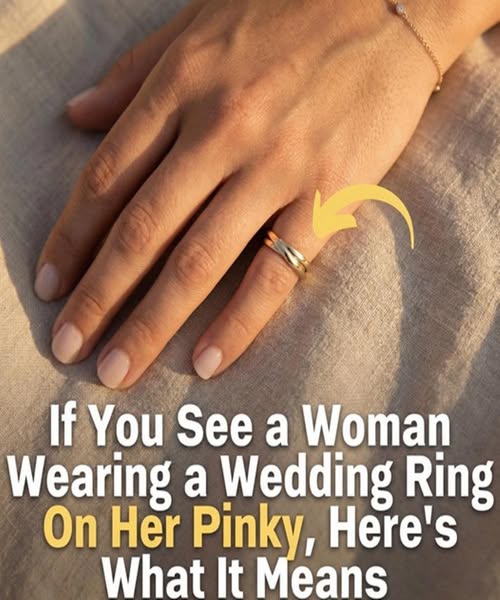
For thousands of years, rings have served as silent messengers. Without words, these circular bands of metal have signaled status, heritage, wealth, loyalty, and lifelong promises. Across cultures and eras, a ring has often spoken before its wearer ever needed to. Yet for much of modern history, especially in Western societies, the most visible story a woman’s hand told was a narrow one. The ring finger became a public notice board for marital status, a social shorthand for whether a woman was “taken” or “available.”
Today, that long-standing script is being quietly revised. A growing number of women are choosing to wear rings on their pinky fingers, a placement once associated mainly with aristocratic signet rings or expressions of male authority. What might appear, at first glance, to be a simple fashion choice is increasingly understood as something more deliberate. The pinky ring is emerging as a symbol of self-sovereignty, personal milestones, and identity that does not depend on romantic validation. In a cultural moment defined by reassessing tradition, this small shift in jewelry placement reflects a much broader change in how success, adulthood, and fulfillment are defined.