
Simple Cooling Techniques That Can Make Hot Nights More Bearable
When nighttime temperatures rise and the air inside a bedroom feels heavy and unmoving, sleep can quickly become elusive. Heat clings to the body, sheets trap warmth, and pillows seem to grow hotter with every passing minute. What should be a time for rest instead becomes a cycle of discomfort, restlessness, and mounting frustration.
Many people recognize this experience well. Lying awake in the dark, aware of every bead of warmth on the skin, the mind becomes increasingly alert rather than relaxed. Each lost hour of sleep adds to irritation and anxiety, making it even harder to drift off.
In these situations, air conditioning is often seen as the only reliable solution. Without it, comfort may feel unattainable. Yet there are simple, low-tech methods that can provide surprising relief, using nothing more than basic household items and an understanding of how heat and airflow behave.
The Challenge of Sleeping in Stagnant Heat
Sleep depends on the body’s ability to cool itself naturally. As night approaches, core body temperature typically begins to drop, signaling the brain that it is time to rest. Excessive heat interferes with this process, keeping the body in a state of alertness.
When the surrounding air is warm and stagnant, this natural cooling mechanism struggles to function. The body cannot easily release heat, leading to sweating, shallow breathing, and frequent movement in search of a cooler position.
This discomfort often triggers mental restlessness as well. Awareness of the heat amplifies frustration, and the longer sleep is delayed, the more difficult relaxation becomes.
Using Evaporative Cooling to Improve Airflow
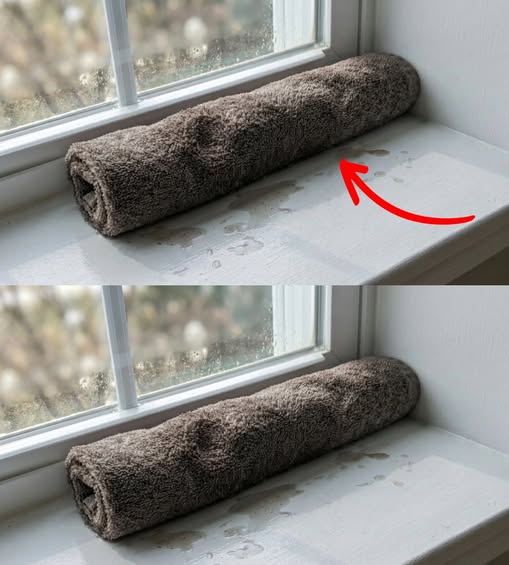
One practical method to address overheated rooms involves cooling the air itself rather than the entire space. Placing a damp towel over an open windowsill may appear improvised, but it relies on a well-established physical principle known as evaporative cooling.
Evaporative cooling occurs when water absorbs heat from its surroundings as it transitions from liquid to vapor. This process draws thermal energy out of the air, reducing its temperature slightly.
When a damp towel is positioned in an open window, incoming warm air passes through the moist fabric. As the water in the towel evaporates, heat is extracted from the air before it enters the room.
The result is not a dramatic drop in temperature but a subtle cooling effect. Even a small reduction can make the air feel fresher and less oppressive, especially in a room where heat has become trapped.
Why Small Temperature Changes Matter
Although the cooling effect of a damp towel may seem minimal, the human body is highly sensitive to changes in temperature during sleep.
A slight decrease in ambient warmth can improve breathing comfort and reduce the sensation of heaviness in the air. This helps the body begin the gradual cooling process needed to transition into sleep.
When heat keeps the body tense and alert, even minor relief can allow muscles to relax and breathing to deepen. This shift often marks the difference between lying awake and finally drifting off.
In this way, evaporative cooling acts as a gentle nudge rather than a complete solution, easing the body into a more sleep-friendly state.
Targeting the Body Instead of the Room
Another effective approach focuses not on the surrounding air, but on cooling the body directly. One particularly simple method involves chilling a pillowcase before bedtime.
By placing a pillowcase in the refrigerator or freezer for a short period, it can be cooled enough to provide immediate relief when used at night.
The head and neck play a crucial role in regulating body temperature. These areas contain a dense network of blood vessels close to the skin, making them especially responsive to temperature changes.
Cooling this region sends a powerful signal to the nervous system that it is safe to relax, helping the body shift out of a heightened state of alertness.
The Psychological Impact of Cool Sensations
The sensation of cool fabric against the skin can have a calming psychological effect as well. It provides immediate contrast to the surrounding heat, creating a moment of comfort that feels intentional and soothing.
This initial relief often reduces anxiety, which itself can be a barrier to sleep. When the mind interprets the cool sensation as a cue for rest, it becomes easier to let go of tension.
Even though the pillowcase will gradually warm to body temperature, those first few minutes can be the most important. They help the body cross the threshold into sleep before discomfort returns.
Why Short-Term Relief Can Be Enough
Falling asleep is often the hardest part of the night during hot weather. Once sleep begins, the body tends to remain asleep more easily, even if conditions are not ideal.
The chilled pillowcase provides a brief window of opportunity. For many people, that window is long enough to allow the body to settle into sleep.
By the time the fabric warms, the nervous system may already be in a resting state, making it less likely that the heat will cause immediate wakefulness.
Combining Air and Body Cooling
Individually, each of these techniques offers modest relief. When used together, their effects can be complementary.
Cooling the incoming air with a damp towel reduces overall room discomfort, while cooling the pillowcase directly lowers perceived body temperature.
This dual approach addresses both environmental and physiological factors that interfere with sleep, creating a more balanced and comfortable sleeping environment.
The combined effect can transform a stifling bedroom into a space that feels manageable, even without mechanical cooling.
Energy Efficiency and Accessibility
One of the advantages of these techniques is their simplicity. They require no electricity beyond basic household appliances and rely on items most people already have.
This makes them particularly useful in situations where air conditioning is unavailable, impractical, or too costly to run overnight.
They also offer an energy-efficient alternative, reducing reliance on power-intensive cooling systems during periods of high demand.
Understanding Airflow in the Bedroom
Air movement plays a significant role in perceived temperature. Even slightly cooler air feels more comfortable when it is moving rather than stagnant.
Placing a damp towel in a window encourages airflow by making use of natural air exchange between indoor and outdoor spaces.
When possible, opening windows on opposite sides of a room or home can further enhance circulation, allowing warm air to escape while cooler air enters.
Timing and Preparation
To maximize effectiveness, these techniques work best when prepared shortly before bedtime.
Soaking and wringing out a towel in advance allows it to be placed while the room is still warm, giving evaporative cooling time to take effect.
Similarly, chilling a pillowcase earlier in the evening ensures it is ready when it is time to sleep.
These small preparations can make bedtime feel more intentional and controlled, reducing stress associated with heat.
Adapting to Personal Comfort Levels
Individual sensitivity to heat varies. Some people may find a lightly damp towel sufficient, while others may prefer it more saturated.
The same applies to chilled pillowcases. A brief stay in the refrigerator may be enough for some, while others may prefer a colder fabric.
Adjusting these methods to personal comfort levels allows for experimentation without risk or expense.
The Role of Routine in Sleep Comfort
Consistency plays an important role in sleep quality. Establishing a routine that includes cooling techniques can help signal the body that it is time to rest.
Repeating the same steps each night reinforces the association between these actions and sleep, making it easier to relax over time.
Even during prolonged periods of heat, routines can provide a sense of predictability and control.
Managing Expectations During Hot Nights
While these methods can improve comfort, they do not eliminate heat entirely. Understanding their limitations helps prevent frustration.
The goal is not to recreate the conditions of a climate-controlled room, but to reduce discomfort enough to allow sleep.
Recognizing that small improvements can have meaningful effects makes these techniques more satisfying to use.
Why Simple Solutions Can Be Effective
Human comfort is influenced by perception as much as by actual temperature. Simple actions that create a feeling of coolness can significantly affect how heat is experienced.
By addressing both physical and psychological aspects of discomfort, low-tech methods can rival more complex solutions in effectiveness.
They demonstrate that relief does not always require advanced technology.
A Practical Approach to Restful Sleep
Hot nights can feel endless and exhausting, especially when sleep seems impossible. Yet small, thoughtful adjustments can make a meaningful difference.
Using evaporative cooling to refresh incoming air and cooling key areas of the body creates conditions that support rest.
These approaches work with the body’s natural processes rather than against them.
Conclusion
When bedroom heat threatens to steal sleep, comfort does not have to depend on air conditioning alone.
Simple techniques using fabric, water, and an understanding of airflow can reduce discomfort enough to restore rest.
By cooling the air and the body together, it becomes possible to transform stifling nights into manageable ones.
In the face of rising temperatures, these uncomplicated methods offer accessible, energy-efficient relief—and a better chance at a restful night’s sleep.