
When a Single Chin Hair Raises Bigger Questions About Health and Identity
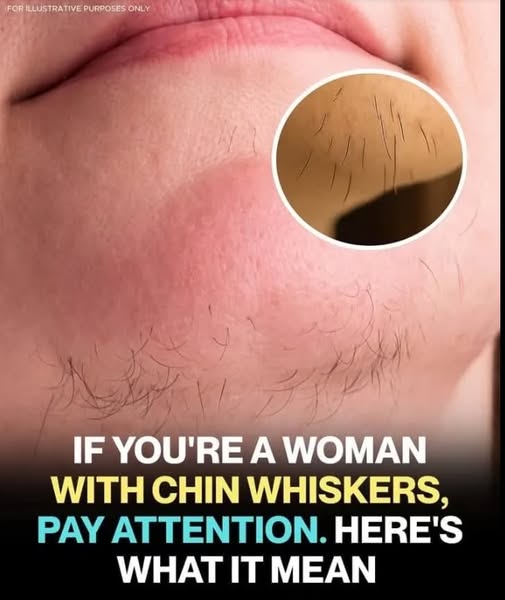
An ordinary glance in the mirror can occasionally reveal something unexpected: a stiff, coarse hair emerging from the chin. For many women, this discovery is a minor nuisance that is quickly dealt with and forgotten. For others, it becomes a recurring concern that carries emotional weight far beyond its physical size.
The reaction is rarely about the hair itself. Instead, it reflects what that small detail seems to challenge. Deeply rooted cultural ideas often link femininity to smooth, hairless skin, and even minimal facial hair can feel like a disruption to those expectations.
In reality, facial hair in women is far more common than many people realize. It can appear gradually with age, during periods of hormonal change, or simply as part of natural genetic variation. In some cases, it signals changes within the body that may be worth understanding. In others, it is purely cosmetic.
The Emotional Weight of a Minor Feature
The first appearance of chin hair often arrives unexpectedly. It may be a single thick strand or a small group of hairs that return often enough to become part of a regular grooming routine.
While the physical act of removal is simple, the emotional response can be complex. Many women describe feelings of embarrassment, discomfort, or heightened self-awareness, particularly when facial hair feels at odds with internalized standards of appearance.
In societies where facial hair is strongly associated with masculinity, even minimal growth on a woman’s face can feel out of place. This disconnect between biology and social norms can turn a neutral physical trait into a source of stress.
Over time, the need to constantly check, remove, or conceal hair can become mentally exhausting. What begins as a minor detail may slowly erode confidence and contribute to ongoing anxiety.
Documented Effects on Mental Well-Being
The emotional impact of unwanted facial hair has been examined in research. A study published in 2006 found that women dealing with unwanted facial hair reported higher levels of anxiety and depression.
The same research showed that participants spent an average of 104 minutes per week removing or hiding facial hair. That amounts to nearly two hours devoted to managing a feature that is often medically harmless.
This time investment reflects more than grooming. It represents ongoing vigilance and concern, highlighting how social expectations can amplify the importance of a small physical trait.
For many women, the distress is not proportional to the physical issue itself, but to the meaning attached to it.
Why Hair Growth Varies So Widely
There is no single standard for what constitutes “normal” hair growth among women. Patterns vary significantly based on genetics, ancestry, and individual sensitivity to hormones.
Some women naturally have more visible facial or body hair due to inherited traits. For them, a few coarse hairs on the chin fall well within a typical range.
For others, similar hair growth may be a signal that something within the body has shifted. Context becomes essential in determining whether chin hair is simply a cosmetic concern or a potential medical clue.
Factors such as how quickly the hair grows, how dark or thick it becomes, and whether it appears alongside other changes all play a role in interpretation.
The Role of Hormones in Chin Hair Growth
On a biological level, chin hair often appears when fine vellus hair transforms into thicker, darker terminal hair. This process is influenced by androgens, a group of hormones that includes testosterone.
Women naturally produce androgens, but changes in hormone levels or in the body’s sensitivity to them can alter how hair follicles behave.
Life stages such as puberty, pregnancy, and menopause are common times for hormonal fluctuations. During these periods, some women notice changes in facial or body hair.
These shifts do not automatically indicate a health problem. They reflect how responsive hair follicles are to the body’s internal chemistry.
When Hormonal Imbalance Becomes Significant
If androgen levels rise beyond typical ranges, some women develop hirsutism. This condition involves coarse hair growth in areas more commonly associated with male patterns, such as the chin, upper lip, chest, or back.
One of the most frequent causes of hirsutism is polycystic ovary syndrome. PCOS affects approximately 5 to 15 percent of women of reproductive age.
PCOS is associated with a range of symptoms beyond hair growth. These can include irregular menstrual cycles, acne, insulin resistance, and an increased risk of type 2 diabetes.
Facial hair growth linked to PCOS can vary in severity. Some women experience only mild changes, while others notice more pronounced and persistent growth.
Other Medical Conditions to Consider
While PCOS is a common cause, it is not the only condition that can influence facial hair growth. Other endocrine disorders may also alter hormone levels.
Cushing syndrome and congenital adrenal hyperplasia are examples of conditions that can affect androgen production and hair patterns.
These disorders are typically accompanied by additional symptoms, which helps distinguish them from more common, benign variations in hair growth.
Because symptoms can overlap, proper evaluation often requires looking at the full clinical picture rather than focusing on hair growth alone.
The Influence of Genetics and Ancestry
Genetics play a powerful role in determining how hair grows and where it appears. Women of Mediterranean, Middle Eastern, and Southeast Asian descent are statistically more likely to experience visible facial hair.
In many cases, this reflects inherited traits rather than disease. However, genetic tendencies can overlap with medical conditions, making interpretation less straightforward.
Understanding family history can provide useful context, but it does not replace medical evaluation when other symptoms are present.
The key distinction lies in whether hair growth represents a stable, lifelong pattern or a recent and noticeable change.
Lifestyle, Weight, and Metabolic Factors
Hormones do not function in isolation. Body weight can influence the balance between estrogen and androgens.
Rapid weight gain or loss can shift this balance, sometimes leading to changes in hair growth patterns.
Insulin resistance, even without a diagnosis of PCOS, can increase androgen activity and contribute to the development of coarse facial hair.
These metabolic factors highlight how closely connected hair growth is to overall health.
The Impact of Medications
Certain medications can also affect hair growth. Anabolic steroids are known to directly stimulate hair follicles.
Some chemotherapy treatments, despite their association with hair loss, can lead to uneven or thicker regrowth during recovery.
Medications used to treat epilepsy have been linked to hypertrichosis, a condition characterized by excessive hair growth that is not driven by hormonal imbalance.
These examples demonstrate how sensitive hair follicles are to internal changes.
Recognizing When to Seek Medical Advice
For many women, chin hair remains a cosmetic issue rather than a medical one. Occasional plucking or other hair-removal methods are sufficient, and no further action is required.
The challenge lies in recognizing patterns that suggest something more.
A sudden increase in facial hair, rapid thickening or darkening, or hair appearing in multiple new areas may warrant further evaluation.
When these changes occur alongside irregular periods, unexplained weight changes, severe acne, or persistent fatigue, they may indicate a broader hormonal or metabolic issue.
How Healthcare Providers Evaluate Hair Growth
Medical professionals typically assess hair growth within a broader context. A single symptom rarely tells the full story.
Blood tests, imaging studies, and a review of medical history can help determine whether hair growth reflects a normal variation or an underlying condition.
Identifying disorders such as PCOS or insulin resistance early can be important for long-term health, beyond cosmetic concerns.
Early recognition allows for management strategies that address both symptoms and associated health risks.
Cultural Standards and Personal Decisions
Chin hair exists at the intersection of biology and culture. Standards of beauty vary across societies and historical periods.
Modern media often promotes a narrow image of acceptability, intensifying emotional responses to minimal facial hair.
Some women choose to remove chin hair as part of personal grooming. Others decide to leave it for comfort, convenience, or self-acceptance.
Neither choice is inherently right or wrong. What matters is that the decision reflects personal comfort rather than external pressure.
Understanding the Broader Context
The psychological burden associated with unwanted facial hair underscores how appearance standards can affect mental health.
Spending nearly two hours a week managing hair is not simply about time. It reflects ongoing concern and emotional strain.
Recognizing this impact allows for more compassionate discussions about body image and self-worth.
It also encourages a shift away from shame and toward informed understanding.
Seeing Chin Hair for What It Is
Chin hair, by itself, rarely defines a person’s health or identity. It is one small feature influenced by hormones, genetics, environment, and lifestyle.
For many women, it will remain a minor and manageable aspect of daily life.
For others, it may serve as an early indicator that something within the body has changed.
Understanding that range helps reduce unnecessary alarm while encouraging appropriate attention when changes are significant.
Living Beyond the Stigma
The presence of a chin whisker does not determine femininity, health, or value.
The real challenge lies in the meaning attached to it.
By viewing facial hair through a broader lens that includes biology, medicine, and social influence, it becomes easier to separate cosmetic concerns from genuine health signals.
Responding with informed care rather than shame allows small details to be understood in context.
In that context, a single strand becomes what it truly is: a common feature that sometimes carries a useful message, but more often reflects the natural diversity of the human body.