
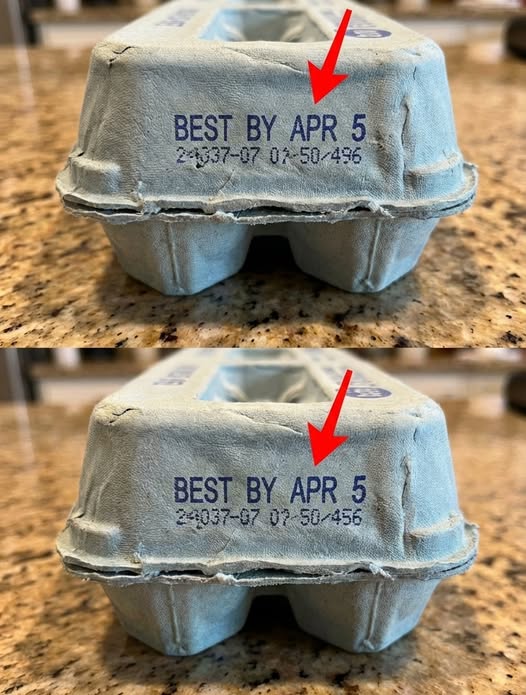
You’ve probably noticed it countless times: a three-digit number printed on the side of your egg carton. Many people dismiss it as a random code, a batch number, or just a part of the packaging. Yet this small string of digits holds essential information about freshness and food safety—and overlooking it could be the reason a seemingly harmless dish like quiche ends up making everyone sick.
Understanding what this number represents, how long eggs remain safe, and how to properly store them can prevent unpleasant surprises in the kitchen.
What Is That Three-Digit Number?
That series of numbers, typically ranging from 001 to 365, is known as the Julian date. Unlike expiration or sell-by dates, the Julian date indicates the exact day of the year the eggs were packed.
Here’s how it works:
-
001 = January 1
-
032 = February 1
-
120 = April 30
-
365 = December 31
So if your carton displays “120,” it means the eggs were packed on the 120th day of the year, which falls at the end of April. This number is a precise timestamp for freshness, not a marker of when the eggs will expire.
Important: The Julian date tells you the packing day, not the expiration date. The “sell-by” or “best-by” printed on cartons is for store inventory management and does not guarantee safety.
How Long Can Eggs Be Consumed Safely?
Eggs are surprisingly resilient when stored correctly, but they do have limits. According to USDA guidelines:
-
Raw eggs in the shell are safe to eat for three to five weeks after the packing date.
-
Refrigeration is critical. Keep eggs at 40°F (4°C) or below. Leaving them at room temperature dramatically reduces shelf life.
Even if a carton’s sell-by date has passed, eggs can still be safe to use if they are within that three-to-five-week window from the Julian date. Conversely, eggs stored improperly can become unsafe well before the printed dates suggest.
Why Old Eggs Can Make You Sick
Eggs can carry Salmonella, a bacteria responsible for nausea, vomiting, stomach cramps, and diarrhea. Unlike other forms of spoilage, Salmonella does not change the egg’s smell, appearance, or taste. This means even visually perfect eggs may harbor dangerous bacteria.
Cooking is the only reliable way to kill Salmonella. Dishes like quiche or custard must reach an internal temperature of 160°F (71°C) to ensure safety. If eggs are old, contaminated, or undercooked, bacteria can survive, even in baked recipes.
Important fact: Salmonella can exist inside an egg before the shell forms, so washing the shell will not eliminate the risk. Handling eggs with care and cooking them thoroughly is essential.
Using the Julian Date to Stay Safe
-
Locate the three-digit Julian date on the short side of the carton, usually near the USDA grade mark.
-
Determine the exact pack date. You can use an online Julian date converter if needed.
-
Consume the eggs within three to five weeks from the pack date.
-
When in doubt, discard older eggs. This is especially important for recipes using partially cooked eggs, such as quiche, hollandaise sauce, or tiramisu.
Following these steps helps ensure that your eggs are both fresh and safe, reducing the risk of foodborne illness.
Decoding Other Egg Carton Markings
Egg cartons often include additional codes and labels beyond the Julian date. Understanding these can help you make more informed choices:
| Marking | What It Means |
|---|---|
| Grade AA, A, or B | Quality rating. AA eggs have the firmest whites and roundest yolks. |
| Organic | Hens are fed organic feed, receive no antibiotics, and have some outdoor access. |
| Cage-Free | Hens are not kept in cages but may still be indoors. |
| Pasture-Raised | Hens roam outdoors; typically considered the most humane with better nutritional quality. |
| Plant Code (e.g., P-1234) | Identifies the farm or processing plant and is traceable in recalls. |
These labels are not just marketing—they indicate both quality and, in some cases, the environmental and ethical practices behind egg production. Knowing these can guide both safety and personal preference.
Practical Tips to Prevent Egg-Related Illness
Even with fresh eggs, food safety requires proper handling:
-
Never consume raw or undercooked eggs unless they are pasteurized.
-
Cook egg dishes thoroughly, reaching 160°F (71°C) internally. Use a food thermometer for precision.
-
Avoid leaving eggs at room temperature for more than two hours, or one hour if the ambient temperature exceeds 90°F (32°C).
-
Wash hands, utensils, and surfaces after contact with raw eggs.
-
Select eggs with clean, intact shells to minimize contamination risk.
Following these steps significantly reduces the likelihood of Salmonella or other foodborne pathogens ruining your meal.
The Bottom Line on Egg Safety
That small three-digit number on the side of the carton is far from meaningless. It is a crucial indicator of freshness that can prevent a sickening dinner experience. By checking the Julian date, storing eggs properly, and cooking them to safe temperatures, you protect yourself and your guests from preventable illness.
Next time you reach for a carton, take a moment to locate the Julian date. A brief glance can save more than just a few minutes—it can protect everyone at the table from unnecessary health risks.
“Freshness isn’t just about taste—it’s about safety.”
Eggs are a staple in kitchens worldwide, but their safety depends on knowledge, storage, and cooking practices. Understanding the Julian date, along with proper handling, allows you to enjoy eggs confidently—whether scrambled, poached, or baked into a quiche.
Have you ever had a food scare from eggs? Were you aware of the Julian date before? Sharing experiences and tips helps everyone cook more safely, keeping kitchens both delicious and hazard-free.