
After thirteen hours crammed inside a plane, the recycled air heavy and monotonous, I welcomed the quiet of the taxi ride. Silence was a relief, not a discomfort. My body still carried the residue of Okinawa—the sticky heat that lingered even after a shower, the constant hum of cicadas outside the barracks that made sleep feel earned rather than natural.
Now, back in western Washington, the landscape felt familiar yet subtly wrong, like a photograph faded by years in the sun. Evergreen trees lined the highway as if guarding it, and the sky pressed low, a gray blanket that hinted at rain without delivering. Suburbs sprawled wider than memory served, buildings erected where trees once stood. I pressed my forehead against the cool taxi window, letting the chill seep into my skin, a desperate attempt to reset.
Beside me, my seabag sagged with the weight of six months of life packed into olive-green canvas: uniforms rolled tight, boots, letters, photos, a few souvenirs purchased more for memory than desire. And a small wooden box, the most precious item I carried. Inside was my late mother’s wedding ring, wrapped in tissue, and a folded note I had read once—enough to last a lifetime. Everything that mattered fit in that bag and that box. Everything else waited at home.
Home. A word I had thought about obsessively over the months. My house had been mine alone, bought after my second deployment with a VA-backed mortgage that represented more than financing—it was a promise, a recognition of service, a foundation I had built with my own hands and money. I remembered holding the key, fingers cramping from paperwork, feeling a rare mix of relief and pride.
I had renovated the home room by room, following YouTube tutorials, learning from mistakes, and celebrating victories in small details: fresh paint, polished floors, the first night sleeping on the bare floor with nothing but a sleeping bag. That house was my sanctuary, the place I envisioned during long Okinawa nights, a mental refuge in moments of isolation. Video calls with my father often centered on it—not because I needed validation, but because it tethered me to something solid.
He had always answered my calls, present if not warm. But in the weeks leading up to my return, something shifted. Calls delayed or cut short, laughter that didn’t match words, eyes averted from the camera—subtle cues I could feel but not fully explain. I tried to dismiss it, blaming distance and fatigue, but instinct proved unyielding.
The taxi turned onto my street, and instinct lifted my spirits. Familiar sidewalks, children’s bikes in driveways, flags on porches, a dog barking at nothing—it was almost comforting. Almost.
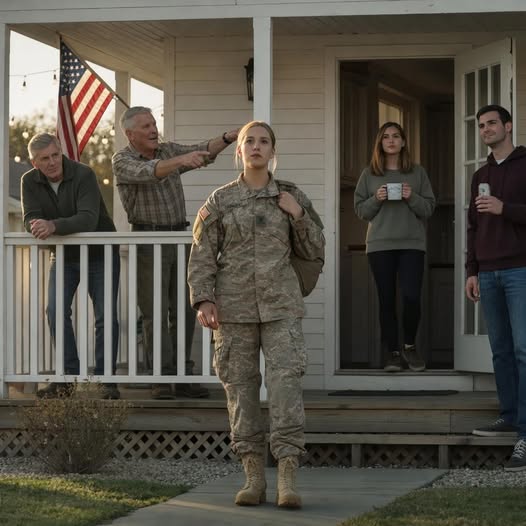
Then I saw them: my father and my brother Chad on the porch. Not waiting. Not welcoming. Their posture was wrong. My father’s arms were folded defensively. Chad leaned against the rail, beer in hand, smirking. Not smiling. Smirking. My stomach dropped.
The taxi stopped. I paid, slung my seabag over my shoulder, and walked toward the porch. Each step felt loud, deliberate, my senses alert. The air smelled of cedar and spilled beer.
“You’re homeless now,” my father said, bluntly.
No greeting. No welcome. Just the stark reality. I paused, adjusting the seabag, buying time to process.
“What are you talking about?” I asked, controlled, calm.
Chad snorted. “We sold your house, sis. Try to keep up.”
Their laughter followed. My father’s thin and nervous, Chad’s loud and satisfied.
The house behind them looked the same: familiar and harmless. But the porch felt alien, the ground beneath me foreign.
“You made a decision,” I said slowly, “about something that didn’t belong to you.”
His face tightened. “I had authority. You signed the papers.”
“I signed papers to handle bills and maintenance, not to sell the foundation of my life.”
Chad muttered, dismissive. I stared at him. “It’s the only place I’ve ever had that didn’t feel temporary. You don’t understand because you’ve never built something you were afraid to lose.”
The months of tension in Okinawa—the suspicious calls, the early-morning texts, the vague answers—culminated in this moment. I had anticipated issues, but nothing could have prepared me for betrayal from the people I trusted most.
I called the county recorder’s office, the VA legal team, and local authorities. Every step was methodical, deliberate. I documented, verified, and secured professional oversight. Emily, the new owner, was drawn in unknowingly, believing the sale was legitimate. I assured her of temporary support and transparency, determined not to let my father’s actions harm innocent people.
Investigations revealed the full scope: my father had acted beyond the limits of the power of attorney I had granted for limited financial matters. Chad had enlisted an intermediary with a history of fast property transfers. Fraud and misrepresentation had occurred.
Legal measures were swift. The intermediary was charged with multiple counts of fraud. My father entered a plea agreement, with restitution, probation, and restrictions on future power of attorney use. Chad was required to repay part of the restitution and undergo financial counseling. The house was returned to me.
Months later, I reclaimed the physical space of my home, restoring it with care: cleaning, replanting, fixing, and reinforcing boundaries. Emily and her family recovered their funds and relocated safely. My father and I now maintain cautious, measured communication; he is in therapy addressing past behavior, while I observe and protect my own life.
The lesson was stark: strength and resilience do not make one a resource to be exploited. Trust, once broken, must be rebuilt through action and accountability, not apologies alone.
Standing in my restored home, I recognize the clarity earned through confrontation and diligence. I acted to reclaim what was mine, ensuring that integrity, truth, and rightful ownership prevailed.
Homes, like people, remember those who fight for them. And in standing firm, I reclaimed more than a house—I reclaimed myself.