
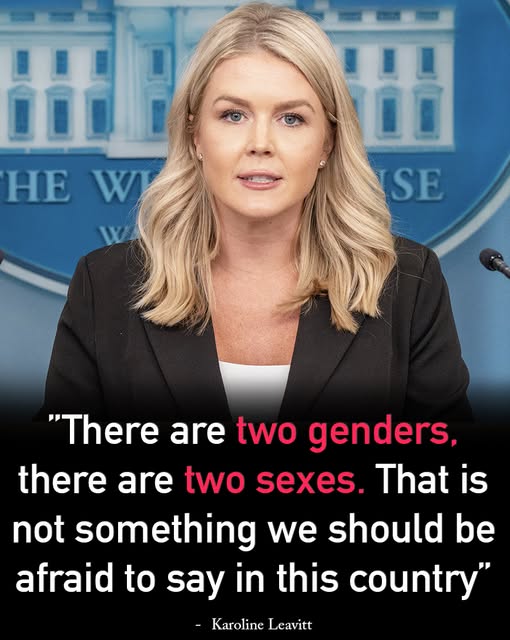
As the United States continues to navigate a period of heightened legal and cultural debate, tensions between the executive branch and the Supreme Court intensified following a consequential hearing focused on transgender participation in women’s athletics. The issue, which sits at the intersection of civil rights law, biological distinctions, and competitive fairness, has now drawn sharp public commentary from the White House.
White House Press Secretary Karoline Leavitt delivered a forceful response on Thursday, directing criticism at members of the Supreme Court’s liberal wing after oral arguments held earlier in the week. The hearing examined two closely watched cases that could significantly reshape how Title IX is interpreted and enforced in relation to sex-based protections in K–12 and collegiate sports.
At the core of the legal dispute is whether states may lawfully restrict participation in women’s sports to biological females, a question that has prompted legislative action in multiple jurisdictions and sparked national debate over fairness, inclusion, and equal opportunity in athletics.
Supreme Court Hearing Brings Issue to the Forefront
The Supreme Court’s oral arguments took place Tuesday and focused on challenges to state-level mandates governing athletic eligibility. These cases carry broad implications for how sex is defined under federal law, particularly within the framework of Title IX, the landmark statute designed to prevent sex-based discrimination in education programs and activities receiving federal funding.
During the proceedings, several justices engaged in pointed questioning of attorneys representing states that seek to maintain women’s sports as restricted to biological females. Justices Sonia Sotomayor, Elena Kagan, and Ketanji Brown Jackson played prominent roles in probing the legal reasoning behind such policies.
The questioning explored how state restrictions align with constitutional principles, federal anti-discrimination laws, and evolving interpretations of sex and gender. As is customary during oral arguments, justices posed hypothetical scenarios and challenged assertions to test the strength and consistency of the arguments presented.
While such exchanges are a routine aspect of Supreme Court hearings, the administration interpreted the tone and substance of the questions as indicative of a deeper philosophical disagreement over biological distinctions in sports.
White House Responds With Strong Rebuke
The White House responded swiftly following the hearing. During a press briefing on Thursday, Leavitt addressed the justices’ questioning directly, framing it as a troubling departure from what the administration considers established biological reality.
She described the line of inquiry from certain members of the Court as unsettling and suggested it reflected confusion over fundamental differences between men and women. Leavitt emphasized that acknowledging biological distinctions does not undermine equality, but rather supports the rationale for maintaining sex-based protections in athletic competition.
“I think, frankly, it was quite alarming to not only hear a couple of justices grapple over that basic fundamental biological fact that men and women are different but inherently equal,” Leavitt told reporters.
She further underscored the administration’s position that equality does not require identical treatment in all circumstances, particularly in competitive sports where physical differences can affect outcomes and safety.
“We are certainly different, and women deserve such rights,” she added.
The remarks marked a notable escalation in rhetoric, as press secretaries typically refrain from overt criticism of sitting Supreme Court justices, especially while cases remain under consideration.
Title IX and the Broader Legal Context
The cases before the Court are expected to influence how Title IX is applied in athletic settings nationwide. Enacted more than five decades ago, Title IX was designed to ensure equal access to educational opportunities regardless of sex, and it has been widely credited with expanding athletic opportunities for women and girls.
Over time, interpretations of the statute have evolved, particularly as societal understanding of gender identity has expanded. Recent years have seen increasing legal challenges over how Title IX should balance protections for transgender students with the preservation of sex-based athletic categories.
Supporters of biological-based eligibility rules argue that such policies are necessary to maintain fair competition and protect opportunities for female athletes. Opponents contend that excluding transgender athletes constitutes discrimination and undermines the inclusive intent of federal civil rights law.
The Supreme Court’s eventual rulings are expected to provide clarity on whether states have the authority to enforce sex-based participation rules without violating federal law.
Political and Cultural Implications
Leavitt’s statements reflect the administration’s broader stance on the issue, which emphasizes the preservation of women’s sports as distinct competitive categories. By publicly criticizing the Court’s questioning, the White House signaled that it views the matter as more than a technical legal dispute.
The administration has framed the debate as one rooted in what it describes as biological fact, asserting that recognizing physical differences between sexes is essential to protecting women’s rights in athletics. This framing resonates with many voters who express concern that long-standing athletic categories could be eroded by changing policies.
At the same time, the issue remains deeply polarizing. Advocacy groups, educators, athletes, and lawmakers continue to debate how best to balance inclusion with fairness, often arriving at sharply different conclusions.
Expectations Ahead of the Ruling
As the Court deliberates, the administration has made its expectations clear. Leavitt concluded her remarks with a direct reference to the pending decision and the outcome the White House hopes to see.
“We hope and expect that the Supreme Court will rule in the right way on this matter.”
The statement underscores the high stakes associated with the cases and the intensity of public interest surrounding them. A ruling is anticipated later this year, and its impact is likely to extend beyond sports, influencing broader legal interpretations of sex-based protections under federal law.
An Unusual Moment in Executive-Judicial Relations
Public criticism of Supreme Court deliberations by executive branch officials is relatively rare, particularly while cases are still under review. The episode highlights the depth of conviction within the administration regarding the issue and reflects the broader cultural significance attached to women’s sports.
As the nation awaits the Court’s decision, the debate continues to unfold across legal, political, and social arenas. The outcome is expected to shape policies affecting schools, athletic programs, and students nationwide, reinforcing the importance of the Court’s forthcoming ruling.
For now, the exchange between the White House and the Supreme Court serves as a reminder of the complex and often contentious relationship between branches of government when fundamental questions of law, identity, and fairness converge.