
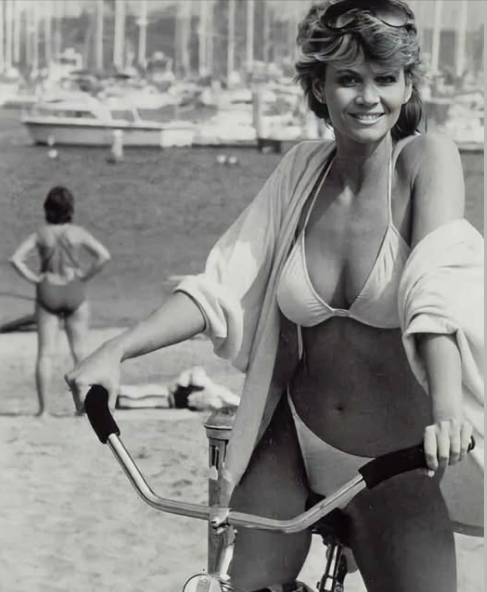
Markie Post was one of those rare performers who seemed to live in two worlds at once: the glamorous realm of television stardom and the warm familiarity of a trusted neighbor you could share coffee and conversation with. On screen, she radiated humor, grace, and a quiet strength that made her unforgettable. To millions, she was Christine Sullivan, the optimistic and big-hearted public defender on Night Court. But her life, like her career, told a much richer story.
Markie had a gift for balance—luminous yet approachable, glamorous yet grounded. She could draw laughter with impeccable comedic timing and, moments later, evoke deep emotion with a glance or a line delivered just so. For audiences, watching her was like being let in on a private joke she shared only with them.
Roots of a Star
Born Marjorie Armstrong Post on November 4, 1950, in Walnut Creek, California, Markie was raised in a home of contrasts: her father, Richard Post, was a renowned nuclear physicist, while her mother, Marylee, was a poet. That unique blend of intellect and artistry shaped her worldview. The nickname “Markie” began as a childhood mispronunciation of “Marjorie” by her siblings and stuck for life, perfectly suiting her spirited personality.
Though she initially tried to follow in her father’s academic footsteps—dabbling in physics and higher education—Markie quickly realized that numbers didn’t speak to her the way stories and characters did. Television, with its ability to connect strangers through shared experiences, fascinated her from an early age.
Behind the Scenes Before the Spotlight
Before becoming a recognizable face, Markie worked behind the camera. She was a researcher on game shows like Split Second and Double Dare, joking later that she learned more crafting trivia questions than she ever had in a classroom. This time backstage was her informal apprenticeship in entertainment—teaching her how shows were built and how audiences connected with what they saw.
But the stage was calling. By the late 1970s, she began landing small acting roles, appearing on popular series such as Cheers and Hart to Hart. These guest spots allowed her to hone her craft while hinting at the charisma and depth that would soon define her career.
The Breakthrough Years
Markie’s first big role came with The Fall Guy (1982–1985), where she played Terri Michaels, a savvy bail bondswoman working alongside Lee Majors. While the role brought visibility, Markie longed for characters with emotional depth and complexity.
That desire was fulfilled when she joined Night Court in 1985. As Christine Sullivan, she brought warmth, humor, and heart to a show known for its zany antics. Over 159 episodes, Markie turned Christine into more than a sitcom character—she became a friend to audiences, embodying resilience and kindness amidst chaos. Her ability to ground comedy in authentic emotion set her apart.
Markie often rejected the “bombshell” label attached to her.
“I’m no sexual siren,” she once laughed. “I see prettier girls than me in the grocery store every day.”
Yet the camera adored her—not just for her beauty, but for the intelligence and humanity she brought to every role.
Beyond Night Court
Markie continued to reinvent herself well beyond her sitcom success. In 1998, she surprised audiences with her hilarious turn as Cameron Diaz’s eccentric mother in There’s Something About Mary, proving her comedic skills could translate to big-screen success. Later, she took a dramatic leap as Barbara “Bunny” Fletcher on Chicago P.D., showing a grittier side of her talent.
She described her acting approach as “leap and figure it out later,” likening herself to Wile E. Coyote charging off a cliff without looking down. This fearless spirit allowed her to take risks and thrive across genres for more than four decades.
A Life Built on Love and Family
Off-screen, Markie built a life rooted in love and stability. She met her husband, writer-producer Michael A. Ross, in an acting class in the early 1980s. The pair married and raised two daughters, Kate and Daisy, creating a close-knit family home in Toluca Lake.
When asked about the secret to their nearly 40-year marriage, Markie offered simple wisdom:
“If 80 percent of a marriage is wonderful, that’s enough. You just commit to reach the end together.”
Family remained her grounding force, even as her career flourished.
Grace Amid Challenge
In her final years, Markie quietly battled cancer, referring to it with wry humor as her “side job.” Even during treatment, she continued acting, appearing in projects like The Kids Are Alright. Her resilience and passion never faltered, and she faced her illness with the same humor and determination that marked her entire life.
When she passed away on August 7, 2021, at age 70, the response was overwhelming. Fans, friends, and colleagues flooded social media with tributes. Melissa Joan Hart, who played her daughter in Holiday in Handcuffs, called her “an angel here on earth,” praising her sweetness and strength.
Her Enduring Legacy
Markie’s family remembered her not just as a star, but as a devoted mother and friend—the woman who baked intricate birthday cakes, sewed curtains for her daughters’ apartments, and modeled generosity daily.
Her legacy is found in every laugh she inspired, every heartfelt moment she brought to life on screen, and every act of kindness she offered behind the scenes. She proved that the greatest measure of a performer isn’t fame, but connection.
As reruns of Night Court continue to bring nostalgic smiles, as new generations discover her film and television work, Markie Post’s spirit lives on. She remains a beacon of warmth and humor in an often-chaotic world—a reminder that grace, laughter, and courage can leave a legacy that shines long after the final curtain.
Markie once said she didn’t see herself as extraordinary, just someone doing her best to tell stories. But to millions who watched her, she was exactly that: extraordinary. And like the best stories, her light will never fade.