
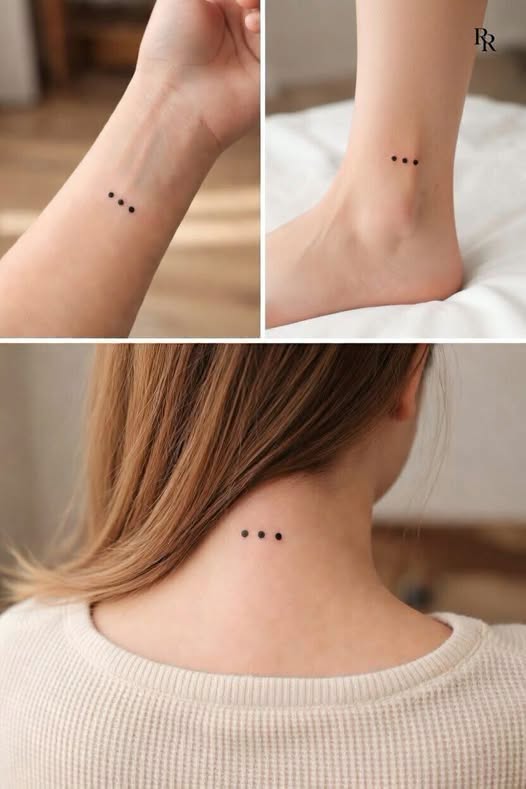
Three-Dot Tattoo Meaning: How a Small Symbol Can Represent Silence, Loyalty, and Identity
A Simple Design With Complicated Meanings
The three-dot tattoo is one of the simplest designs a person can choose, yet its meaning may be far more complicated than its appearance suggests.
Usually created as three small marks arranged in a triangular pattern, the tattoo is commonly placed on the hand, between the thumb and forefinger, or near the knuckles.
Its significance is not universal. The same pattern can represent silence, loyalty, hardship, rebellion, imprisonment, brotherhood, or personal identity depending on the wearer’s background and the environment in which it appears.
Because the design is used in different cultures and subcultures, it should not automatically be interpreted in only one way.
For some people, the tattoo reflects experiences connected to prison or criminal life. For others, it represents a difficult past, a commitment to trusted companions, or a refusal to speak about matters involving their group.
Its meaning can also change over time. A mark that once represented participation in a particular lifestyle may later become a reminder of survival, regret, or personal transformation.
The Connection to the Three Wise Monkeys
One interpretation of the three-dot tattoo connects it with the idea of the “Three Wise Monkeys”: see no evil, hear no evil, speak no evil.
The well-known concept is often understood as a warning against engaging with wrongdoing or spreading harmful information.
Within prison or criminal environments, however, the phrase may take on a more specific meaning.
Instead of serving only as a general moral lesson, it can represent a strict code of silence.
Under that interpretation, the wearer may be signaling that they do not cooperate with authorities, disclose private information, or betray other members of their group.
The three dots can therefore function as a quiet statement about what the person has seen, heard, and chosen not to reveal.
In settings where trust is difficult to establish and speaking openly may carry serious consequences, such a symbol can communicate allegiance without requiring words.
A Symbol of Silence
Silence is one of the most frequently associated meanings of the three-dot tattoo.
In prison systems and criminal subcultures, remaining silent may be treated as an important rule of survival and loyalty.
A person may be expected not to identify others, provide information to authorities, or discuss activities that could expose the group.
The tattoo may represent acceptance of that rule.
Its visible placement on the hand can make the message recognizable to people familiar with the symbol while remaining unclear to outsiders.
That allows the design to operate almost like a private language.
Those who understand the code may view it as a sign that the wearer can be trusted to keep certain information confidential.
However, the symbol alone does not prove that someone has engaged in criminal behavior or refused to cooperate with law enforcement.
Context remains essential because tattoos are often copied, reinterpreted, or chosen for personal reasons that have little connection to their traditional meaning.
Loyalty and Brotherhood
The three-dot tattoo may also represent loyalty to friends, companions, or members of a close community.
Within prison environments, trust can become especially important because individuals may depend on one another for protection, information, and emotional support.
A small tattoo can serve as a permanent sign of that bond.
For some wearers, the dots express brotherhood and solidarity rather than direct involvement in a particular offense or organization.
The design may show that the person values unity, respect, and commitment to those who share similar experiences.
It can also indicate that the wearer follows an informal code of conduct.
That code may emphasize keeping promises, defending trusted companions, maintaining secrecy, and refusing to abandon others during hardship.
In this sense, the tattoo is not merely decorative. It becomes a statement about the relationships and principles that the wearer considers important.
A Marker of Shared Values
Symbols often become powerful because they allow people to recognize one another quickly.
The three-dot tattoo can identify individuals who share similar beliefs, experiences, or rules of behavior.
Someone familiar with the pattern may understand it as evidence that the wearer has lived within a particular environment or accepted a specific set of expectations.
Respect, secrecy, and solidarity are frequently connected to that interpretation.
The tattoo may communicate that the wearer places group loyalty above personal disclosure.
It can also suggest that certain experiences are understood only by people who have lived through similar circumstances.
This sense of belonging may be especially meaningful to individuals who have felt excluded from conventional society.
A visible symbol can provide identity within a smaller community, even when that identity carries risks outside it.
A Permanent Record of Past Experiences
In some cases, dot tattoos are used as personal records.
Additional dots may represent periods of incarceration, individual sentences, or important stages in a person’s life.
The marks can therefore operate like a private timeline written on the body.
Each dot may refer to an event that the wearer does not openly explain to others.
For someone who has spent time in prison, the tattoo may become a permanent reminder of confinement, hardship, survival, or choices made in the past.
The meaning may be painful, proud, cautionary, or emotionally mixed.
A person might view the marks as evidence of endurance, while another may see them as a warning not to return to the same lifestyle.
Because such interpretations are personal, even people with similar tattoos may attach very different stories to them.
Association With Russian Prison Culture
The three-dot tattoo is often discussed in connection with Russian prison culture.
In that environment, tattoos may communicate detailed information about a person’s history, status, beliefs, or relationships.
Body markings can function as a complex visual system understood by people familiar with prison customs.
A simple pattern may carry information that is not immediately obvious to the general public.
Within that broader tradition, dots can be linked to silence, criminal identity, incarceration, or loyalty.
However, meanings may differ between facilities, regions, generations, and individual groups.
It is therefore inaccurate to assume that every three-dot tattoo connected to Russian prison culture has one fixed interpretation.
The wearer’s placement, additional symbols, personal history, and surrounding circumstances may all affect what the design communicates.
The Latin American Meaning
In Latin American contexts, the three-dot tattoo is often connected with the phrase “Mi Vida Loca” or “My Crazy Life.”
This interpretation usually reflects a life marked by danger, rebellion, unpredictability, or disregard for conventional expectations.
The tattoo may express acceptance of a difficult lifestyle rather than regret over it.
For some wearers, the phrase represents surviving instability and continuing forward despite harsh circumstances.
For others, it can signal identification with street culture or a life shaped by risk.
The dots do not necessarily refer to one specific criminal organization.
Instead, they may represent a broader attitude toward life, particularly one involving struggle, defiance, and loyalty to a chosen community.
The meaning can still overlap with ideas of silence and belonging, even when the cultural explanation differs from interpretations found elsewhere.
Identity Is the Common Theme
Although the details vary, identity remains one of the strongest themes connected to the three-dot tattoo.
The design can tell others that the wearer belongs to a group, has endured a certain experience, or follows a particular code.
It may also help the wearer define themselves after periods of instability or hardship.
Tattoos can preserve memories that a person does not wish to explain repeatedly.
A few small marks may contain an entire history of relationships, losses, mistakes, or survival.
The design’s simplicity makes it easy to overlook, but that same simplicity allows it to carry private meaning.
The wearer may understand the dots in a way that no outside observer ever fully can.
Possible Connections to Gang Affiliation
In some environments, the three-dot tattoo may be associated with gangs or organized criminal groups.
Its presence can sometimes be interpreted as a warning that the wearer has connections to a dangerous community.
That interpretation may affect how other people approach or respond to the individual.
However, the tattoo should not be treated as automatic proof of gang membership.
Symbols can travel far beyond the environments where they first became common.
People may copy a design without understanding its history, choose it because of its visual simplicity, or give it an entirely personal meaning.
Someone may also continue carrying the tattoo long after leaving the group or lifestyle with which it was once connected.
Judging affiliation from a single mark can therefore lead to inaccurate assumptions.
Visible Tattoos Can Create Lasting Consequences
A tattoo placed on the hand is difficult to hide during daily activities.
That visibility can create problems for people whose markings are associated with prison, gangs, or criminal behavior.
Employers, strangers, officials, and community members may form immediate opinions before learning anything about the person’s current life.
A wearer may face suspicion even after leaving the circumstances that gave the tattoo its original meaning.
Past experiences can remain visible long after behavior, relationships, and priorities have changed.
This can make reintegration more difficult for individuals attempting to build new careers or social connections.
The tattoo may become a barrier during job interviews, housing applications, or ordinary public interactions.
Even when the wearer no longer identifies with the symbol, other people may continue interpreting it through its most negative associations.
Discrimination Based on Appearance
Visible body art can influence how a person is treated, especially when the design has a reputation connected to criminal activity.
Someone with a three-dot tattoo may be viewed as dangerous, untrustworthy, or involved with a gang without any supporting evidence.
Such reactions demonstrate how symbols can shape social judgment.
The meaning assumed by an observer may be very different from the meaning intended by the wearer.
A person might have received the tattoo during a difficult period, inherited its significance from friends, or selected it as a reminder of personal survival.
Yet outsiders may see only a warning sign.
This difference between intended and perceived meaning can follow a person for years.
The Symbol May Outlast the Lifestyle
Tattoos are permanent even when circumstances are not.
A person may leave prison, end contact with a group, change beliefs, or completely rebuild their life while the original marks remain visible.
Over time, the tattoo’s meaning may shift from loyalty to regret or from rebellion to reflection.
It can become evidence of a past the wearer has worked hard to overcome.
Some people may choose to cover or remove the design, while others keep it as a reminder of where they came from.
For those who retain it, the three dots may represent both the person they once were and the changes they have made since then.
This makes the tattoo’s meaning impossible to understand fully without knowing the individual story behind it.
Placement Can Affect Interpretation
The location of the three dots can influence how the design is understood.
Placement between the thumb and forefinger is especially common and highly visible.
Dots near the knuckles may be easier for others to recognize and may appear alongside additional prison or street-related symbols.
A similar pattern placed elsewhere on the body could have a more private or decorative purpose.
The surrounding tattoos may also provide important context.
When the three dots appear alone, their meaning can remain ambiguous.
When combined with names, numbers, letters, or other recognizable markings, the intended message may become clearer to people familiar with the symbolism.
Why Context Matters
No tattoo should be interpreted without considering context.
Geography, culture, age, personal history, and placement can all change the meaning of the same design.
A pattern associated with prison in one country may represent personal spirituality, friendship, or rebellion somewhere else.
Even within the same community, individuals may disagree about what the three dots mean.
Assuming that every wearer shares the same background ignores how widely tattoo symbols spread and change.
The safest conclusion is that the design may carry serious associations, but its exact significance belongs to the individual wearing it.
More Than Decorative Body Art
The three-dot tattoo demonstrates how a very small image can hold a large amount of meaning.
It may represent silence toward authorities, loyalty to companions, survival through incarceration, or acceptance of a dangerous and unpredictable life.
It can also express belonging within a group whose members share experiences that outsiders do not understand.
For some, the tattoo is worn with pride.
For others, it is a lasting reminder of hardship or a past they no longer wish to repeat.
Its meaning can be protective, rebellious, painful, or deeply personal.
A Small Mark With a Powerful Story
The three-dot tattoo cannot be reduced to one simple definition.
Its associations with the “Three Wise Monkeys,” codes of silence, loyalty, prison culture, gang identity, and “Mi Vida Loca” all contribute to its complicated history.
The design may communicate trust and brotherhood within one setting while creating suspicion and discrimination in another.
It can connect a person to a community, but it can also make it harder to leave that community behind.
Ultimately, the true meaning depends on the wearer, the culture surrounding the tattoo, and the experiences that led to its creation.
The three small dots are a reminder that body art does not need to be elaborate to carry a powerful message.
Even the simplest mark can preserve a story of loyalty, struggle, identity, survival, or change.