
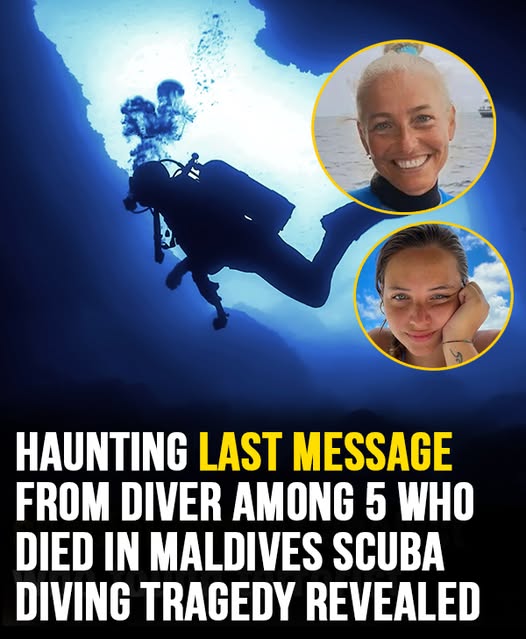
Last Message of Marine Biologist Emerges After Maldives Diving Tragedy Claims Five Lives
A Devastating Diving Disaster in the Maldives
The final words of one of the marine biologists who died in the Maldives diving tragedy have emerged as families, colleagues, and officials continue trying to understand how the expedition ended in such devastating loss.
Five divers died last Thursday during a scuba diving incident in Vaavu Atoll, part of the Indian Ocean archipelago. The victims were later identified as University of Genoa marine biology professor Monica Montefalcone, her 20-year-old daughter Giorgia Sommacal, Muriel Oddenino, Gianluca Benedetti, and Federico Gualtieri.
The tragedy has caused deep shock because several members of the group had strong professional ties to marine science and diving. Their deaths have raised painful questions about what happened inside the underwater cave system where the fatal incident unfolded.
The sorrow surrounding the disaster grew even heavier after a Maldivian military rescue diver also died from decompression sickness during an attempted recovery mission.
The combination of the original accident and the later death during recovery efforts has made the incident one of the most heartbreaking diving disasters connected to the Maldives.
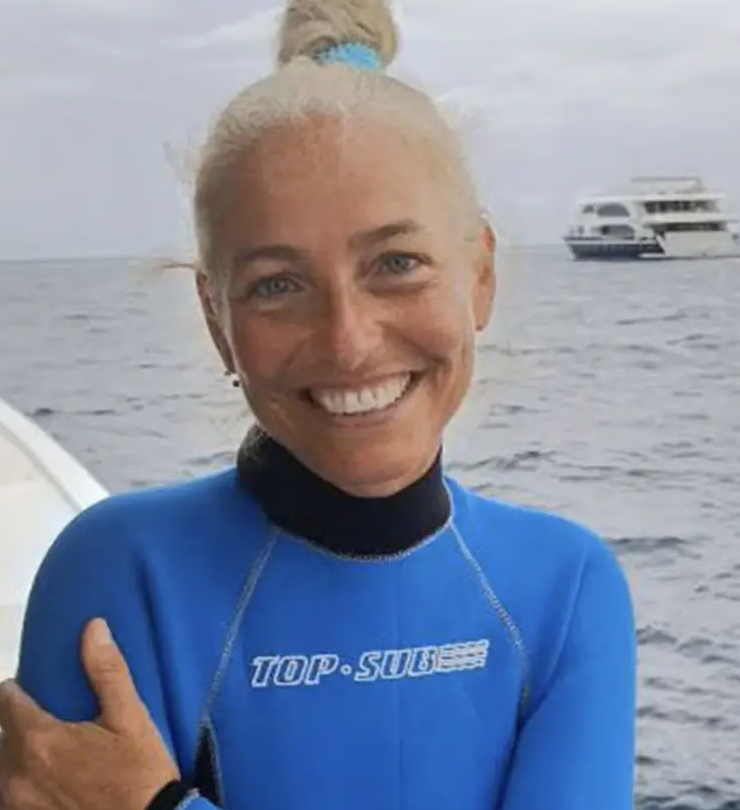
The Dive That Ended in Disaster
The divers are believed to have been exploring caves at a depth of around 50 metres, or 164 feet. The underwater environment where the accident occurred was difficult, deep, and dangerous.
Cave diving presents challenges that are far more complex than ordinary open-water diving. Visibility, depth, air supply, navigation, and pressure all become critical factors, especially when divers enter enclosed underwater passages.
In this case, the exact sequence of events remains unclear. Authorities and specialists are still trying to determine what caused five experienced divers to lose their lives during the same dive.
The incident occurred in Vaavu Atoll, an area known for marine beauty and underwater formations. But the same conditions that make such places attractive to divers can also create major risks when something goes wrong below the surface.
Once divers are inside a cave system, returning safely can depend on precise coordination, calm decision-making, and properly functioning equipment. Any sudden emergency can become fatal quickly.
The Victims Identified
The five divers who died have been identified as Monica Montefalcone, Giorgia Sommacal, Muriel Oddenino, Gianluca Benedetti, and Federico Gualtieri.
Montefalcone was a 51-year-old marine biology professor at the University of Genoa. Her daughter, Giorgia Sommacal, was 20 years old and was also part of the group.
Muriel Oddenino was among the divers who lost their lives, along with Federico Gualtieri and Gianluca Benedetti.
Benedetti, a diving instructor, had previously worked in banking before leaving that field and resettling in the Maldives to pursue diving full-time. His life had become closely connected to the underwater world.
So far, Benedetti is the only one of the five whose body has been recovered. Rescuers found him inside the cave on Thursday before poor weather forced teams to suspend operations.
Authorities believe the bodies of Montefalcone and the other three members of the group remain trapped inside the cave system.
A Husband and Father Questions the Tragedy
Carlo Sommaca, the husband of Monica Montefalcone and father of Giorgia Sommacal, has spoken publicly about the tragedy. He has questioned how five divers could have died during the same trip.
His grief is compounded by disbelief. He has emphasized that his wife was highly skilled and deeply experienced underwater.
Despite criticism from various experts about the decision to dive at such depth, Sommaca defended Montefalcone’s judgment. He said his wife “would never have put the life of our daughter or other kids at risk.”
He also expressed confidence in her diving ability, saying, “My only certainty is that my wife is one of the best scuba divers on the face of the earth.”
Those words reflect both sorrow and certainty. For her family, the idea that Montefalcone would knowingly take reckless risks is impossible to accept.
Her husband’s comments have added another emotional layer to the investigation, highlighting the difference between outside speculation and the family’s understanding of who she was.
Monica Montefalcone’s Last Message
One of the most poignant details to emerge after the tragedy is Montefalcone’s last known message to a colleague before the fatal dive.
On Wednesday, one day before her death, she wrote about the importance of observing and understanding the underwater world.
“It is fundamental to observe the underwater environment — which remains far too unknown to the general public — whether with our own eyes or through the lens of a robot,” Montefalcone wrote on Wednesday, one before her death.
The message now carries a painful weight. It reflects her commitment to marine research and her belief that the underwater world needed to be better understood.
Montefalcone had reportedly traveled to the Maldives to study how climate change is affecting tropical biodiversity. Her work was tied to the same marine environment where her life ended.
What began as a scientific journey into one of the world’s most remarkable underwater regions ended in tragedy, leaving colleagues and loved ones mourning both a person and a dedicated researcher.
A Mission Linked to Marine Science
Montefalcone’s presence in the Maldives was connected to the study of tropical biodiversity. The region’s marine ecosystems are sensitive to environmental change, making them important subjects for scientific observation.
Climate change has become an urgent concern for marine scientists, especially in tropical areas where biodiversity can be affected by warming waters and environmental stress.
For researchers like Montefalcone, direct observation of underwater environments plays an important role in understanding these changes. Her final message reflected that mission clearly.
She believed the underwater environment remained too unknown to the public. That belief shaped her work and her presence in the field.
The tragedy has therefore struck not only her family but also the broader scientific community connected to marine biology and conservation.
The Recovery Operation Faces Severe Challenges
Recovering the remaining bodies has proven extremely difficult. The underwater cave system is complex, and poor conditions have complicated efforts.
Italian Ambassador Damiano Francovigh described the challenges facing rescue crews. He explained that the cave is not a simple open passage but a structure divided into multiple connected parts.
“It’s a particularly complex dive because the cave is divided into three separate, interconnected segments,” Francovigh said.
That layout makes recovery operations dangerous and technically demanding. Divers must manage depth, air supply, visibility, navigation, and decompression while entering a confined environment.
Francovigh also explained the limitations faced by Maldivian divers attempting to enter the cave.
“The Maldivian divers were only able to enter the first two, then had to come up to allow time for decompression.”
His remarks show why the operation has been slow and dangerous. Even trained recovery divers must work within strict limits to avoid putting more lives at risk.
A Rescue Diver Also Dies
The tragedy deepened when a Maldivian military rescue diver died from decompression sickness during an attempted recovery mission.
Decompression sickness can occur when divers ascend after exposure to pressure without properly managing the release of dissolved gases in the body. It is a serious and potentially fatal condition.
The death of a rescuer underscores the danger of the recovery effort. It also shows that the cave system and depth involved continue to pose major risks even after the initial accident.
For those working to recover the remaining victims, the mission is emotionally urgent but physically hazardous. Every attempt requires careful calculation.
The loss of a rescue diver has added another family and community to the circle of grief surrounding the disaster.
Questions Over What Went Wrong
Experts have raised several possible explanations for what may have happened to the diving group. Among the theories discussed are oxygen toxicity and panic inside the underwater cave system.
Oxygen toxicity can become a serious threat during deep dives when breathing mixtures and pressure conditions create dangerous effects on the body. In an underwater cave, sudden symptoms could become catastrophic.
Panic is another dangerous possibility in cave diving. If visibility becomes poor or one diver experiences distress, the situation can escalate quickly in an enclosed environment.
Cave systems can make escape difficult, especially when divers must navigate through narrow or interconnected passages. The deeper and more complex the environment, the smaller the margin for error becomes.
At this stage, no final explanation has been confirmed. The uncertainty has added to the anguish of families and colleagues waiting for answers.
One of the Maldives’ Deadliest Diving Incidents
The Vaavu Atoll cave diving disaster has been described as the deadliest single diving incident in the history of the Maldives.
The Maldives is internationally associated with diving, coral reefs, marine life, and underwater tourism. Fatal diving incidents are rare compared with the large number of people who visit the region for ocean activities.
That rarity makes the scale of this disaster especially shocking. The deaths of five divers in one incident, followed by the death of a rescue diver, have left a deep mark.
The tragedy has also renewed attention on the risks of advanced diving, especially in caves and at significant depth. Even experienced divers can face circumstances that become impossible to survive.
For the families involved, however, the disaster is not defined by statistics. It is defined by the sudden loss of people they loved.
A Community in Mourning
The deaths of Montefalcone, Sommacal, Oddenino, Benedetti, and Gualtieri have left colleagues, friends, and relatives grieving across countries and professional communities.
Montefalcone’s work in marine biology gave her a public scientific identity, but her death is also deeply personal for those closest to her. The loss of her daughter Giorgia in the same incident makes the tragedy even more painful.
Benedetti’s life story also adds emotional depth to the disaster. He had changed the direction of his life to follow his passion for diving in the Maldives, only to die in the environment that had become central to him.
Each of the victims carried a separate life, separate relationships, and separate hopes into the dive. The scale of the loss cannot be measured only by the number of people who died.
It is measured in the families left behind, the scientific work interrupted, the friendships ended, and the questions that remain unanswered.
The Search for Answers Continues
As recovery efforts and investigations continue, the central question remains: how did five divers die during the same expedition?
The husband of Monica Montefalcone has rejected any simple explanation that frames the group as reckless. He has emphasized her skill, judgment, and care for the lives of others.
At the same time, experts continue examining the dangers of the dive itself, including depth, cave structure, breathing conditions, and the possibility of panic or oxygen toxicity.
The remaining bodies are believed to still be inside the cave system, making the search for complete answers even more difficult. The dangerous conditions have already cost the life of a rescue diver.
Until the investigation is complete, uncertainty will remain part of the tragedy. Families are left grieving while also waiting to understand what happened beneath the surface.
A Final Message That Now Feels Haunting
Monica Montefalcone’s final known message has become a haunting reminder of her life’s work. She wrote about the need to observe the underwater world because it remained too unknown to the general public.
Those words now stand in painful contrast to the mystery surrounding her final dive.
She had gone to the Maldives to study the effects of climate change on tropical biodiversity. She entered the water as someone committed to understanding the sea, not as someone careless with its dangers.
The tragedy in Vaavu Atoll has left behind grief, unanswered questions, and renewed awareness of the risks that can come with deep cave diving.
For those who loved the victims, the search is not only about recovering bodies or reconstructing events. It is about honoring the lives of people who went beneath the surface and never returned.
Montefalcone’s last words now echo with both purpose and sorrow. They speak of a world beneath the water that remains largely unknown, and of a scientist whose final journey ended in the very environment she had devoted herself to understanding.