
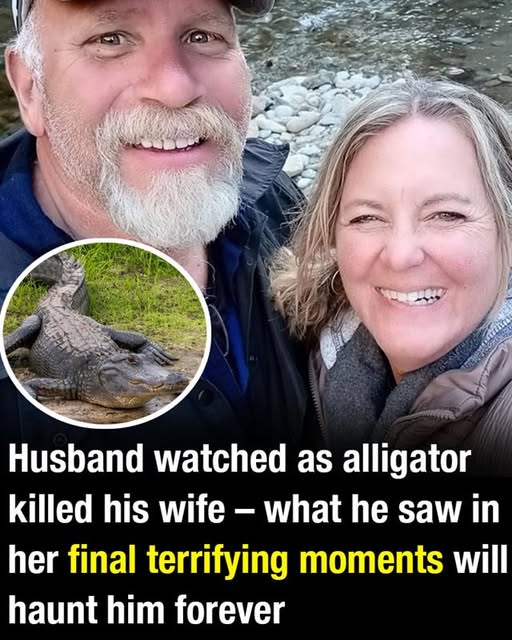
Florida Woman Dies After Alligator Attack During Canoe Trip on Lake Kissimmee
A Canoe Trip Turns Into a Tragedy
A Florida woman died after an alligator attack turned a canoe outing with her husband into a deadly incident on Lake Kissimmee. What began as a quiet trip on the water ended in tragedy after the couple’s canoe was flipped near the mouth of Tiger Creek.
The attack happened on May 6, 2025. Cynthia Diekema, 61, was canoeing with her husband, Dave Dikema, in an area where the water was roughly 30 inches deep.
The couple had been moving through the lake when they passed an alligator. Moments later, the animal suddenly thrashed, causing the canoe to overturn.
Both Cynthia and her husband were thrown into the water. Cynthia fell onto the alligator after the canoe flipped, and the situation became immediately dangerous.
The alligator attacked her and dragged her away. Her husband survived, but he was unable to save her.
The Attack Near Tiger Creek
The area where the incident occurred was near the mouth of Tiger Creek on Lake Kissimmee. The couple were in shallow water, estimated at about 30 inches deep, when the encounter happened.
Before the attack, they had passed the alligator while canoeing. There was no indication in the account that the couple expected the animal to react as violently as it did.
Then the alligator thrashed. The sudden movement flipped the canoe and threw both people into the lake.
Because Cynthia landed on top of the alligator after falling into the water, the encounter became extremely close and immediate. The animal attacked her and pulled her away before her husband could stop it.
The terrifying speed of the event left little time to react. What had been a recreational outing became a fight for survival within seconds.
Her Husband Tried to Save Her
Dave Dikema tried to rescue his wife during the attack. He attempted to free her from the alligator’s mouth for several minutes, but he could not stop the animal from dragging her away.
He later described Cynthia as alert during the attack but unable to speak. He said she had a “puzzled look on her face.”
The description adds a deeply painful detail to the tragedy. Cynthia was conscious enough to be aware of what was happening, but she could not communicate as her husband fought to save her.
Despite his efforts, Dave could not break the alligator’s grip. The attack continued until Cynthia was pulled away into the lake.
Only her husband made it out alive.
Officials Search the Lake
After the attack, authorities became involved in the search for Cynthia. The Polk County Sheriff’s Office used a helicopter to help locate her body.
Officials with the Florida Fish and Wildlife Conservation Commission later recovered her body from Lake Kissimmee.
The recovery confirmed the worst possible outcome. What had begun as an emergency response became a fatal alligator attack investigation.
Officials determined that Cynthia died from “multiple blunt force injuries from an alligator.” Her death was ruled an accident.
The ruling reflected the conclusion that the fatal injuries occurred during the encounter with the alligator and that the incident was not classified as intentional or criminal.
Attack Not Believed to Be Predatory
Investigators said they did not believe the attack was predatory in nature. Even so, the alligator involved was considered dangerous enough that further action was taken.
The Florida Fish and Wildlife Conservation Commission requested that a nuisance alligator trapper respond to the scene.
The nuisance alligator program is used to remove alligators considered a threat to people, pets, or property. In cases involving serious attacks, trappers may be called to locate and remove alligators from the area.
The request reflected the seriousness of the incident, even though investigators did not describe the attack as predatory.
Alligator behavior can be unpredictable, especially when people are close to the animal in or near water. In this case, the canoe flipped after the animal thrashed, placing Cynthia directly in contact with the alligator.
FWC Calls the Incident a Somber Reminder
Following the fatal attack, officials emphasized that deadly alligator encounters are uncommon but still possible in Florida’s natural spaces.
“While alligator attacks resulting in fatalities are extremely rare, this tragedy serves as a somber reminder of the powerful wildlife that share our natural spaces,” FWC Executive Director Roger Young said.
The statement highlighted the difficult balance between enjoying Florida’s waterways and recognizing that they are also habitats for large wild animals.
Lake Kissimmee and surrounding waterways are part of a natural environment where alligators may be present. People using canoes, boats, or shorelines can come near wildlife even when they do not intend to.
The attack underscored the need for caution around bodies of water, especially in areas where alligators are known to live.
Alligators Captured After the Attack
Two days after the deadly incident, trappers captured an alligator matching the description of the one involved in the attack.
Officials said the reptile measured 11 feet, 4 inches long. Its size made it a powerful animal capable of causing severe injury.
Another alligator was also recovered from the area. That second animal was estimated to be between 10 and 11 feet long.
The recovery of both alligators reflected the effort to reduce further danger in the area after the fatal attack.
Large alligators can be especially concerning near places where people paddle, swim, fish, or spend time close to the water. Their presence does not always result in conflict, but encounters can become dangerous quickly.
Part of a Larger Pattern of Alligator Incidents
The fatal attack on Lake Kissimmee is one of several alligator-related incidents in Florida. The state has many lakes, rivers, wetlands, and canals where alligators live naturally.
Residents and visitors may encounter alligators in freshwater areas, especially near shorelines or shallow water.
Although fatal attacks are rare, the risk is not zero. People in Florida are regularly reminded to treat alligator habitats with caution and respect.
The Lake Kissimmee case stands out because it involved a married couple on a canoe trip and because the incident unfolded after the canoe passed an alligator in shallow water.
The sudden nature of the attack shows how quickly a peaceful outdoor activity can become dangerous when a large wild animal is nearby.
Safety Guidance Around Alligator Habitats
The Florida Fish and Wildlife Conservation Commission has reminded people to remain alert around bodies of water where alligators may be present.
The agency advises residents and visitors to stay aware in alligator habitats and keep a close watch on children near water.
People are also urged to swim only in designated areas and only during daylight hours. These precautions are intended to reduce the chance of dangerous encounters.
If an alligator attacks, the agency advises fighting back in an attempt to make the reptile release its grip.
These safety recommendations are important because alligators are powerful animals, and a close encounter in the water can become life-threatening quickly.
A Tragic Ending to an Ordinary Outing
Cynthia Diekema and her husband were canoeing in shallow water when the alligator encounter changed everything. The animal’s sudden thrashing overturned the canoe and threw them both into Lake Kissimmee.
Dave Dikema survived and tried desperately to save his wife, but he could not free her from the alligator. Cynthia was dragged away and later recovered by officials.
Her death was ruled accidental, with officials citing multiple blunt force injuries caused by an alligator.
The tragedy has served as a painful reminder that Florida’s natural beauty exists alongside powerful wildlife. Lakes, creeks, and wetlands may appear calm, but they remain shared habitats.
For Cynthia’s family, the incident was not a warning or statistic. It was a devastating loss that happened during what should have been an ordinary day on the water.
The attack near Tiger Creek remains a sobering example of how quickly conditions can change in alligator territory and why caution around Florida waterways remains essential.