
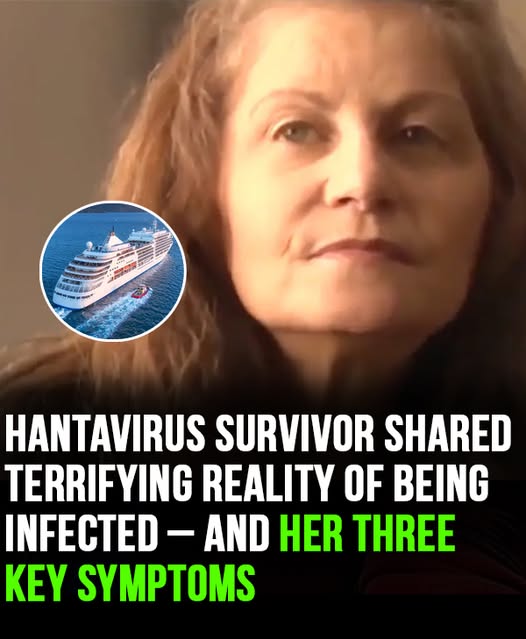
Hantavirus Survivor Describes Severe Illness as MV Hondius Outbreak Leaves Passengers Stranded
Fatal Outbreak Raises Alarm on Cruise Ship
A woman who survived hantavirus has described the frightening impact of the disease as concern grows over an outbreak linked to the Dutch cruise ship MV Hondius. The outbreak has so far been connected to the deaths of three people.
The situation has drawn international attention because nearly 150 passengers and crew members remain on the vessel. The ship is positioned off the coast of Cape Verde, where authorities have refused to allow anyone on board to disembark.
Several suspected infections have also been identified among people connected to the ship. The ongoing response has involved medical monitoring, evacuations, and coordination between multiple national authorities and health officials.
Hantavirus is not a single virus but a group of viruses carried by rodents, including mice and rats. Human infection can occur when people come into contact with contaminated droppings or urine, especially when particles become airborne and are inhaled.
Spread between people is rare. That distinction has become important as online concern has increased and some comparisons have been made between the cruise ship outbreak and the early stages of Covid-19.

Passengers Remain on Board MV Hondius
The MV Hondius came under global attention earlier this week after it became known that three passengers had died after becoming infected with hantavirus. The ship remains off the coast of Cape Verde while the response continues.
The situation has left passengers and crew members stranded. With nearly 150 people still on board, health authorities and the ship’s operator are monitoring possible cases and arranging medical care where required.
WHO Director-General Tedros Adhanom Ghebreyesus wrote on X on Wednesday: “Three suspected hantavirus case patients have just been evacuated from the ship and are on their way to receive medical care in the Netherlands in coordination with WHO, the ship’s operator and national authorities from Cabo Verde, the United Kingdom, Spain, and the Netherlands.”
He continued: “WHO continues to work with the ship’s operators to closely monitor the health of passengers and crew, working with countries to support appropriate medical follow-up and evacuation where needed.
“Monitoring and follow-up for passengers on board and for those who have already disembarked has been initiated in collaboration with the ship’s operators and national health authorities. WHO thanks all those involved. At this stage, the overall public health risk remains low.”
The response has included medical evacuations and ongoing observation of people still on the vessel. Passengers who have already left the ship are also part of the monitoring and follow-up process.
The overall public health risk has been described as low, but the circumstances remain distressing for those directly affected. For people on the ship, the uncertainty around possible exposure and symptoms has added to the fear surrounding the outbreak.
Health Experts Push Back on Covid Comparisons
As discussion of the outbreak has spread online, some people have expressed concern that the situation could resemble the beginning of the Covid-19 pandemic. That comparison has been rejected by WHO epidemiologist Maria Van Kerkhove, who emphasized that hantavirus is different.
During a recent press conference, she said: “This is not the next Covid, but it is a serious infectious disease. If people get infected, and infections are uncommon, they can die. People on the ship who are hearing this are very scared, rightly so,”
She added: “The general public might be scared as well. Accurate information is critical. Knowing what your actual exposure might be – most people will never be exposed to this.”
The message was intended to separate broad public fear from the actual pattern of exposure. Hantavirus infections are uncommon, and most people will never encounter the conditions that create a meaningful risk.
Even so, the disease can be extremely dangerous when infection does occur. The seriousness of the illness is one reason the situation aboard MV Hondius has triggered such a strong response.
The outbreak has also highlighted how frightening infectious diseases can become when they appear in a confined setting such as a ship. When passengers and crew are unable to leave, even a disease with rare person-to-person spread can create intense concern.
How Hantavirus Is Carried and Transmitted
Hantavirus is associated with rodents, particularly mice and rats. The viruses are carried by these animals and can be found in their droppings and urine.
People can become infected when contaminated material is disturbed and enters the air as dust. If that dust is inhaled, the virus can enter the body and cause serious illness.
This means that enclosed spaces where rodents have been present can become risky, especially if droppings or urine have dried and mixed with dust. Cleaning, entering, or disturbing such spaces may create exposure if proper precautions are not taken.
Although the outbreak on MV Hondius has raised widespread concern, human-to-human spread of hantavirus is rare. The primary risk remains exposure to infected rodents or contaminated environments.
The exact details of exposure connected to the ship have not been fully described in the provided information. What is known is that three passengers have died, suspected cases have been identified, and medical evacuations have taken place.
The ship remains under restrictions while authorities continue monitoring passengers and crew. The priority is to identify possible infections, provide medical care where needed, and prevent further health risks.
The Potential Severity of Hantavirus Illness
While many people may never be exposed to hantavirus, certain strains can cause severe disease. American strains are often linked to Hantavirus Pulmonary Syndrome, also known as HPS or HCPS.
This form of the illness affects the lungs and heart. It can progress rapidly and become life-threatening, especially when breathing problems develop.
The death rate in these cases has been described as between 20 and 40 percent. That range underscores why even a small outbreak can be treated as a serious medical event.
Symptoms may not appear immediately after exposure. In one survivor’s case, the first signs developed about a week after she entered a contaminated area.
The illness can begin with symptoms that may not immediately point to hantavirus. Fatigue, body pain, and other discomforts can appear before the condition worsens.
As the disease progresses, it may affect breathing and overall organ function. Severe cases can require hospitalization, intensive medical support, and ventilation.
Montana Survivor Recalls Brief Exposure
One survivor, Debbie Zipperian of Montana, experienced the severity of hantavirus after a brief visit to an old chicken coop on her ranch in 2011. She had entered the coop to collect her cat’s food plates.
She was inside for less than five minutes. That short period was enough for her to inhale dust contaminated with rodent droppings carrying hantavirus.
Debbie later described how close she had been to the contaminated material during that brief exposure. “My face was this close to it,” she said in 2018.
About a week after entering the coop, she began feeling unwell. Her symptoms included backaches, extreme fatigue, and severe neck pain.
At first, those symptoms did not immediately reveal the seriousness of what was happening. She made multiple hospital visits before receiving a diagnosis.
She was eventually diagnosed with HPS. By that point, her condition had become far more dangerous than the initial symptoms may have suggested.
A Rapid Decline in the Hospital
After Debbie was diagnosed, her health deteriorated quickly. The illness affected her body severely and led to frightening complications while she was in the hospital.
She experienced hallucinations and confusion. Her breathing also failed, leaving her in need of serious medical intervention.
“I flat-lined twice,” she said.
Doctors struggled to place her on a ventilator because she was stressed and difficult to sedate. Her condition was unstable, and the effort to support her breathing became part of the battle to keep her alive.
Her late husband later described how extreme her behavior became during the illness. He told her that she grew ‘hysterical like a rabid bobcat’.
The description reflected the severity of the neurological and respiratory distress she experienced. Hantavirus did not simply cause fatigue or pain; it pushed her into a life-threatening medical crisis.
Debbie eventually regained consciousness after spending a week in the hospital. Surviving the acute stage of the illness, however, did not mean she returned immediately to normal life.
Long-Term Effects After Survival
The virus left lasting damage. Debbie suffered spinal and neurological effects that continued after she regained consciousness.
She had to relearn how to walk. Recovery required more than rest; it involved rebuilding basic physical ability after the illness had taken a severe toll.
Even years later, the effects had not fully disappeared. In 2018, she continued to have difficulty with memory and concentration.
Her experience shows that survival does not always mean complete recovery. Hantavirus can leave lasting consequences that affect movement, thinking, and daily functioning.
The severity of her illness also helps explain the fear now surrounding the MV Hondius outbreak. For passengers and crew on the ship, the deaths and suspected infections have made the threat feel immediate and personal.
At the same time, health officials have stressed that the wider public risk remains low. Most people will not encounter the kind of exposure that typically leads to hantavirus infection.
Fear, Facts, and the Ongoing Response
The MV Hondius outbreak has created a difficult balance between public concern and accurate understanding. The deaths connected to the ship are serious, and those still on board are facing a distressing situation.
However, the disease does not spread in the same way as Covid-19. Human-to-human transmission is rare, and the usual route of infection involves exposure to contaminated rodent droppings or urine.
That distinction matters because fear can grow quickly during an outbreak, especially when people are stranded and suspected cases are still being evaluated. Clear information about exposure and risk is essential for passengers, crew members, and the general public.
The response involving medical evacuations, monitoring, and coordination between authorities is continuing. People on board remain under observation, and those already disembarked are also being followed up.
The case of Debbie Zipperian demonstrates why hantavirus is taken seriously even though infections are uncommon. A brief exposure in an old chicken coop led to respiratory failure, a week in the hospital, and long-term neurological and spinal damage.
For those connected to MV Hondius, the outbreak has turned a voyage into a medical emergency. Three people have died, suspected infections remain under review, and nearly 150 passengers and crew members are still waiting offshore while health measures continue.
The disease may not represent the same kind of global threat as Covid-19, but for infected individuals it can be devastating. That reality is now central to the concern surrounding the cruise ship and to the warnings from those who have lived through hantavirus firsthand.