
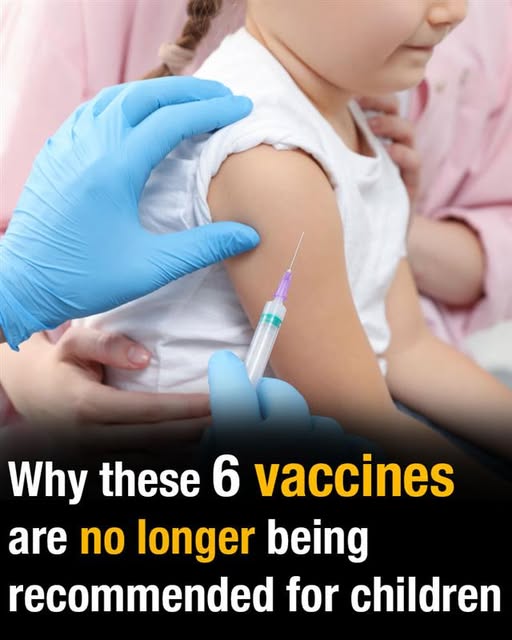
Revised U.S. Childhood Vaccine Guidelines Trigger Concern Among Medical Experts
Shift in Recommendations Sparks Debate
Vaccines have long been recognized as a cornerstone of public health, significantly reducing illness and preventing deaths, particularly among children.
A recent update to childhood immunization guidelines in the United States has prompted concern among parts of the medical community.
The changes mark a notable shift in how certain vaccines will be recommended moving forward.
New Guidance Announced in January
On January 5, updated recommendations were issued by the Centers for Disease Control and Prevention.
The revised guidance outlines changes to the routine vaccination schedule for children.
Under the new framework, six out of 17 vaccines will no longer be broadly recommended for all children.
The update is scheduled to take effect starting in 2026.
This adjustment represents a departure from previous guidance that had included these vaccines as part of standard immunization practices.
Review Process Behind the Changes
The Department of Health and Human Services described the revisions as the result of a scientific review of existing data.
The evaluation included comparisons between the United States and other developed countries.
Findings suggested that the U.S. had been recommending a larger number of vaccines than some of its global counterparts.
Countries such as Denmark and Canada were part of the comparison used during the review process.
Officials stated that the goal was to align the national schedule more closely with international practices.
Officials Cite Alignment and Transparency
Health Secretary Robert Kennedy Jr. addressed the changes, emphasizing alignment with broader global approaches.
“We are aligning the US childhood vaccine schedule with international consensus while strengthening transparency and informed consent,” he said.
The move also received support from Donald Trump, who described it as being grounded in strong scientific standards.
“rooted in the gold standard of science.”
List of Vaccines Affected by the Update
According to the revised guidelines, the following vaccines will no longer be broadly recommended for all children:
Hepatitis A
Hepatitis B
Influenza
Meningococcal disease
Rotavirus
Respiratory syncytial virus (RSV)
While these vaccines are being removed from universal recommendations, they may still be available in specific circumstances.
High-Risk Groups May Still Receive Vaccines
Health authorities indicated that certain vaccines will continue to be offered to children considered at higher risk.
This includes those for hepatitis A and B, RSV, dengue, and meningococcal disease.
The approach aims to focus protection on populations deemed most vulnerable.
At the same time, several core vaccines will remain widely recommended for all children under the updated schedule.
Medical Organizations Voice Strong Opposition
Despite the rationale provided for the changes, some medical organizations have expressed significant concern.
The American Academy of Pediatrics criticized the decision, describing it as both unnecessary and potentially harmful.
The reaction reflects broader unease within parts of the healthcare community.
Concerns Over Potential Impact
Healthcare professionals have warned that reducing routine recommendations could lead to increased illness.
Some fear that diseases previously kept under control may become more common if vaccination rates decline.
These concerns are rooted in the historical impact of immunization programs.
Data from the Centers for Disease Control and Prevention indicates that three of the vaccines affected have prevented nearly 2 million hospitalizations and more than 90,000 deaths over the past three decades.
This data has been cited by those who argue against scaling back recommendations.
Warnings From Medical Experts
Among those raising concerns is Dr. Sean O’Leary, who spoke about the potential consequences of the policy shift.
“They’re going to bring back suffering and death,” he said.
He emphasized the seriousness of the situation in his remarks.
“I don’t say that with any hyperbole, that’s exactly what’s going to happen.”
Balancing Policy and Public Health
The updated guidelines highlight an ongoing debate about how best to structure vaccination programs.
Balancing international comparisons, scientific analysis, and public health outcomes remains a complex challenge.
The decision has brought differing perspectives into focus.
Looking Ahead to Implementation
With the new recommendations set to take effect in 2026, attention is turning to how they will be implemented.
Healthcare providers, families, and policymakers are expected to continue discussing the implications of the changes.
The long-term effects of the revised guidelines will likely be closely monitored.
Continuing Discussion in the Medical Community
The conversation surrounding childhood immunization remains active, with experts examining the potential outcomes of the revised approach.
As new data emerges and the policy takes shape, the debate is expected to continue.
The focus remains on ensuring the health and safety of children while navigating evolving perspectives on public health strategy.