
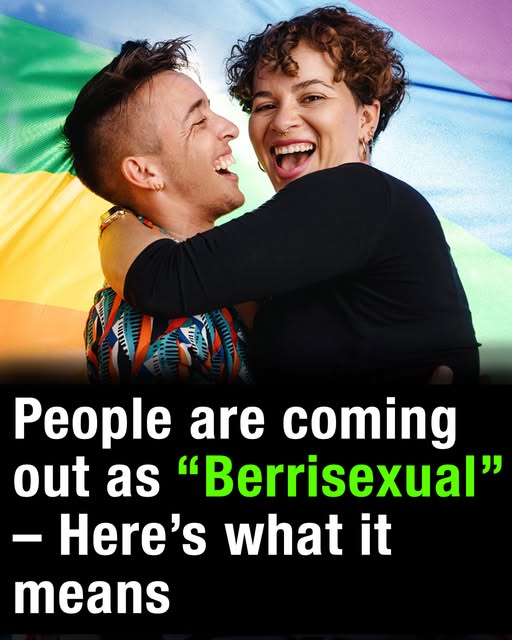
Understanding Berrisexual Identity and Its Meaning in Modern Attraction Labels
Changing Language Around Attraction
In recent years, the language used to describe human attraction has expanded significantly, with an increasing number of terms emerging to reflect the diverse ways people experience emotional and romantic connection. Alongside more widely known identities, newer and more specific labels have appeared to describe subtle variations in attraction patterns that some individuals feel are not fully captured by existing definitions.
Terms such as graysexual, demisexual, and almondsexual have already become part of this growing conversation, each offering a distinct way for individuals to articulate how they experience attraction. These identifiers reflect the idea that attraction is not always fixed or identical from person to person, but instead can exist on a broad and varied spectrum. As more of these labels become known, discussions around identity have become more detailed and nuanced.

This ongoing development of language reflects a broader cultural shift in how people understand personal identity. Rather than relying on a small set of categories, many now look for more precise ways to describe their own experiences. This has led to the introduction of additional terms intended to capture very specific patterns of attraction that might not align neatly with traditional definitions.
With this expansion, however, comes a growing sense of complexity. The increasing number of identifiers can make it challenging for individuals to keep track of all available terms. Despite this, many people continue to find value in having access to a wider vocabulary that allows them to better express how they relate to attraction and connection.
Introduction of the Term Berrisexual
Among the newer labels that have surfaced in discussions about attraction is berrisexual. This term is part of the broader trend of micro-identities that aim to describe more specific experiences of attraction across different genders and expressions.
Berrisexuality is generally understood as a form of attraction that spans multiple genders, while also reflecting differences in the intensity or frequency of that attraction depending on gender presentation. It is positioned within the wider spectrum of identities that seek to express nuanced variations in romantic or sexual interest.
Although relatively new compared to established terms such as bisexual and pansexual, berrisexuality has gained attention in certain online spaces where individuals discuss identity and personal experience. For some, it provides a way to articulate feelings that may not have felt fully represented by more general labels.
The concept continues to develop as more people engage with it and share how it relates to their own understanding of attraction. As with many emerging identity terms, its meaning is shaped in part by the individuals who use it and the contexts in which it is discussed.
Core Meaning of Berrisexuality
The central idea behind berrisexuality is that an individual may experience attraction across all genders, but with a noticeable variation in how that attraction is directed or expressed. In this understanding, attraction toward women, feminine-presenting individuals, and androgynous individuals may occur more frequently or feel stronger.
At the same time, attraction toward men or masculine-presenting individuals may still be present, but is generally described as less frequent, lighter in intensity, or secondary in comparison to other forms of attraction. This creates a pattern where attraction is not excluded based on gender, but instead varies in degree depending on presentation and personal experience.
This structure places berrisexuality within a group of identities that recognize fluidity in attraction while also acknowledging internal differences in preference or intensity. Rather than suggesting strict boundaries, it allows for variation and change in how attraction is experienced over time or across different individuals.
The flexibility of this definition means that berrisexuality can be interpreted in slightly different ways depending on personal understanding. However, the consistent element is the idea of attraction existing across genders with a noticeable shift in emphasis toward certain gender expressions over others.
Relation to Broader Attraction Categories
Berrisexuality is often discussed alongside broader identity terms that also describe attraction across multiple genders. These wider categories are generally used to express more inclusive or expansive patterns of attraction, without necessarily emphasizing differences in intensity between gender groups.
What distinguishes berrisexuality from these broader terms is the specific detail regarding how attraction may vary depending on whether an individual is masculine-presenting or feminine-presenting. Instead of describing equal or uniform attraction across all genders, it highlights a more layered experience where some forms of attraction may occur more frequently than others.
This distinction allows berrisexuality to function as a more specific identifier for those who feel that broader categories do not fully capture their personal experience. It provides a way to acknowledge both inclusivity of attraction across genders and the uneven nature of that attraction in practice.
As with many identity terms that exist within this spectrum, the boundaries between categories are not always rigid. Individuals may interpret and use labels in ways that best reflect their personal understanding, leading to a diverse range of self-descriptions within the broader conversation about attraction and identity.
Personal Identification and Expression
For individuals who identify with berrisexuality, the term can serve as a way to better articulate their lived experience. Having access to a more specific label can help some people feel that their pattern of attraction is more accurately described, particularly if they do not feel fully represented by more general terms.
The use of such identity labels also reflects a broader desire for clarity and self-understanding. By identifying patterns in attraction and assigning language to them, individuals are able to communicate aspects of their experience more clearly to themselves and others.
At the same time, the adoption of newer identity terms highlights the evolving nature of language around attraction. As people continue to explore and define their experiences, additional terms may emerge, while existing ones may also shift in meaning or usage over time.
Within this evolving landscape, berrisexuality represents one of many ways individuals may choose to describe the complexity of attraction. Its focus on varying intensity across different gender presentations provides a structured yet flexible framework for understanding personal experience.
As conversations around identity continue to expand, the presence of such terms reflects a broader movement toward more detailed and individualized expressions of attraction. This ongoing development underscores the diversity of human experience and the continued search for language that can accurately reflect it.