
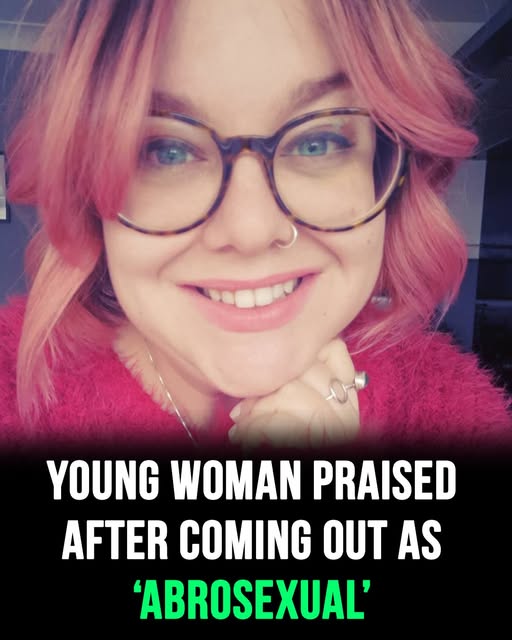
The experience of sexual attraction is often portrayed as fixed—a clear orientation discovered once and carried unchanged throughout life. Yet, for many individuals, desire is not static but fluid, shifting over time in ways that defy conventional labels. This fluidity has a name: abrosexuality. For those who identify as abrosexual, the term provides clarity and validation after years of uncertainty and self-questioning.
A Personal Journey: Emma Flint’s Story
Writer Emma Flint’s path to understanding her own fluidity illustrates the impact of having the right language. In a candid reflection on her thirty-year journey, Flint described decades of navigating a world that demanded a singular orientation. For much of her youth, she identified as a lesbian, but her attraction often shifted unexpectedly. At times, she found herself drawn to men, other times exclusively to women, and occasionally her desire disappeared entirely.
Flint described these fluctuations as both confusing and isolating. “I felt lost, as if out at sea,” she said, recalling the psychological toll of feeling inconsistent in a society that values clear categories. Her internal shifts were not indecision—they were simply her authentic experience of sexual fluidity. The discovery of the term abrosexual in an online forum provided a transformative moment. For the first time, Flint could name her experience: she was not confused; she was abrosexual.
What Abrosexuality Means
Abrosexuality is distinct within the LGBTQ+ spectrum. Unlike labels such as bisexuality or pansexuality, which describe the genders a person is attracted to, abrosexuality describes the nature of attraction itself. An abrosexual person experiences orientation that changes over time. This can include phases that resemble homosexuality, heterosexuality, bisexuality, or even periods of asexuality. The defining feature is movement between states, rather than a fixed destination.
The manifestation of abrosexuality varies widely:
Some experience daily shifts, with attraction changing as frequently as moods.
Others notice longer phases, lasting months or years, before transitioning to a new pattern of desire.
Periods of gray-sexuality or asexuality, where attraction diminishes temporarily, are also common.
This variability makes abrosexuality highly personal and sometimes difficult for others to understand.
Challenges and Misunderstanding
One of the most significant pressures abrosexual individuals face is the expectation of providing a clear, unchanging label. Flint described encounters with people who demanded she “pick a lane,” a request rooted in discomfort with ambiguity. Fluid identities are often dismissed as trends or indecision, yet this societal misunderstanding does not invalidate the lived experience. Authenticity lies in recognizing and accepting one’s internal reality, even when it shifts over time.
The abrosexual label provides an essential sense of validation. For years, Flint felt “broken” because her experiences did not align with rigid categories. Naming her fluidity allowed her to embrace it as a legitimate aspect of her identity rather than a flaw. Access to supportive communities and vocabulary can profoundly influence mental well-being, helping individuals feel recognized and understood.
Abrosexuality in Broader Context
Flint’s story underscores a broader truth: human attraction is not always linear. As language evolves, more people are able to describe complex experiences that previously went unacknowledged. Abrosexuality highlights that sexual orientation can be a spectrum not only in terms of gender preference but also in its temporal nature.
For those who are abrosexual, relationships often focus on the individual rather than a fixed gender category. This perspective allows for deep, meaningful connections that persist even as attraction fluctuates. Flint hopes that sharing her journey will normalize abrosexuality, shifting public perception from skepticism to recognition and respect.
The Value of Language in Identity
Words matter. They provide structure, validation, and a framework for understanding oneself. For people whose attraction changes over time, abrosexuality offers a sense of home and legitimacy. It serves as a reminder that attraction does not always follow a straight line; for some, it is a winding path full of discovery and self-awareness.
Ultimately, the journey toward self-acceptance is intertwined with the words we use to describe ourselves. Abrosexuality represents a pathway for individuals to embrace the natural shifts in their desires without judgment. By fostering understanding and visibility, society can create space for everyone to feel seen, understood, and at peace with who they are at any given moment.