
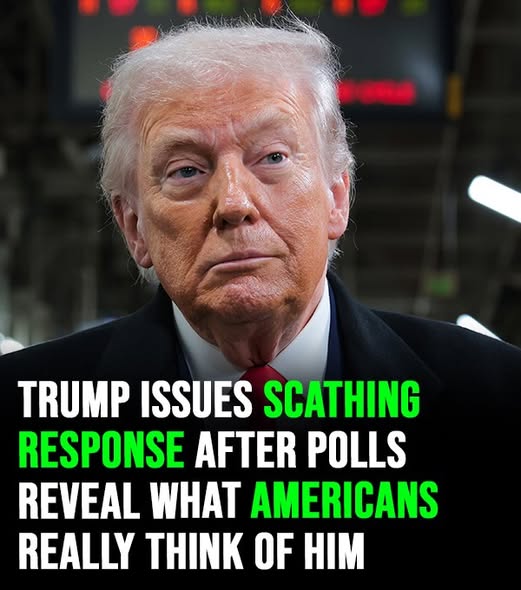
As the 2026 midterm elections approach, President Donald Trump’s approval ratings have become a focal point of national political discussion. Analysts, voters, and media outlets are scrutinizing the numbers as they reflect public sentiment about his second term in office.
Following the early months of his administration, which saw relatively steady approval, recent polling indicates a decline in public confidence. A growing portion of Americans now express disapproval of Trump’s leadership, particularly regarding key issues such as the economy and immigration.
The president has publicly pushed back against these findings, criticizing media organizations and pollsters for what he describes as misleading coverage and “fraudulent polling.”
Polling Data Reflects Declining Confidence
Recent surveys reveal a notable trend of dissatisfaction with Trump’s presidency. A January 2026 poll conducted by the Associated Press‑NORC Center for Public Affairs Research found that roughly four in ten U.S. adults approve of the president’s overall job performance, leaving a majority expressing disapproval.
The survey also highlighted public concerns over policy priorities. Many respondents indicated that Trump’s focus does not align with what they perceive as the nation’s most pressing issues. Economic performance and immigration enforcement, signature areas of his administration, received particularly low approval scores.
Specific data points from AP‑NORC include:
Only about 37–38% of adults approve of Trump’s economic leadership, a figure that has remained largely stagnant during his second term.
Approval of his handling of immigration has declined, signaling increasing public unease with how policies are being implemented.
A significant portion of respondents indicated that Trump is focusing on the wrong priorities for the country more often than the right ones.
These findings align with trends seen in multiple national polls, which consistently show the president’s approval ratings below the 50% mark. Disapproval frequently exceeds approval, with public sentiment closely tied to perceptions of the economy, immigration, and other major national issues.
Patterns Across Different Polls
While polling methods and timing vary, the broader data landscape presents a consistent pattern. National polling aggregators, such as RealClearPolitics, report Trump’s approval hovering in the low‑to‑mid 40% range, with disapproval typically in the mid‑50s or higher.
Independent surveys also indicate voter skepticism regarding Trump’s leadership and direction for the country. Many negative assessments are connected to ongoing economic pressures, including inflation, rising living costs, and uncertainties in foreign policy.
Issue‑specific approval ratings often fall below the president’s overall job rating, particularly for economic and immigration policies. Collectively, these surveys suggest a decline from the early enthusiasm observed in the beginning months of his second term, with a notable shift toward more critical public opinion.
Trump’s Response: Criticism of Media and Pollsters
In response to unfavorable polling, President Trump has repeatedly denounced surveys he deems inaccurate. Through statements on Truth Social and other public comments, he labeled some major polls as “fake and fraudulent,” asserting that media outlets and polling firms are misrepresenting his popularity and the public’s support.
Trump singled out major organizations, including The New York Times, accusing them of publishing biased numbers intended to undermine his administration. His commentary frames the issue as not merely inaccurate polling but as a serious offense, suggesting that pollsters and media institutions should face accountability for disseminating misleading information.
This rhetoric is consistent with his long-standing critique of media coverage, portraying news organizations as adversarial. Beyond public statements, Trump has pursued legal action against media outlets, including defamation lawsuits against The New York Times and others, rooted in prior reporting and events surrounding the 2024 election. Courts have emphasized the high threshold for defamation claims involving public figures under U.S. law.
Implications of Approval Ratings for Midterms
Approval ratings carry tangible political consequences. They shape campaign strategies, influence party resource allocation, and affect voter perceptions of candidate viability. Ratings below 50% are typically seen as a potential vulnerability for an incumbent, particularly when the party is defending slim congressional majorities.
Historical trends suggest that presidents with sub‑50% approval heading into midterm elections often face challenging environments for their party’s congressional candidates. Low approval can suppress voter enthusiasm among supporters, boost opposition turnout, and complicate messaging in down‑ballot races.
For Republicans, declining support for Trump’s priorities, such as immigration enforcement and economic policy, may signal potential weaknesses in key districts or states. Economic concerns, in particular, could sway voters in regions experiencing financial pressures, impacting both presidential and congressional dynamics.
Economic Perceptions Drive Public Opinion
The economy remains a central factor in presidential approval. Research from independent economic institutions shows that many Americans continue to view inflation, the cost of living, and wage stagnation as significant challenges.
Recent surveys indicate that roughly seven in ten adults rate the economy as fair or poor, a perception that heavily influences overall evaluations of Trump’s performance. Even when official labor market data or job growth statistics appear strong, individual experiences with rising grocery costs, housing affordability, and energy prices shape public sentiment more directly.
The gap between administration statements of economic strength and voters’ lived experiences contributes to the ongoing challenge in maintaining high approval levels.
Immigration, Foreign Policy, and Other Key Issues
Immigration, once a strong rallying point for Trump, now shows signs of declining public support. While border security and enforcement remain politically salient, criticism from various groups and widespread public protests have complicated the president’s messaging. Recent polls indicate record‑low approval for his handling of immigration, with only about four in ten adults expressing support.
Foreign policy also plays a role in shaping perceptions. Global conflicts, including tensions in the Middle East, Ukraine, and frictions with traditional allies, have led to mixed evaluations of presidential performance on international issues. Approval ratings for foreign policy frequently mirror or fall below overall presidential approval, further dampening public enthusiasm.
Partisan Support and National Polarization
Despite broader public disapproval, Trump retains strong backing among Republican voters, with majorities in his party continuing to support his leadership. Conversely, opposition is high among Democrats, and a sizable portion of independents express disapproval.
This internal division highlights the polarized state of contemporary U.S. politics. While Trump maintains a loyal base, winning broader national support remains challenging. Independent voters, often decisive in swing states, are demonstrating higher disapproval, suggesting possible obstacles for Republicans seeking to expand influence in competitive districts.
Critiques of Trump’s Poll Attacks
Political analysts and polling experts argue that dismissing unfavorable polls is a common tactic among elected officials. Polls provide snapshots of public opinion at a given time rather than predictive certainties, and variability between surveys is normal due to differing methodologies, sample sizes, and timing.
Experts emphasize that trends across multiple reputable polls offer a more accurate gauge of public sentiment than any single survey. Cross-referencing data and adhering to transparent methodology help ensure that polling reflects voter attitudes comprehensively.
Shaping the Narrative: Distrust of Media
Trump’s critique of media and polling resonates with a segment of the electorate that distrusts mainstream institutions. By framing unfavorable polls as politically motivated distortions, he reinforces skepticism toward traditional media and elevates alternative outlets that portray more favorable performance metrics.
While this strategy solidifies support within his base, critics argue it can deepen polarization by dismissing legitimate data as inherently unreliable. The debate over polling accuracy and media bias remains a central theme in the lead-up to the midterms.
A Critical Moment Ahead of Midterms
As the 2026 midterm elections draw near, Trump’s approval ratings and his public response to them are poised to remain central in political discourse. Control of Congress, voter turnout, and battleground states will be closely monitored by both parties, and approval numbers will play a critical role in shaping campaign strategies.
Recent data suggests that Americans are evaluating Trump primarily through the lens of economic performance, immigration policy, and national priorities. These perceptions are likely to continue influencing political narratives, voter engagement, and the strategic decisions of both parties throughout the election season.