
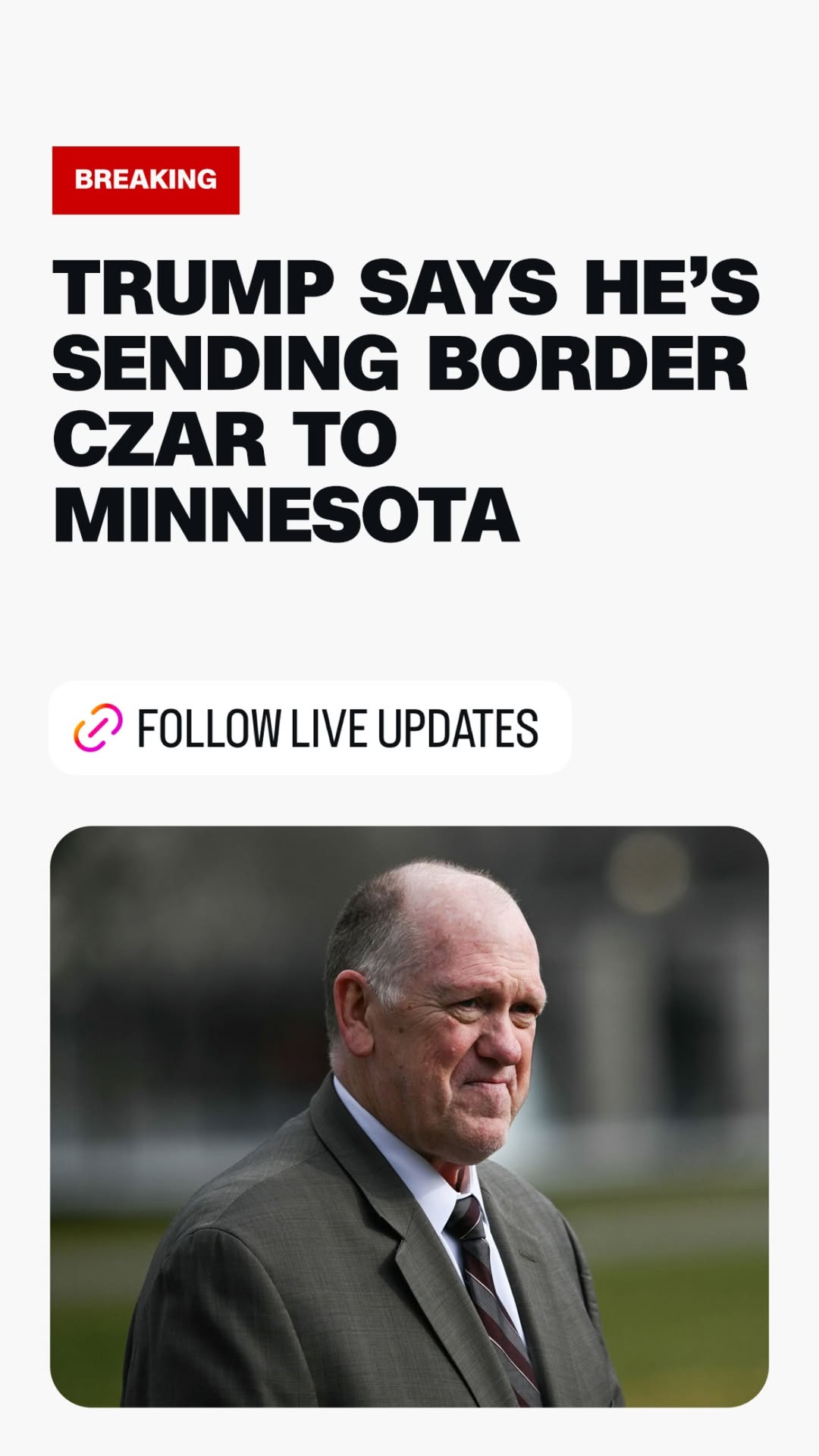
MINNEAPOLIS, Minn. — President Donald Trump announced that Tom Homan, a senior federal immigration official often referred to as a “border czar,” will be dispatched to Minnesota tonight in the wake of the fatal shooting of ICU nurse Alex Pretti. The shooting occurred during a confrontation with federal agents on Saturday, intensifying tensions over the federal immigration crackdown in the Minneapolis area.
Homan’s arrival signals a significant shift in federal leadership on the ground. Some Department of Homeland Security (DHS) officials view the move as a potential sidelining of Gregory Bovino, a top Border Patrol official who has been a key spokesperson defending federal agents’ actions. The administration maintains that Homan will oversee operations and ensure “orderly management” amid the heightened scrutiny of federal enforcement activities.
Federal Claims Under Scrutiny
Federal authorities have asserted that an agent shot Pretti in self-defense during the operation. According to DHS and Border Patrol officials, Pretti allegedly posed a threat during the encounter. However, federal officials have not released critical details supporting these claims.
Video footage and multiple eyewitness accounts have raised questions about the official narrative. Some videos show Pretti holding what appears to be a phone rather than a firearm, contradicting the assertion that he represented an immediate threat. Footage also depicts agents retrieving a weapon from Pretti’s waistband only after he was subdued.
These conflicting accounts have led lawmakers, including members of both parties, to demand a thorough investigation into the incident. Public officials and community leaders have emphasized that transparency is crucial to maintain trust and ensure accountability.
Court Hearings and Legal Proceedings
Several legal proceedings are unfolding as a result of Pretti’s death. A federal judge is scheduled to hear arguments on whether to temporarily halt the federal immigration crackdown in Minnesota. State officials argue that the enforcement actions have created a climate of fear and potentially violated civil rights. Federal representatives contend that the operation remains lawful and necessary to enforce immigration policies.
Separately, a federal court has issued a temporary restraining order preventing federal agencies from destroying or altering evidence related to Pretti’s killing. This order ensures that state authorities and investigators can access crucial evidence during ongoing investigations. Legal teams are currently presenting arguments regarding evidence preservation and oversight.
Community and Political Response
The killing of Alex Pretti has sparked outrage in Minnesota and across the nation. Vigils have been held in Minneapolis and surrounding areas to honor Pretti’s life and service as an ICU nurse. Community members have called for independent investigations, stressing the importance of impartial scrutiny of federal enforcement actions.
Political leaders from both parties have weighed in. Former President Barack Obama described Pretti’s death as a “tragedy” and emphasized the need for a full investigation. Several Democratic lawmakers have called for federal agents to be removed from the state, while some Republicans have urged clarity and transparency regarding the circumstances of the shooting.
In addition to political pressure, corporate and civic leaders in Minnesota have voiced concerns about ongoing unrest. Over 60 CEOs and the state’s major sports franchises issued an open letter urging federal, state, and local officials to “de-escalate tensions immediately” and work collaboratively to prevent further disruption to communities.
Background: Operation Metro Surge
The federal immigration enforcement campaign in Minneapolis, known as Operation Metro Surge, has deployed hundreds of ICE and Border Patrol agents to apprehend undocumented immigrants and conduct targeted enforcement actions. Critics argue that the operation has overwhelmed local communities and strained relationships with municipal law enforcement.
Pretti’s death is the second fatal incident involving federal immigration agents in the city within a few weeks. Earlier in January, a separate confrontation led to the death of Renée Nicole Good, prompting further scrutiny of federal operations and raising questions about the appropriateness of deploying armed agents in densely populated urban areas.
Key Questions Remain
As investigations and court hearings continue, several critical issues remain unresolved:
The precise sequence of events that led to Pretti’s death.
Whether the use of lethal force by federal agents was legally justified.
The accuracy of federal claims that Pretti was armed and posed a lethal threat.
The extent to which federal agencies may have hindered state and local investigations.
The long-term implications of deploying large numbers of federal agents in urban communities.
The Trump administration’s decision to send Tom Homan to Minnesota underscores the high stakes involved in managing both the operational and public perception aspects of the enforcement operation. Legal and political developments are expected to continue over the coming weeks, with the potential for additional court rulings and public scrutiny.
Ongoing Investigations
Minnesota state authorities have emphasized the importance of conducting a full and independent investigation into Pretti’s death. The temporary restraining order ensures that federal agencies cannot destroy evidence, preserving materials critical to determining the circumstances of the shooting.
Lawmakers, civil rights advocates, and community members alike have called for transparency and accountability. The ongoing court proceedings and federal review may provide clarity, but questions surrounding federal immigration enforcement, the use of lethal force, and agent conduct remain at the forefront of public debate.
Public Safety and Policy Considerations
The incident has raised broader concerns about federal enforcement policies in urban settings. Advocates argue that deploying heavily armed agents into densely populated neighborhoods without adequate coordination with local authorities can escalate tensions and lead to unintended consequences.
At the same time, federal officials maintain that aggressive enforcement is necessary to uphold immigration laws and deter illegal activity. Balancing operational priorities with public safety concerns remains a central challenge for both federal and state officials.
As Minnesota navigates these complex issues, communities continue to seek reassurance that investigations will be thorough and impartial, and that similar incidents can be prevented in the future.