
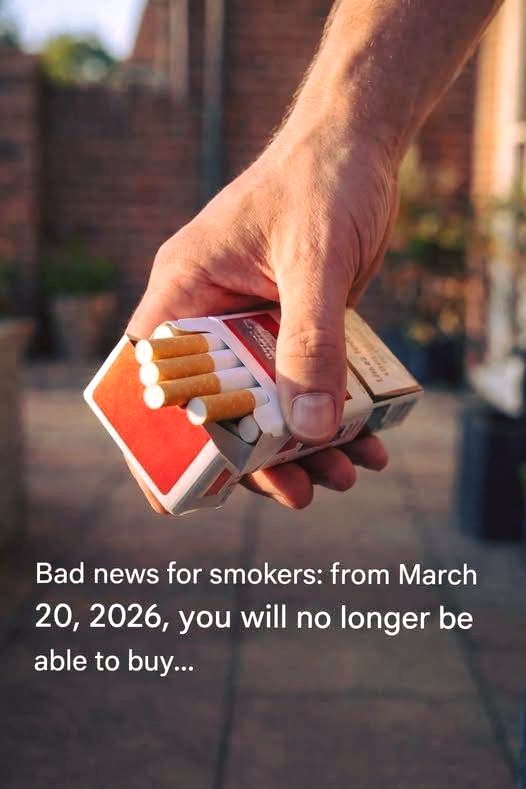
Why Cigarette Prices in France Have Continued to Rise Over Time
A Public Health Strategy Built Into Pricing
The price of cigarettes in France has risen steadily over several decades, and that increase has not happened by chance. It is the result of deliberate public health policy designed to reduce tobacco use across the country.
French authorities have long treated tobacco pricing as more than a commercial issue. The cost of cigarettes is used as a tool to influence behavior, discourage smoking, and reduce the long-term health consequences associated with tobacco consumption.
Taxation has become one of the government’s strongest methods for achieving that goal. By making cigarettes more expensive, public health officials aim to reduce smoking rates, especially among younger people who may be more sensitive to price increases.
This approach is part of a broader national effort to limit smoking-related illnesses, reduce healthcare costs, and prevent premature deaths. In that context, cigarette prices are closely tied to health policy rather than ordinary market competition.
As a result, the tobacco market in France operates under strict state control. Prices are not left entirely to retailers, and tobacco products are not treated like standard consumer goods.
How Cigarette Prices Are Controlled
In France, the retail price of tobacco products is not decided freely by shop owners. A formal regulatory process determines the price that consumers pay for cigarettes and other tobacco products.
Manufacturers or importers begin the process by proposing a retail price. That proposed amount includes several elements, such as production costs, distribution expenses, commercial margins, and taxes.
However, the proposed price does not automatically become the official selling price. It must be reviewed and approved by French authorities before it can be applied in the market.
The Directorate General of Customs and Indirect Taxes, known as DGDDI, plays a central role in this process. It is responsible for ensuring that tobacco pricing complies with national regulations.
This system allows the state to maintain control over tobacco pricing across the country. Once a price is approved, it becomes the official retail price and applies uniformly.
That means the same product must be sold at the same price in all licensed tobacco shops. The system is designed to prevent uneven pricing and to protect the public health goals behind tobacco policy.
No Discounts or Price Competition
Licensed tobacco shops in France, known as “tabacs,” must follow the official prices approved by the authorities. They cannot independently reduce prices or raise them according to local demand.
Tobacconists are not allowed to offer discounts, special promotions, or marketing campaigns that would make cigarettes cheaper or more attractive to consumers. This is a major difference between tobacco and many other products sold in shops.
For ordinary consumer goods, retailers often compete by changing prices, offering sales, or creating promotional deals. Tobacco sales in France are treated differently because price competition could weaken the government’s anti-smoking strategy.
If sellers were able to discount cigarettes, the public health impact of higher taxes could be reduced. Lower prices could encourage continued consumption or make it easier for new smokers to start.
By banning price competition, the government preserves the intended effect of its pricing policy. Every smoker pays the official price, regardless of the shop where the product is purchased.
This uniform pricing system is one reason cigarette prices in France remain consistent across the country. It also reinforces the state’s role in shaping tobacco consumption through regulation.
The Main Parts of a Cigarette Pack Price
The final retail price of a pack of cigarettes in France is made up of three main components. These are the manufacturer’s share, the tobacconist’s commission, and government taxes.
The manufacturer’s share is usually a relatively small part of the final price. It generally represents around 15 percent of what the consumer pays.
This portion covers production costs, logistics, business expenses, and profit margins for the manufacturer. Although manufacturers propose retail prices, their final share is limited by the heavy tax burden applied to tobacco products.
Tobacconists also receive a portion of the sale price. Their commission generally ranges between 8 and 10 percent.
This commission compensates licensed tobacco retailers for distributing tobacco products under strict state regulation. Their role is not simply commercial, because they operate within a system closely monitored by the government.
The largest part of the price is taxation. Taxes account for approximately 75 to 80 percent of the final retail price of cigarettes in France.
Why Taxes Dominate the Final Price
France places one of the highest tobacco tax burdens in Europe on cigarettes. This is the main reason cigarette packs have become so expensive over time.
The taxes included in the final price include excise duties and value-added tax. Both are built into the retail amount paid by the consumer.
Excise duties are the most important tax component. They are regularly adjusted through government financial laws and are a major driver of price increases.
Value-added tax, or VAT, is also included in the final retail price. This means consumers pay VAT as part of a price that already includes heavy tobacco-specific taxation.
The structure creates a high and consistent tax burden. Because taxes represent the dominant share of the price, even small changes in tax policy can significantly affect the cost of a pack.
For the government, this is intentional. The tax burden is designed to keep tobacco expensive enough to discourage consumption and support long-term anti-smoking goals.
How Excise Duty Is Calculated
Excise duty on tobacco in France is based on a mixed calculation system. It includes both a percentage of the retail price and a fixed amount based on the quantity of tobacco sold.
This dual system helps ensure that taxation remains strong across different cigarette brands and price categories. It prevents the tax burden from depending only on the price chosen by manufacturers.
If the tax amount calculated under this system falls below a legally defined minimum, the state applies the minimum tax automatically. This rule is important because it stops very low-priced products from escaping the intended tax impact.
Without such a minimum, manufacturers could attempt to lower prices in ways that would reduce the effect of taxation. The minimum tax level prevents that from happening.
As a result, cheaper brands are still subject to a substantial tax burden. This limits the price difference between lower-priced and premium cigarette brands.
The system helps maintain a high overall price level throughout the market. It also supports the broader objective of discouraging smoking through consistently elevated prices.
A Long-Term Increase Over Two Decades
The rise in cigarette prices in France has been especially clear over the past two decades. In the early 2000s, a standard pack of cigarettes typically cost around three euros.
Since then, prices have climbed year after year as governments continued increasing tobacco taxes. These increases have been part of a long-term public health strategy rather than isolated policy decisions.
By January 2026, the average price for a pack of 20 cigarettes in France had reached approximately 12.50 to 13 euros. Some premium brands exceeded 13.50 euros per pack.
Lower-priced brands remained slightly below that level, but the difference between brands was limited. Heavy taxation and strict price regulation reduce the amount of variation consumers see at the counter.
This means that smokers cannot easily avoid the higher cost simply by switching brands. The overall market is structured to keep cigarette prices high across the board.
The scale of the increase shows how aggressively France has used pricing as an anti-smoking measure. A product that once cost only a few euros per pack has become far more expensive under successive policy reforms.
Reducing Smoking Through Higher Prices
One of the main goals behind higher cigarette prices is to reduce smoking prevalence. Public health authorities consider price increases one of the most effective methods for lowering tobacco consumption.
Higher prices can discourage people from starting to smoke. This is especially important among teenagers and young adults, who are often more affected by price than older consumers with established habits.
Price increases can also encourage existing smokers to reduce consumption or attempt to quit. For some people, the financial burden becomes an additional reason to reconsider daily smoking.
Occasional smokers may be particularly responsive to price changes. When cigarettes become more expensive, casual use may decline because the cost becomes harder to justify.
This approach supports the government’s goal of reducing tobacco-related harm. Fewer smokers can mean fewer smoking-related diseases, lower healthcare costs, and fewer premature deaths over time.
The impact of rising prices has been reflected in public health trends. Higher cigarette costs have contributed to lower smoking rates, especially among young adults.
Changes in Consumer Behavior
Rising cigarette prices have also changed the way some smokers behave. Not every smoker responds by quitting completely.
Some reduce the number of cigarettes they smoke each day. Others move toward products they believe may be less expensive, such as rolling tobacco.
Rolling tobacco is sometimes seen as a more economical option. However, it is also heavily taxed and remains part of the same broader anti-smoking policy environment.
Some smokers living near borders have turned to cross-border purchasing, especially in areas close to countries where tobacco prices are lower. This behavior reflects the price differences that can exist between neighboring markets.
French customs regulations limit large-scale transport of tobacco products across borders. These rules are intended to prevent smokers or resellers from bypassing French tobacco pricing policies through bulk purchases elsewhere.
Even with these changes in behavior, the central policy remains the same. France continues to use high prices to make tobacco less accessible and less attractive.
The Role of European Union Rules
Tobacco taxation in France also exists within a European Union framework. EU rules establish minimum taxation levels for tobacco products across member states.
These minimum levels are designed to create some consistency within the single market. However, each member state still has room to set its own final retail prices and apply higher taxes if it chooses.
France consistently applies tobacco taxes well above the EU minimum requirements. This reflects the country’s strong domestic public health position on smoking.
Because of that policy, France has become one of the European Union countries with the highest cigarette prices. Its approach is more aggressive than the minimum level required at the EU level.
The relationship between national policy and EU regulation helps explain why tobacco prices vary across Europe. France has chosen to use its available authority to keep cigarette prices high.
This decision fits with the country’s long-term effort to reduce smoking and make tobacco less financially accessible.
The Regulated Role of Tobacconists
Tobacconists in France operate under a highly regulated system. They are licensed by the state and serve as official points of sale for tobacco products.
Their work is controlled by rules that govern pricing, distribution, and compliance with national tobacco policy. They must sell approved products at official prices.
They are also expected to follow age verification rules and other legal requirements connected to the sale of tobacco. Their role is therefore both commercial and regulatory.
In exchange for selling tobacco, tobacconists receive a commission. This commission generally represents a small portion of the final price compared with the share collected through taxation.
Because they cannot compete through discounts or promotions, tobacconists operate differently from ordinary retailers. Their business is tied to a state-supervised tobacco distribution model.
This system helps authorities maintain control over legal tobacco sales and ensures that pricing policy is applied consistently across the country.
Why Brand Price Differences Are Limited
Although cigarette brands still differ in their positioning, the difference in retail price between many products is relatively narrow. The reason is the heavy and structured tax system.
When taxation accounts for 75 to 80 percent of the final price, the manufacturer’s ability to create large price gaps is limited. The state’s minimum tax rules further reduce the possibility of very cheap cigarettes.
Premium brands can still cost more than average, and some exceed 13.50 euros per pack. However, lower-priced brands remain within a range shaped by taxes and official approval.
This reduces the chance that smokers will simply switch to very low-cost products instead of reducing consumption. The policy is designed to prevent cheaper brands from undermining public health goals.
Uniform pricing across tabacs also strengthens that effect. A smoker cannot search for a shop offering the same pack at a discount because discounts are not permitted.
The result is a market where price remains controlled, predictable, and aligned with national health objectives.
Cigarette Pricing as Health Policy
In France, cigarette pricing functions as a public health instrument. The state uses taxes, price approval, and retail regulation to influence smoking behavior.
This approach recognizes that tobacco creates costs beyond the purchase price of a pack. Smoking-related illnesses place pressure on healthcare systems and contribute to preventable deaths.
By raising prices, the government aims to reduce those long-term harms. The higher cost of smoking is intended to make cigarettes less attractive, especially to people who have not yet developed a strong dependence.
The policy also supports smoking cessation by adding financial pressure to the health reasons for quitting. For some smokers, the rising cost becomes an important factor in reducing or stopping consumption.
France’s approach shows how pricing can be used not only to raise revenue, but also to shape public behavior. Tobacco taxes are designed to discourage use rather than simply collect money.
A Carefully Structured System
The price of cigarettes in France is the outcome of a carefully organized system. It combines manufacturer proposals, government approval, regulated retailer commissions, and high taxation.
Manufacturers and importers propose prices, but the state decides whether those prices comply with national rules. Once approved, the prices become mandatory across licensed tobacco shops.
Tobacconists sell products at those official prices and receive a regulated commission. They cannot discount cigarettes or use promotional pricing to attract customers.
Government taxes make up the largest portion of the final price. Excise duties and VAT together create a high tax burden that pushes retail prices upward.
The system is designed to maintain consistency and prevent avoidance of public health policy through cheaper pricing. Every part of the structure supports the broader goal of reducing tobacco consumption.
A Long-Term Commitment to Reducing Smoking
The steady rise in cigarette prices reflects France’s long-term commitment to anti-smoking policy. Over many years, successive governments have continued using taxation to make tobacco less affordable.
This strategy has contributed to reduced smoking rates, especially among younger people. It has also encouraged some smokers to cut back or attempt to quit.
At the same time, the policy has influenced other behaviors, including switching to rolling tobacco, reducing daily consumption, and buying tobacco across borders in some regions.
Even with those responses, France has maintained its high-tax approach. The country continues to apply tobacco taxes above European Union minimum requirements and remains among the higher-priced cigarette markets in Europe.
The system makes clear that cigarette prices in France are not shaped by ordinary competition. They are shaped by regulation, taxation, and a public health objective.
While cigarettes remain legally available, their increasing cost is intended to send a clear message. Smoking is being made more expensive as part of a national effort to protect health and reduce tobacco-related harm.
In that sense, every pack sold in France reflects more than production costs or retailer margins. It reflects a policy choice to use price as a tool against smoking and to place public health at the center of tobacco regulation.