
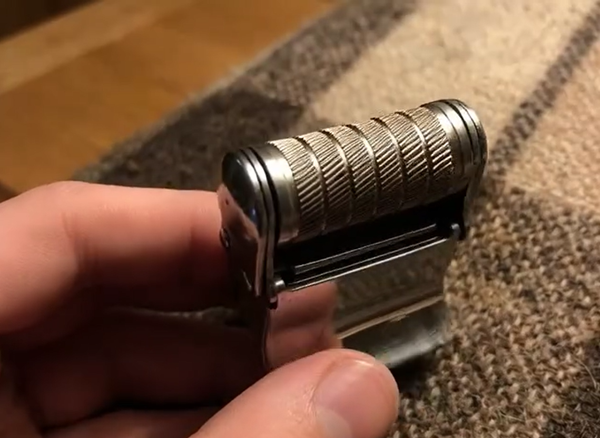
In the broader history of personal grooming, few devices reflect the inventive confidence of the mid-20th century as clearly as the Rally Dry Shaver. Emerging during a period defined by mechanical optimism and consumer experimentation, the device represented more than a simple attempt to remove facial hair. It embodied a cultural moment when everyday routines were viewed as opportunities for reinvention, efficiency, and progress through design.
The decades spanning the 1940s through the 1960s were marked by sweeping technological change. Industrial growth, postwar prosperity, and expanding consumer markets fueled a belief that innovation could—and should—improve nearly every aspect of daily life. Household appliances, transportation, entertainment, and personal care products were redesigned with an emphasis on speed, convenience, and modern aesthetics. Grooming, particularly shaving, became a focal point for this wave of ingenuity.
For generations, shaving had followed a largely unchanged pattern. Traditional wet shaving relied on water, soap or cream, a brush, and a razor, often a double-edged blade. The process was deliberate and methodical, requiring preparation and attention. Many men viewed it as a daily ritual that balanced practicality with a sense of routine and personal discipline. Comfort, closeness, and familiarity defined the experience, and the method persisted precisely because of its effectiveness and simplicity.
By the mid-20th century, however, cultural priorities were shifting. Modern life increasingly emphasized efficiency, mobility, and time-saving solutions. As work schedules intensified and travel became more common, inventors and manufacturers began searching for alternatives that could simplify grooming without sacrificing effectiveness. Shaving, long regarded as time-consuming, presented an ideal challenge for mechanical innovation.
A New Approach to Shaving
The Rally Dry Shaver emerged from this climate of experimentation as a radical departure from established methods. Instead of relying on blades dragged across lubricated skin or electrically powered cutters, the Rally proposed a fully manual, dry shaving system. Its design eliminated the need for water, soap, electricity, or batteries, offering a self-contained grooming solution that could be used almost anywhere.
At the heart of the device was a rolling cylindrical mechanism fitted with finely engineered teeth. As the cylinder moved across the skin, the interlocking components sheared hair in a scissor-like action. The concept aimed to cut facial hair efficiently while minimizing direct blade contact with the skin. In theory, this approach promised a faster, cleaner shave without the mess or preparation associated with traditional methods.
The Rally Dry Shaver occupied an unusual position between established grooming technologies. Wet shaving prioritized closeness and comfort through ritual, while electric shavers emphasized speed and automation. The Rally attempted to combine aspects of both, offering portability and convenience alongside a tactile, hands-on experience. This balance reflected a broader cultural fascination with practical novelty—the belief that innovation should not only improve efficiency but also feel modern and engaging.
Engineering and Design
From a technical standpoint, the Rally Dry Shaver demonstrated compact mechanical ambition. The cylindrical cutting head required precise machining to ensure that hair was cut effectively without pulling or pinching the skin. The tolerances between the interlocking teeth were critical; even minor imperfections could compromise comfort or performance.
Users operated the device manually, guiding it across the face in controlled motions. Unlike electric shavers, which used motor-driven oscillation or rotation, the Rally depended entirely on user input. This design choice reduced complexity and eliminated reliance on power sources, making the shaver highly portable. It could be used during travel, outdoors, or in environments where sinks and mirrors were unavailable.
The casing and handle were designed with ergonomics in mind, allowing users to maintain control while navigating facial contours such as the jawline and chin. Although the Rally did not remove skill from the shaving process entirely, it introduced a new tactile interaction between user and machine. The experience was neither fully traditional nor fully automated, reflecting a transitional phase in grooming technology.
Marketing and Mid-Century Appeal
Promotion of the Rally Dry Shaver emphasized modern living and efficiency. Advertising campaigns positioned it as an ideal solution for busy men seeking a quick, uncomplicated shave. Portability was a recurring theme, with messaging that highlighted its usefulness during travel, workdays, or situations where conventional shaving setups were impractical.
This marketing strategy aligned with broader postwar trends. Mobility, convenience, and self-improvement were central to consumer identity during the period. New technologies promised to save time, reduce effort, and enhance daily life. Within this cultural framework, the Rally Dry Shaver symbolized progress and adaptability, appealing to consumers eager to embrace innovation.
The device also carried symbolic weight. Its unconventional mechanism and sleek design reflected a willingness to depart from tradition in pursuit of something better. For many consumers, owning such a product was not only about functionality but also about participating in a forward-looking lifestyle shaped by invention and optimism.
Challenges and Market Reality
Despite its inventive design, the Rally Dry Shaver encountered practical limitations that hindered widespread adoption. User experiences varied, and many found that the shave lacked the smoothness associated with wet razors or the consistency offered by emerging electric models. The shearing action, while innovative, could produce uneven results, particularly on coarse or dense facial hair.
Skin irritation was another concern. Although the design aimed to reduce direct blade contact, improper technique or individual sensitivity could still result in discomfort. Additionally, the learning curve required to use the device effectively meant that it did not fully deliver on its promise of effortless shaving.
During the same period, electric shavers were advancing rapidly. Improvements in motor design, blade configuration, and skin protection made electric models increasingly attractive to consumers. These devices offered greater consistency with less manual effort, gradually capturing the market segment that prioritized speed and convenience. Meanwhile, traditional wet shaving retained its appeal among those who valued closeness and ritual.
Caught between these two established approaches, the Rally Dry Shaver struggled to define a lasting niche. Its novelty generated interest, but not enough to secure long-term commercial success.
Enduring Legacy and Collectibility
Today, the Rally Dry Shaver is remembered less as a practical grooming solution and more as a historical artifact. Collectors of vintage appliances and personal care devices value surviving examples for their distinctive design and mechanical originality. The shaver serves as a tangible reminder of an era when inventors were willing to experiment boldly, even at the risk of limited market acceptance.
For enthusiasts, the device represents a snapshot of mid-century design philosophy. It reflects optimism, creativity, and a belief that mechanical ingenuity could transform even the most routine activities. Preserved models, especially those with original packaging, are appreciated not only for their rarity but also for the story they tell about innovation and consumer culture.
A Symbol of Mid-Century Experimentation
The story of the Rally Dry Shaver mirrors broader patterns of postwar innovation. During this period, designers and engineers frequently prioritized bold ideas and novel mechanisms, sometimes at the expense of refinement. Not every invention succeeded, but each contributed to a collective process of experimentation that ultimately shaped modern technology.
The Rally’s limitations do not diminish its significance. Instead, they highlight the trial-and-error nature of progress. Its existence demonstrates how ambitious concepts can influence future development, even if they do not achieve lasting commercial dominance.
Influence on Modern Grooming
While the Rally Dry Shaver eventually faded from mainstream use, its underlying ideas continue to resonate. Modern grooming tools emphasize portability, minimal preparation, and adaptability to different environments. Battery-powered travel shavers, dry-use electric models, and skin-sensitive cutting systems all reflect the same desire to simplify grooming while maintaining effectiveness.
The Rally can be seen as an early expression of these priorities. Its focus on independence from water and power sources anticipated later trends in mobile-friendly personal care technology. In this sense, the device occupies an important place in the evolutionary chain of grooming innovation.
Conclusion
The Rally Dry Shaver stands as more than a forgotten curiosity from the past. It is a testament to a time when innovation was ambitious and experimentation was embraced. Rooted in the optimism of the mid-20th century, the device captured a belief that even the most ordinary routines could be improved through creative engineering.
Although it did not achieve enduring commercial success, its legacy lives on as a symbol of ingenuity and forward thinking. For historians, designers, and collectors, the Rally Dry Shaver offers insight into an era when the future seemed open to reinvention and no idea was too unconventional to pursue.
In reflecting on its story, the shaver reminds modern audiences of a timeless human impulse: the drive to imagine better solutions, challenge tradition, and refine daily life through innovation. Even in the simple act of shaving, the spirit of progress found room to roll forward.