
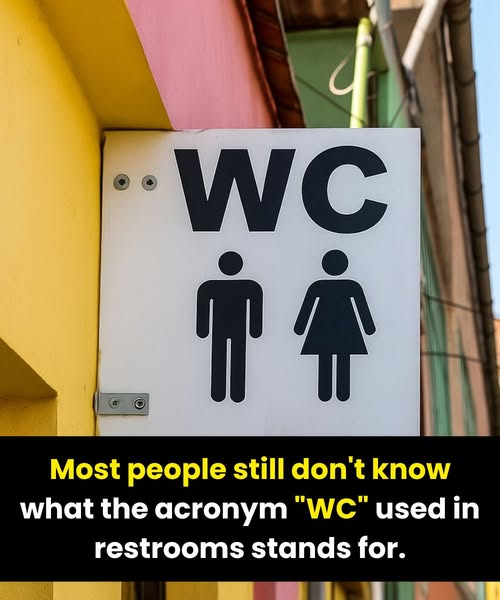
Everywhere you go — from airports and train stations to shopping malls, cozy cafés, and roadside diners — there’s one universal sign you can always count on to find: the restroom. Sometimes it’s marked with a simple set of letters like “WC”, other times it’s represented by pictograms — one figure in pants, the other in a skirt.
These little signs may seem like nothing more than practical directions, but behind them lies a fascinating history of language, culture, and design that spans centuries. The story of how humanity went from outdoor latrines to elegant restroom symbols is far richer than you might expect.
The Birth of the WC
The abbreviation WC stands for Water Closet, a term that first appeared in 19th-century England. At the time, indoor plumbing was a luxury only the wealthy could afford. Most people relied on outdoor privies, outhouses, or chamber pots, which servants or family members emptied manually — a task as unpleasant as it sounds.
When the flush toilet was invented and began to spread during the Victorian era, there needed to be a new way to describe this innovative, private space inside the home. The term Water Closet emerged as a polite, modern label that set these rooms apart from traditional, outdoor facilities.
Interestingly, the word “toilet” was initially avoided. At the time, it referred to personal grooming rather than the act of using a bathroom and was considered too direct or even vulgar. The Victorians, famous for their modesty, preferred the more discreet Water Closet.
While the full phrase has mostly disappeared from everyday English conversation, the WC abbreviation endured. Today, travelers around the world still encounter “WC” signs, particularly throughout Europe, Asia, and international airports.
Global Variations in Restroom Terminology
Just as languages vary across the globe, so too do the words we use for bathrooms. Here’s a quick guide to some of the most common regional terms:
-
United States: Restroom — a polite euphemism implying a space to rest and refresh.
-
Canada: Washroom — emphasizes cleanliness and formality.
-
United Kingdom: Toilet or Loo — both common in everyday conversation, though WC remains on signage.
-
France: Toilettes — instantly recognizable to most travelers.
-
Philippines: CR, short for Comfort Room, a term unique to the region.
-
Australia & New Zealand: Simply Toilet, though WC appears occasionally in older buildings or tourist areas.
-
Japan: Otearai or the English word Toilet, both used interchangeably.
These differences can sometimes lead to confusion for international travelers. A clear, universal visual system was needed — and that’s where restroom icons came in.
The Rise of Universal Restroom Symbols
In the mid-20th century, as air travel expanded and international tourism boomed, relying solely on text-based signs became impractical. Airports, train stations, and major venues needed language-free symbols that could be instantly understood by people from any background.
Designers turned to pictograms: clean, minimalistic stick figures representing male and female users.
-
The male symbol featured straight lines and neutral shapes.
-
The female symbol was distinguished by a triangular “skirt,” a simple way to indicate gender at a glance.
These symbols were intentionally simple and non-distracting, focused solely on clarity. Over time, they became standardized worldwide, especially in international transit hubs.
Today, even if you don’t speak the local language, these icons will reliably guide you to the facilities — a testament to the power of universal design.
When Creativity Meets Confusion
While standard icons dominate in global settings, many local businesses like to put a creative twist on restroom signage:
-
Cafés might use symbols like coffee cups for women and mugs of beer for men.
-
Western-themed bars may swap stick figures for cowboy boots and hoop skirts.
-
Trendy restaurants sometimes opt for abstract art or pop culture references.
While fun, these designs occasionally confuse tourists, especially when the symbols are overly obscure. This is why standardized signs remain crucial in busy, international spaces.
The Push for Gender Inclusivity
In recent years, restroom signage has undergone a significant evolution to reflect changing social values, especially around gender identity. Many public places now include gender-neutral restrooms, often marked with:
-
Symbols combining traditional male and female elements,
-
Neutral imagery like a simple toilet icon,
-
Or straightforward text such as “All-Gender Restroom.”
These inclusive updates aren’t just practical; they represent respect and dignity for individuals who don’t fit into traditional gender categories. They also create safer, more accessible spaces for everyone, from families with young children to people with disabilities.
Why These Signs Truly Matter
At first glance, restroom signage might seem trivial. But in moments of stress — when you’re lost in a crowded airport, traveling abroad, or urgently searching for facilities — clarity becomes essential. A clear sign is reassurance, offering instant guidance in a universal language.
Beyond functionality, these signs reflect the values of society:
-
The Victorian obsession with propriety gave us the term Water Closet.
-
The rise of global travel led to universal pictograms.
-
Today’s push for inclusivity is reshaping restroom signage once again.
Conclusion
The next time you see a WC sign or familiar restroom icon, take a moment to appreciate its deeper story. What seems like a simple directional tool is actually the product of centuries of cultural evolution, design innovation, and social progress.
From the luxury indoor plumbing of the 1800s to today’s inclusive, globally understood signage, these symbols reveal how humanity adapts to meet both practical needs and human values.
No matter where you are — whether it’s Tokyo, Toronto, or Timbuktu — one thing never changes: everyone needs to find the restroom, and thanks to WC and its evolving icons, we almost always do.