
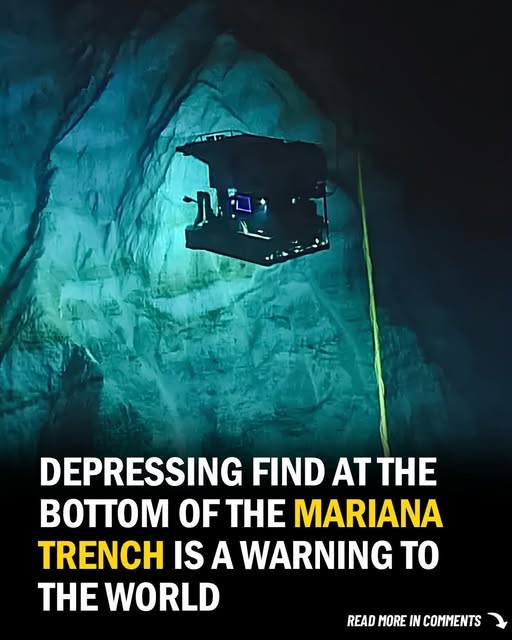
Plastic Waste Found in the Mariana Trench Highlights the Global Reach of Ocean Pollution
A Discovery in Earth’s Deepest Ocean Region
The Mariana Trench is widely regarded as one of the most remote and extreme environments on the planet.
Located deep beneath the Pacific Ocean, this vast underwater chasm is characterized by crushing pressure, complete darkness, and conditions unlike anywhere else on Earth.
For many years, it was viewed as a place largely untouched by human activity.
That perception changed dramatically when explorers discovered a discarded plastic bag within the trench.
The finding served as a powerful reminder that human-generated waste has reached even the most isolated corners of the world.
Far from being an isolated incident, the discovery reflects a broader environmental challenge affecting oceans across the globe.
It demonstrates how pollution can travel extraordinary distances and accumulate in places once believed to be beyond humanity’s influence.
The End of a Long-Held Assumption
For generations, many people assumed that the ocean’s immense size could absorb the consequences of human waste.
The belief that discarded materials would simply disappear into the vastness of the sea influenced attitudes toward consumption and disposal.
However, growing scientific evidence has shown that waste does not vanish.
Instead, it often remains in the environment for decades or even centuries.
The discovery of plastic at the bottom of the Mariana Trench challenges the notion that there are places on Earth untouched by modern pollution.
It illustrates how human activity can leave lasting impacts far beyond the locations where waste is originally discarded.
Even the deepest ocean environments are now affected by materials produced and used on the surface.
A Fragile Ecosystem Beneath the Surface
Although the Mariana Trench may appear barren to many observers, it supports a variety of specialized marine life.
Numerous organisms have adapted to survive under immense pressure and in complete darkness.
These ecosystems remain among the least explored environments on Earth.
Scientists continue to discover new species and gain insights into how life thrives in such extreme conditions.
The presence of pollution in these habitats raises concerns about the long-term effects on organisms that have evolved in relative isolation.
Many deep-sea species are highly specialized and may be particularly vulnerable to environmental disturbances.
Protecting these ecosystems has become an increasingly important priority for researchers and conservationists.
The Impact of Plastic on Marine Life
Plastic pollution affects marine organisms in multiple ways.
Animals can become entangled in debris, restricting movement and reducing their ability to feed or avoid predators.
Others may accidentally ingest plastic fragments, mistaking them for food.
Ingestion can lead to internal injuries, nutritional deficiencies, and other health complications.
Research examining deep-sea debris has documented numerous interactions between marine organisms and plastic waste.
Some of these encounters result in injury or death.
As plastic continues to accumulate in ocean environments, concerns about its effects on marine biodiversity continue to grow.
The issue is particularly significant because many affected ecosystems recover very slowly from environmental disturbances.
A Global Pollution Problem
Plastic pollution has become one of the most significant environmental challenges facing the world’s oceans.
Unlike many forms of waste, plastic is highly durable.
It can persist in the environment for long periods while gradually breaking into smaller fragments.
Single-use plastics represent a major portion of this problem.
Products such as disposable bags, packaging materials, and other short-lived items are often used briefly before being discarded.
When waste management systems fail to capture these materials, they can eventually enter waterways and reach the ocean.
Once there, ocean currents can transport them across vast distances.
The result is a pollution issue that extends far beyond the communities where the waste originated.
The Dominance of Single-Use Plastics
Studies examining debris on the ocean floor have consistently identified plastic as one of the most common forms of waste.
Among these materials, single-use products are particularly prevalent.
The discovery of disposable plastic items in extremely remote marine environments demonstrates the scale of the problem.
Many of these products are designed for convenience and intended for only brief use.
However, their environmental lifespan can extend for many years.
The contrast between short-term utility and long-term environmental persistence has become a central concern for policymakers and environmental organizations.
Reducing reliance on disposable plastics is increasingly viewed as an important step toward addressing ocean pollution.
How Plastic Reaches Remote Locations
The presence of waste in distant environments often raises questions about how it arrived there.
In the case of marine pollution, the answer lies in interconnected water systems and global ocean currents.
Plastic entering rivers and streams can eventually reach larger bodies of water.
From there, currents transport debris across oceans and into regions far removed from its original source.
Some waste originates from maritime activities, including shipping and fishing operations.
However, a substantial portion comes from land-based sources.
Improperly managed waste can travel through drainage systems and waterways before entering the marine environment.
Once plastic reaches the ocean, controlling its movement becomes extremely difficult.
The Role of Fishing Equipment
Discarded fishing gear represents another significant source of marine debris.
Nets, ropes, and other equipment can remain in the ocean long after they are abandoned.
These materials are often referred to as ghost gear because they continue affecting marine life even after they are no longer in use.
Ghost gear can entangle fish, marine mammals, and other organisms.
Because many fishing materials are made from durable synthetic substances, they can persist for extended periods.
Large accumulations of debris have been observed in several regions of the world’s oceans.
Addressing the issue requires cooperation among fishing industries, governments, and environmental organizations.
Improved equipment management and recovery efforts are increasingly recognized as important solutions.
The Transformation Into Microplastics
Plastic pollution does not remain unchanged over time.
Exposure to sunlight, waves, and environmental conditions gradually breaks larger items into smaller pieces.
These fragments, known as microplastics, are now found throughout marine ecosystems.
Because of their small size, microplastics can be consumed by a wide range of organisms.
They have been detected in surface waters, coastal environments, and deep-sea habitats.
Microplastics can also settle onto the ocean floor, accumulating in areas far from their point of origin.
The widespread distribution of these particles has made them a major focus of environmental research.
Scientists continue working to understand their long-term ecological consequences.
Chemical Concerns Associated With Plastic Waste
Beyond the physical presence of plastic debris, researchers are also examining its chemical effects.
As plastics degrade, they can release various substances into the surrounding environment.
These compounds may interact with marine ecosystems in ways that are not yet fully understood.
Scientists have suggested that some chemical pollutants found in deep-sea environments may be linked to the breakdown of plastic materials.
The potential impacts of these substances on marine organisms remain an active area of investigation.
Understanding these effects is important because deep-sea ecosystems often contain species that have adapted to highly stable environmental conditions.
Even relatively small changes may influence ecological balance.
A Symbol of a Larger Environmental Challenge
The discovery of a plastic bag in the Mariana Trench has become a powerful symbol of the broader issue of ocean pollution.
While a single item may seem insignificant on its own, it represents a much larger pattern of environmental impact.
The presence of human-generated waste in one of the most inaccessible places on Earth demonstrates how far-reaching pollution has become.
It also highlights the interconnected nature of modern environmental challenges.
Actions taken in one location can ultimately affect ecosystems thousands of miles away.
This reality has prompted growing calls for coordinated international efforts to reduce waste and protect marine environments.
The Importance of Waste Management
Effective waste management plays a critical role in preventing pollution from reaching natural ecosystems.
When waste is properly collected, processed, and recycled, the likelihood of environmental contamination decreases significantly.
Many experts emphasize the need for stronger infrastructure and improved waste handling practices.
Communities around the world face different challenges related to waste management, but reducing leakage into waterways remains a common goal.
Investments in collection systems, recycling programs, and public education can contribute to meaningful improvements.
Preventing pollution before it enters the environment is often more effective than attempting to remove it later.
Reducing Dependence on Disposable Products
One frequently discussed strategy for addressing plastic pollution involves reducing the use of single-use products.
Reusable alternatives can help decrease the amount of waste entering the environment.
Consumers, businesses, and governments all play a role in encouraging more sustainable practices.
Small changes in daily habits can contribute to broader reductions in waste generation.
Many communities have already introduced initiatives aimed at limiting disposable plastics and promoting reusable options.
While no single solution will eliminate pollution entirely, reducing unnecessary waste is widely regarded as an important step forward.
Long-term success will likely require a combination of individual actions and systemic improvements.
The Need for Global Cooperation
Ocean pollution is a global issue that cannot be addressed by any one country alone.
Marine currents connect ecosystems across international boundaries, allowing debris to travel between regions.
As a result, effective solutions require cooperation among governments, industries, researchers, and communities.
International agreements, scientific collaboration, and shared environmental goals can help support progress.
Protecting the world’s oceans depends on collective action and sustained commitment.
The challenges are significant, but so are the opportunities for meaningful change.
Growing awareness of marine pollution has already encouraged many organizations to pursue innovative solutions.
A Reminder From the Ocean Depths
The discovery of plastic waste in the Mariana Trench serves as a reminder of the far-reaching consequences of human activity.
What was once considered an untouched environment now reflects the broader impact of modern consumption and waste generation.
The finding has become an important symbol of the need for greater environmental responsibility.
Protecting marine ecosystems requires ongoing attention, scientific research, and practical action.
From improving waste management systems to reducing reliance on disposable plastics, there are many opportunities to address the problem.
The oceans support countless forms of life and play a vital role in the health of the planet.
Ensuring their protection will require sustained effort from individuals, communities, industries, and governments alike.
The lesson from the deepest part of the ocean is clear: environmental stewardship is not limited by geography, and the choices made today can influence even the most remote corners of the Earth.