
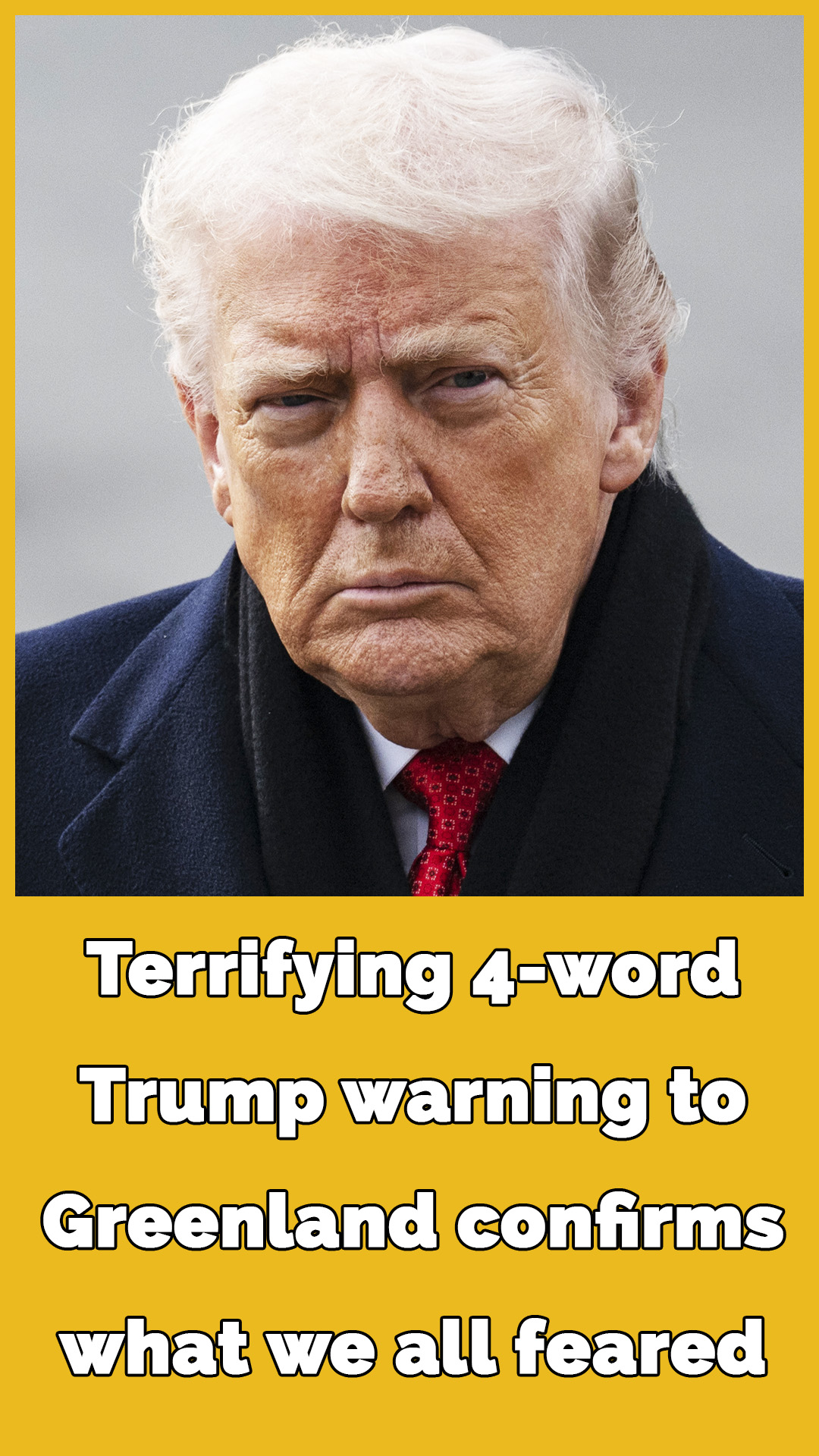
The situation surrounding Greenland is intensifying, with global attention now focused on the Arctic territory. The United States president has issued a fresh warning, raising concerns about sovereignty, international alliances, and transatlantic relations.
While a poll conducted last year indicated that 85% of Greenlanders oppose becoming part of the United States, the president appears determined to assert U.S. influence over the region. The latest statement, posted on Truth Social Monday morning, accused Denmark of failing to address what the president calls the “Russian threat” in the Arctic, and suggested decisive action may be forthcoming.
“Unfortunately, Denmark has been unable to do anything about it. Now it is time, and it will be done!!!”
This strong language signals an escalation in rhetoric surrounding the U.S. interest in Greenland, a territory historically aligned with Denmark but strategically important due to its Arctic location.
NATO and Greenland
In his post, the president claimed that NATO has spent the past two decades urging Denmark to remove perceived Russian influence from Greenland. The statement implied that, due to Denmark’s inaction, the United States may consider taking matters into its own hands.
The Arctic island has long been recognized for its strategic value. Its location provides access to key shipping routes, surveillance points, and potential military installations, making Greenland a focal point for both European and U.S. defense considerations. Control over the island has implications not only for military strategy but also for natural resources, including minerals and potential energy reserves beneath the Arctic ice.
Tariffs Target European Allies
The president’s latest warning comes just a day after announcing a 10% tariff on imports from Denmark, Norway, Sweden, France, Germany, the United Kingdom, the Netherlands, and Finland. According to the announcement, these tariffs are aimed at countries perceived as obstructing U.S. control of Greenland.
The tariffs are set to take effect on February 1 and, according to the president, will remain in place “until Greenland becomes American.” This move has prompted immediate concern across Europe, raising questions about trade relations, diplomatic tensions, and the stability of transatlantic alliances.
European Response
The announcement sparked swift backlash among European nations. Emergency discussions among EU ambassadors were convened on Sunday, culminating in a statement from EU Council President Antonio Costa. He criticized the tariffs, stating:
“Tariffs would undermine transatlantic relations and are incompatible with the EU-U.S. trade agreement.”
Costa further emphasized that the EU is prepared to defend itself against coercion, signaling that European leaders are taking the matter seriously. A special EU summit is scheduled for Thursday to address the Greenland situation, highlighting the urgency and international ramifications of the president’s rhetoric.
In addition, thousands of Greenlanders have demonstrated against the U.S. stance. Around 1,000 residents marched in the capital city of Nuuk, heading toward the U.S. consulate to voice their opposition. The protest underscored the widespread local resistance to any transfer of sovereignty.
Nordic Nations Unite
Denmark, along with Norway, Sweden, France, Germany, the U.K., the Netherlands, and Finland, released a joint statement clarifying that military troops stationed in Greenland as part of Operation Arctic Endurance pose no threat to anyone.
Danish Foreign Minister Lars Løkke Rasmussen stressed that ongoing dialogue with the United States continues, but he insisted,
“we will not give up on that… So we will stay on track — unless U.S. decides differently.”
Norwegian Foreign Minister Espen Barth Eide echoed the sentiment, stating:
“We will not allow ourselves to be put under pressure, and those types of threats (of U.S. tariffs) are unacceptable between close allies.”
These statements underscore the unity of European and Nordic nations in rejecting coercive measures and defending Greenland’s sovereignty.
Domestic Pushback in the U.S.
The controversy has also generated criticism within the United States. Republican Representative Michael McCaul, a former chair of the House Foreign Affairs and Homeland Security committees, expressed strong opposition to any military attempt to seize Greenland.
During an appearance on This Week, McCaul warned that unilateral action could place the U.S. in direct conflict with NATO allies, potentially undermining the alliance itself. He stated:
“The fact is, the president has full military access to Greenland to protect us from any threat. So if he wants to purchase Greenland, that’s one thing. But for him to militarily invade would turn Article 5 of NATO on its very head and, in essence, press a war with NATO itself. It would end up abolishing NATO as we know it.”
McCaul’s remarks highlight the complex balance of military strategy, international law, and alliance obligations, which could be jeopardized by aggressive actions.
Strategic Importance of Greenland
Experts point out that Greenland holds significant strategic value, not only for defense but also for resource access. Its location provides a vantage point for monitoring the Arctic region, including the North Atlantic sea routes. The territory’s mineral deposits and potential energy reserves add another layer of economic and geopolitical interest.
Russia’s increased activity in the Arctic, including military exercises and energy exploration, has further heightened attention on Greenland. While NATO countries have maintained a presence in the region, U.S. statements suggest concern over perceived gaps in European defense posture.
Potential Consequences
The president’s tariffs and public warnings carry risks for international relations. The EU has signaled its readiness to counteract coercive economic measures, while Nordic nations have reinforced that their military presence in Greenland is defensive, not aggressive.
If the standoff escalates further, analysts warn it could affect:
Trade relations between the U.S. and Europe.
NATO cohesion, particularly Article 5 commitments.
Arctic security, as competing interests in the region intensify.
Domestic politics, with potential debate in Congress over executive authority and international law.
Next Steps
The coming days are expected to see intense diplomatic engagement. European leaders will convene during the special EU summit, and dialogue with Denmark, Norway, and other allies is likely to continue behind the scenes.
Observers note that while public statements from the U.S. president are forceful, actual military action would be complex and fraught with international ramifications, making negotiation and diplomacy critical in preventing escalation.
The Global Implications
The Greenland dispute is more than a regional issue. It has implications for global trade, international security, and alliance stability. The tariffs and rhetoric have already raised questions about U.S. commitment to cooperative defense strategies and could redefine how allies interact on sensitive strategic matters.
Analysts emphasize that any unilateral action in Greenland could lead to a lasting reshaping of NATO and transatlantic relations, highlighting the importance of careful, measured responses.
The situation remains fluid, and the world is watching closely as leaders navigate this unprecedented series of developments over one of the Arctic’s most strategic territories.