
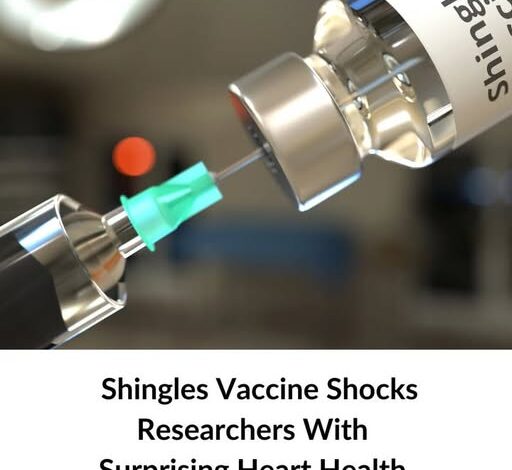
Major 2026 Study Suggests Shingles Vaccine May Significantly Reduce Heart Disease Risk
A Surprising Medical Discovery With Global Implications
A landmark medical study released in early 2026 has introduced a highly promising development in preventive healthcare, revealing that the shingles vaccine may offer unexpected protection against cardiovascular disease. Originally designed to prevent the reactivation of the varicella-zoster virus, the vaccine is now being examined for its broader health benefits beyond viral prevention.
Researchers in South Korea analyzed a vast dataset of more than 1.2 million health records collected over a period exceeding ten years. Their findings indicate that individuals who received the shingles vaccine experienced a nearly 23% lower risk of major adverse cardiovascular events.
These events include serious conditions such as stroke, heart failure, and coronary artery disease, all of which remain leading causes of mortality worldwide. The study’s results suggest that a routine vaccination may provide long-term cardiovascular advantages previously unrecognized by the medical community.
The Study’s Focus on Aging Populations
The research primarily followed individuals aged 50 and older, a demographic particularly vulnerable to both shingles and heart-related conditions. As populations across Western nations and East Asia continue to age, healthcare systems are increasingly focused on preventive strategies that address multiple health risks simultaneously.
According to the data, the protective cardiovascular effect of the shingles vaccine was not temporary. Researchers observed that the reduction in cardiac risk remained measurable for up to eight years following vaccination.
This extended duration of benefit has generated significant interest among public health experts, who are exploring how existing vaccines might contribute to broader disease prevention strategies.
The findings arrive at a critical moment when chronic disease prevention is becoming a central pillar of global healthcare planning.
Understanding the Biological Link Between Shingles and Heart Health
The connection between shingles prevention and cardiovascular protection lies in the inflammatory nature of the varicella-zoster virus. Shingles occurs when the virus, which remains dormant in the nervous system after chickenpox, reactivates later in life.
When reactivation occurs, the body experiences not only a painful rash but also widespread systemic inflammation. Medical research has increasingly identified chronic inflammation as a major contributor to cardiovascular damage.
This inflammatory response can lead to damage in blood vessels, fluctuations in blood pressure, and increased stress on the cardiovascular system. Such physiological changes elevate the risk of arterial plaque instability and clot formation.
By preventing viral reactivation, the shingles vaccine may effectively reduce one of the underlying inflammatory triggers linked to heart disease.
Inflammation as a Key Driver of Cardiovascular Risk
Modern medical science often describes chronic inflammation as a “silent” contributor to heart disease. Unlike acute symptoms, inflammation can persist without noticeable warning signs while gradually damaging vascular health.
Researchers involved in the study hypothesized that vaccination helps stabilize the immune system by suppressing viral flare-ups that would otherwise initiate inflammatory cascades. In doing so, the vaccine may indirectly protect arterial integrity.
This mechanism provides a plausible explanation for the observed reduction in major cardiac events among vaccinated individuals. It also highlights the interconnected nature of infectious diseases and long-term cardiovascular health.
The concept that preventing a viral condition could also safeguard the heart represents a significant shift in preventive medicine.
Demographic Variations in Vaccine Effectiveness
The study also revealed that the cardiovascular benefits of the shingles vaccine were not uniform across all population groups. Instead, researchers observed distinct variations based on age, gender, and lifestyle factors.
Individuals under the age of 60 demonstrated the most significant reduction in heart-related risks. Scientists suggest that younger seniors may have a more responsive immune system, allowing the vaccine to provide stronger anti-inflammatory protection.
Gender differences were also noted, with the protective effect appearing more pronounced in men than in women. While the exact biological reasons remain under investigation, researchers believe hormonal and immune system differences may play a role.
Lifestyle factors added another layer of complexity. Participants with higher-risk habits, such as smoking or poor dietary patterns, appeared to benefit disproportionately from the vaccine’s protective effects.
High-Risk Groups Show Unexpected Gains
One of the more notable findings was the vaccine’s strong relative benefit among individuals with less healthy lifestyles. In these cases, the vaccine may have acted as a critical buffer against inflammation caused by external risk factors.
For individuals already facing elevated cardiovascular risks, the additional anti-inflammatory effect of preventing shingles may have significantly reduced the likelihood of severe cardiac events.
This observation suggests that vaccination could serve as a complementary preventive measure alongside lifestyle interventions. It reinforces the idea that medical prevention strategies can work synergistically with behavioral health improvements.
Such insights are prompting healthcare professionals to consider vaccination as part of a broader preventive care model.
Limitations and the Need for Global Research
Despite the promising results, experts have emphasized that the study was conducted within a single ethnic population consisting of 1.2 million South Koreans. In cardiovascular research, genetic and ethnic variability can influence how individuals respond to both infections and vaccines.
Global health statistics demonstrate that cardiovascular risk profiles differ significantly across racial and ethnic groups. These variations highlight the importance of conducting further studies involving more diverse populations.
Medical specialists note that broader clinical trials involving Black, Hispanic, and White populations will be necessary to confirm whether the 23% risk reduction remains consistent worldwide.
Until such studies are completed, the findings should be interpreted as highly encouraging but not yet universally conclusive.
Comparing Vaccine Types and Potential Outcomes
The South Korean research utilized a live-attenuated shingles vaccine, while many Western countries primarily use the recombinant Shingrix vaccine. Shingrix is widely recognized for its 90–97% effectiveness in preventing shingles.
Because the recombinant vaccine is considered more potent than the live version, some experts speculate that its cardiovascular benefits could be even greater. However, direct comparative clinical trials are still required to validate this possibility.
If future research confirms stronger protective effects, vaccination policies may evolve to emphasize cardiovascular prevention alongside viral protection.
This possibility underscores the importance of continued investment in long-term vaccine research.
A Preventive Shift in the 2026 Healthcare Landscape
The findings align with a broader medical trend in 2026 that emphasizes prevention rather than reactive treatment. Healthcare systems worldwide are increasingly prioritizing interventions that address multiple health risks simultaneously.
Researchers are now debating whether the shingles vaccine should be viewed not only as a preventative measure against a painful viral condition but also as a potential “vascular stabilizer.”
If additional studies consistently confirm a reduction in stroke and heart disease risk exceeding 20%, the vaccine could become a standard recommendation for individuals with a family history of cardiovascular conditions.
This evolving perspective reflects a growing understanding that preventive medicine often delivers benefits beyond its original purpose.
Practical Implications for Adults Over 50
For individuals aged 50 and older, the study’s findings carry significant practical relevance. Vaccination decisions are increasingly being framed not only in terms of immediate protection but also long-term health outcomes.
The research suggests that the shingles vaccine may offer protective benefits even for those without known cardiovascular risk factors. This indicates that its anti-inflammatory effects may provide universal advantages.
Public health experts highlight that preventive vaccination could play a key role in reducing the long-term burden of heart disease, particularly in aging populations.
As the medical community awaits results from more diverse and large-scale trials, the current data provides a compelling incentive for eligible individuals to consider vaccination as part of a comprehensive health strategy.
Reevaluating Established Medical Tools
The 2026 study exemplifies a broader scientific shift toward reexamining established medical interventions for hidden benefits. Researchers are increasingly uncovering unexpected connections between immune health and chronic disease prevention.
The discovery that a vaccine designed to prevent shingles may also reduce cardiovascular events highlights the importance of ongoing data analysis and long-term health monitoring.
In an era defined by evolving medical knowledge, such findings reinforce the value of evidence-based prevention strategies. They also demonstrate how existing healthcare tools can yield new insights when examined through a broader scientific lens.
As further research progresses, the shingles vaccine may emerge as a key component in the global effort to reduce heart disease and improve long-term health outcomes.