
Cornish Beef Pasties: A Traditional Handheld Dish with Rich Flavor and Golden Pastry
A Hearty Meal with Deep Historical Roots
Cornish Beef Pasties have long been recognized as a comforting and practical meal, known for their sturdy pastry shell and savory filling. The dish is designed as a complete meal enclosed in a crisp crust, making it both convenient and satisfying.
This traditional preparation combines beef with potatoes, vegetables, and aromatic herbs. Once baked, the pastry becomes golden and flaky while the filling inside develops a rich, balanced flavor.
The dish gained popularity in England’s mining communities, where workers needed portable meals that could withstand long hours underground. The firm pastry casing protected the filling and made it easy to carry.
Today, Cornish Beef Pasties remain a beloved comfort food enjoyed around the world. Their classic ingredients and straightforward preparation make them a timeless addition to any home kitchen.
The Balance Between Pastry and Filling
The defining feature of a Cornish Beef Pasty is its pastry shell. The dough must be strong enough to hold the filling while still baking into a tender and flaky crust.
Inside the pastry, the filling brings together several ingredients that complement each other in both texture and flavor. Beef provides heartiness, while potatoes and carrots add subtle sweetness and body.
Onions contribute a mild sharpness that balances the richness of the meat. Herbs and Worcestershire sauce deepen the overall flavor, giving the filling a savory profile that pairs well with the crisp pastry.
Small slits cut into the top of each pasty allow steam to escape during baking. This simple step prevents excess moisture from softening the crust and helps the pastry develop a crisp, golden exterior.
Ingredients for the Pastry
All-purpose flour – 3 cups
Salt – 1 teaspoon
Unsalted butter, cold – ½ cup (1 stick)
Cold water – ½ cup
Egg yolks – 2 (divided)
Ingredients for the Filling
Ground beef or finely chopped roast – 1 lb
Waxy potatoes (such as red or Yukon Gold), diced – 1 lb
Carrots, peeled and diced – 2
Small onion, diced – 1
Worcestershire sauce – 2 tablespoons
Garlic, minced – 2 cloves
Dried rosemary – ½ teaspoon
Dried thyme – ½ teaspoon
Kosher salt and black pepper – to taste
Preparing the Pastry Dough
The pastry begins with a mixture of flour and salt combined in a bowl. Cold butter is added in small cubes and worked into the flour until the mixture resembles coarse crumbs.
This step is essential for creating the flaky texture that defines the crust. The small pieces of butter remain within the dough and melt during baking, forming delicate layers.
In a separate bowl, one egg yolk is whisked together with cold water. This mixture is gradually stirred into the flour and butter until a soft dough begins to form.
The dough is then transferred to a lightly floured surface and kneaded gently until smooth. Once combined, it is wrapped and placed in the refrigerator for at least 30 minutes.
Chilling the dough allows the butter to firm up again and relaxes the gluten structure. This resting period helps the pastry roll out easily and maintain its shape during baking.
Cooking the Filling for Better Flavor
The filling begins by cooking the beef in a skillet over medium heat. A small amount of salt and pepper enhances the natural flavor of the meat as it browns.
Once the beef is fully cooked, it is transferred to a bowl and set aside. The same skillet is used to cook the vegetables, allowing them to absorb some of the savory flavor left behind.
Diced potatoes, carrots, and onion are sautéed together for about six to eight minutes. During this time, they begin to soften while maintaining their structure.
Garlic is added along with dried rosemary and thyme. The herbs release their fragrance quickly, blending with the vegetables and creating a deeper aroma.
A splash of Worcestershire sauce is stirred into the mixture. This ingredient adds a slightly tangy and savory note that enhances the richness of the beef.
Combining the Filling
After cooking, the vegetables are added to the bowl with the browned beef. The ingredients are mixed thoroughly so that the flavors distribute evenly throughout the filling.
Before assembling the pasties, the filling must cool completely. Using hot filling can melt the butter within the pastry dough and prevent the crust from forming properly.
Allowing the mixture to cool also helps maintain the structure of the pasties during baking. A chilled filling keeps the dough firm and easier to handle.
Shaping the Pasties
Once the dough has rested, it is divided into six equal portions. Each portion is rolled into a circle roughly three-eighths of an inch thick.
Rolling the dough evenly ensures the pasties bake consistently. A uniform thickness also prevents weak spots in the pastry.
The edges of each circle are lightly brushed with water. This moisture helps seal the dough once it is folded over the filling.
A portion of the beef mixture is placed on one half of the dough circle. About half an inch of space is left around the edge to allow room for sealing.
Sealing the Pasties
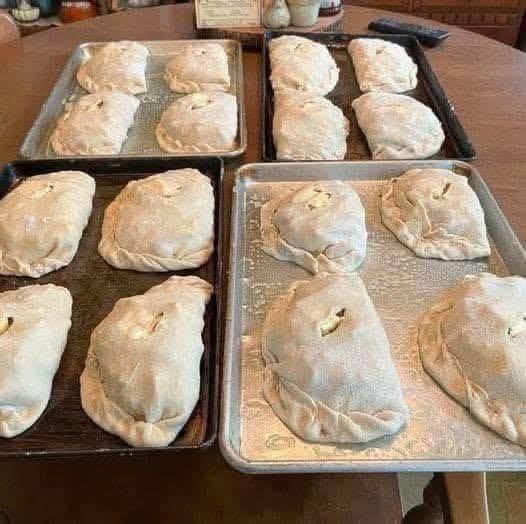
The empty half of the dough is folded over the filling, creating a half-moon shape. The edges are pressed together to enclose the filling completely.
A fork is used to crimp the edges firmly. This step not only seals the pastry but also gives the pasties their traditional appearance.
The shaped pasties are placed on a lined baking sheet. Before baking, three small slits are cut into the top of each one.
These vents allow steam from the filling to escape during baking. Without them, trapped moisture could soften the crust.
Baking to a Golden Finish
The remaining egg yolk is whisked with two tablespoons of water to create a simple egg wash. This mixture is brushed over the tops of the pasties.
The egg wash gives the pastry a glossy surface and encourages a deep golden color as it bakes.
The pasties are placed in an oven preheated to 400°F (200°C). They bake for 30 to 40 minutes, during which the crust becomes crisp and richly colored.
As the pastry bakes, the flavors inside continue to blend. The beef, vegetables, and herbs create a filling that is tender and flavorful.
When finished, the Cornish Beef Pasties emerge with a firm crust and a warm, savory center. Each one serves as a complete meal wrapped in golden pastry.
A Classic Dish That Endures
Cornish Beef Pasties remain popular because of their simplicity and practicality. The combination of meat, vegetables, and pastry delivers a balanced and satisfying dish.
The recipe demonstrates how basic ingredients can come together to create a meal that is both hearty and comforting. Every element, from the flaky dough to the flavorful filling, plays a role in the final result.
Served fresh from the oven, the pasties offer a warm and filling meal that can be enjoyed at home or on the go. Their classic preparation continues to be appreciated by cooks and diners alike.