
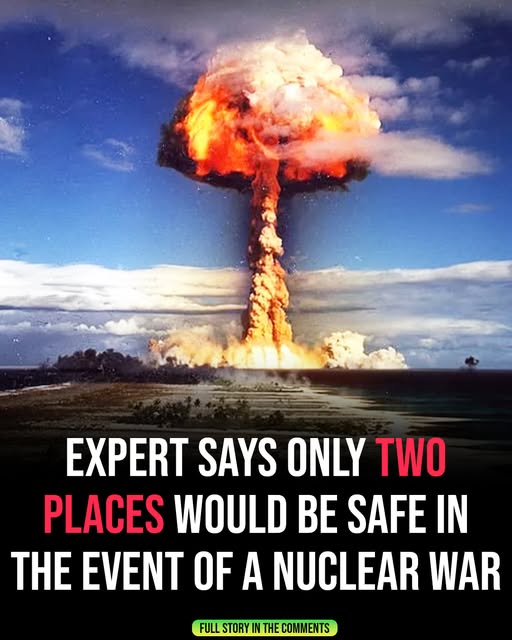
Rising Global Tensions Renew Debate Over Nuclear Risk and Survival Geography
Escalating Conflict Sparks Public Concern
As global tensions intensify following airstrikes on Iran by the United States and Israel over the weekend, public anxiety has increasingly shifted toward the broader implications of a potential large-scale conflict.
Among the most pressing questions being raised is how a wider war, particularly one involving nuclear weapons, could affect survival prospects across different regions.
The discussion reflects a resurgence of Cold War-era fears, now resurfacing in a modern geopolitical environment shaped by advanced weaponry and evolving strategic threats.
Renewed Focus on Nuclear Preparedness
There was a time when American students were routinely trained on how to respond to the possibility of a nuclear attack.
During the Cold War, “duck and cover” drills instructed children to hide under desks as a precaution against a potential Soviet strike, creating a sense of preparedness despite offering limited real-world protection.
While the geopolitical landscape has changed significantly since then, current tensions have revived concerns reminiscent of that earlier era.
With the United States now involved in military conflict with Iran, fears of escalation have contributed to renewed public discussion about nuclear risks.
Claims Surrounding Iran’s Nuclear Capabilities
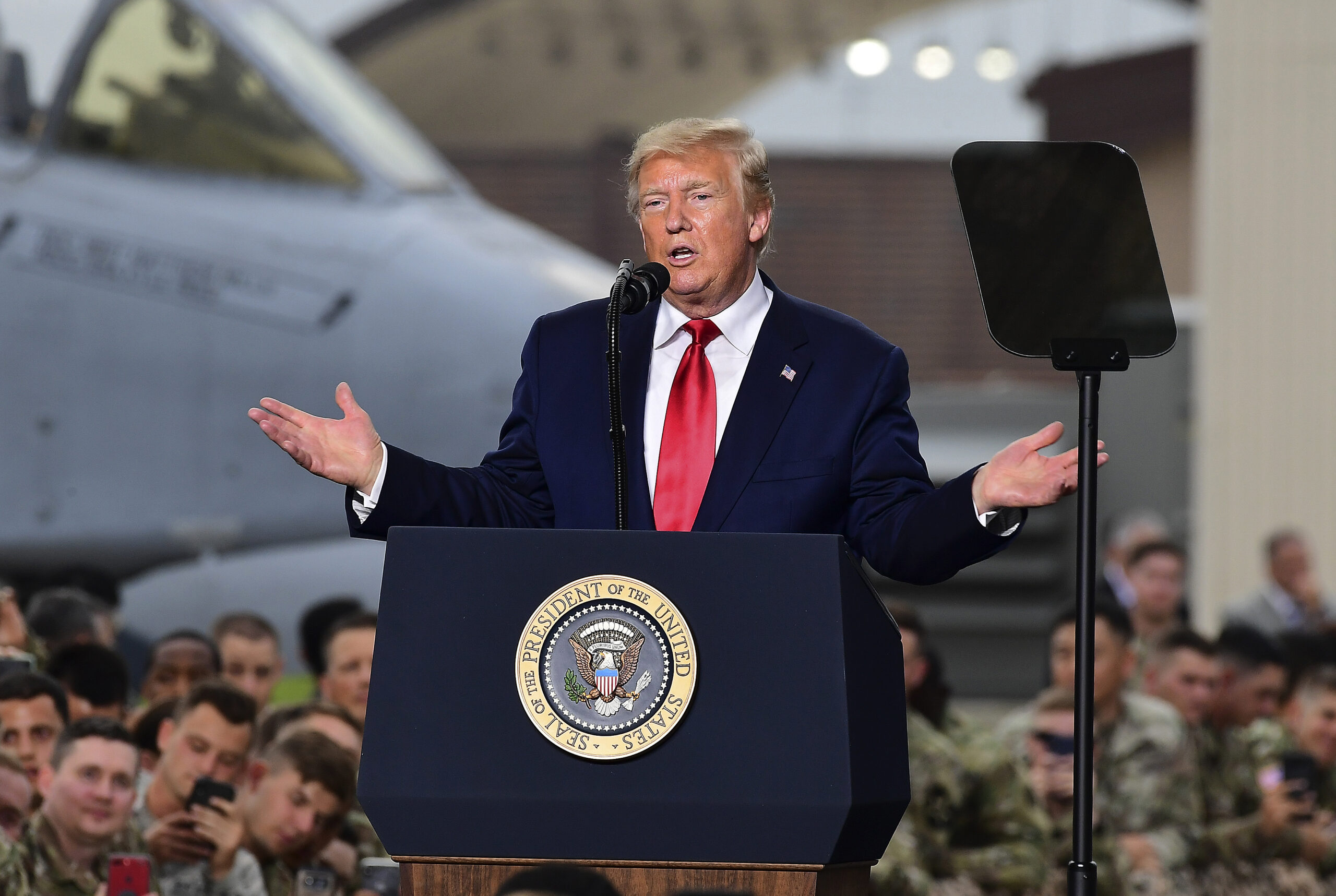
President Donald Trump and members of his administration have asserted that Iran has restarted its nuclear program and possesses sufficient fissile material to produce a nuclear weapon within days.
They have also claimed that Iran is developing long-range missiles capable of reaching the United States.
However, these assertions have been described as either false or unproven, even as military operations have proceeded.
The gap between political messaging and verified evidence has further complicated public perception of the conflict and its potential consequences.
Details of Operation Epic Fury
The joint military campaign, referred to as Operation Epic Fury, reportedly targeted several major Iranian cities.
Strikes were carried out in Tehran, Isfahan, Tabriz, Kermanshah, and Qom, representing a coordinated effort against key locations.
Reports indicate that Supreme Leader Ayatollah Ali Khamenei, who had ruled the country for more than three decades, was killed during the operation.
This development marked a dramatic escalation in the confrontation and raised concerns about potential retaliation.
Fears of Retaliation and Strategic Targets
Although warnings have been issued to Iran against retaliatory action, analysts remain concerned about the possibility of counterstrikes targeting critical U.S. military infrastructure.
One of the most vulnerable strategic assets in such a scenario would be nuclear missile silos located across several central states.
A direct strike on these facilities could significantly amplify the scale of devastation and long-term environmental damage.
These concerns have prompted increased attention to the geographic distribution of nuclear assets within the United States.
Location of U.S. Nuclear Warheads
The majority of the United States’ roughly 2,000 nuclear warheads are concentrated in Montana, North Dakota, and Nebraska.
Smaller stockpiles are also located in Wyoming and Colorado, forming a network of missile infrastructure primarily situated in the central and northern regions of the country.
This concentration of strategic weapons creates specific areas that could be considered higher-risk targets in a nuclear exchange.
The geographic placement of these installations plays a critical role in risk assessments related to potential fallout and radiation exposure.
Radiation Risks Near Missile Silo States
States housing missile silos, including Montana, Wyoming, Colorado, Nebraska, South Dakota, North Dakota, Iowa, and Minnesota, could face severe radiation exposure in the event of a direct strike.
Estimated radiation levels in such scenarios could range from 1 Gy to as high as 84 Gy, depending on proximity and impact scale.
For context, exposure to approximately 8 Gy is considered lethal, underscoring the catastrophic consequences of a nuclear detonation near these locations.
The potential for widespread contamination further heightens concerns about both immediate and long-term health risks.
Regions Considered Lower Risk
Analysts assessing survival probabilities have suggested that states located farther from nuclear infrastructure may offer relatively lower exposure risk.
Areas identified as potentially less vulnerable include Maine, New Hampshire, Vermont, Massachusetts, Rhode Island, Connecticut, New York, New Jersey, Pennsylvania, Delaware, Maryland, Washington D.C., Virginia, West Virginia, North Carolina, South Carolina, Georgia, Florida, Alabama, Mississippi, Tennessee, Kentucky, Ohio, Indiana, and Michigan.
Additional locations cited as comparatively safer include Washington, Utah, New Mexico, and Illinois.
These assessments are based on calculated radiation exposure risks tied to geographic coordinates and projected fallout patterns.
Understanding Radiation Exposure Metrics
The evaluation of potential survival zones relies on models estimating cumulative radiation doses over time.
Such models use grays (Gy) as the standard unit for measuring ionizing radiation exposure.
Calculations typically consider the estimated cumulative dose over several days following a nuclear event, taking into account latitude, longitude, and atmospheric conditions.
This analytical framework helps researchers estimate how radiation might spread and affect different regions.
No Location Is Completely Risk-Free
Despite the identification of lower-risk areas, experts caution that no region within the United States would be entirely safe in a full-scale nuclear conflict.
A coordinated attack on major silo fields in Colorado, Wyoming, Nebraska, Montana, and North Dakota could devastate surrounding regions.
Beyond immediate destruction, fertile agricultural land in affected areas could remain contaminated for years.
The environmental consequences alone would have profound implications for long-term recovery and food production.
Long-Term Survival and the Impact of Nuclear Winter
Beyond the initial blast and radiation exposure, long-term survival considerations focus heavily on climate effects associated with nuclear winter.
A prolonged period of reduced sunlight and global temperature decline could disrupt agriculture on a massive scale.
Investigative journalist Annie Jacobsen discussed these implications during a conversation on The Diary of a CEO podcast.
She explained that regions heavily reliant on agriculture could face severe food shortages if global cooling persists for extended periods.
Agricultural Collapse and Food Security
According to Jacobsen, areas such as Iowa and Ukraine could experience years of extreme cold and agricultural failure under nuclear winter conditions.
“Places like Iowa and Ukraine would just be snow for 10 years,” she explained. “So agriculture would fail, and when agriculture fails, people just die.”
The collapse of food systems would likely become one of the most significant threats to human survival following a large-scale nuclear exchange.
Limited sunlight, soil contamination, and disrupted growing seasons would compound the crisis.
Southern Hemisphere as a Potential Refuge
For long-term survival scenarios, geographic distance from major nuclear powers becomes an increasingly important factor.
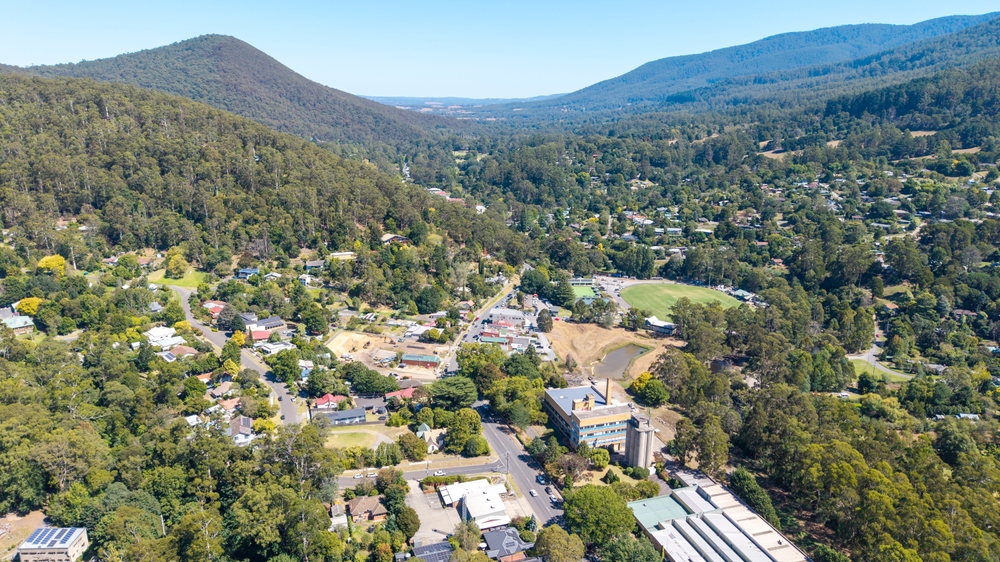
Jacobsen suggested that countries in the Southern Hemisphere, particularly New Zealand and Australia, could offer comparatively better survival prospects during a nuclear winter.
She emphasized that radiation exposure and damage to the ozone layer could make sunlight hazardous in many parts of the world.
This would potentially force survivors in heavily affected regions to live underground for extended periods.
Distance From Strategic Targets
Another factor contributing to the relative safety of Southern Hemisphere locations is their distance from major nuclear powers and primary strategic targets.
This geographic separation reduces the likelihood of being directly targeted in an initial strike.
Combined with the potential for continued agricultural production, this distance could play a crucial role in long-term resilience.
However, even these regions would still face indirect global consequences of a nuclear conflict.
A Stark Reality About Global Safety
Jacobsen summarized the broader reality of nuclear conflict with a direct assessment: “No one is truly safe in a nuclear war. But if you’re looking for the best possible odds of survival, and the ability to grow food when the rest of the planet freezes, pack your bags for down under.”
Her remarks underscore the severity of the long-term environmental and societal impacts associated with nuclear escalation.
Even areas considered less vulnerable would still contend with disrupted ecosystems and global instability.
Public Anxiety in a Changing Geopolitical Climate
The renewed focus on survival geography reflects deeper public concern about the possibility of large-scale conflict in an increasingly volatile global environment.
Modern warfare capabilities, combined with geopolitical tensions, have revived discussions that were once largely associated with Cold War history.
While analysts continue to evaluate strategic risks and potential outcomes, the overarching consensus remains clear.
In the event of a full-scale nuclear conflict, the consequences would extend far beyond any single region, reshaping global living conditions and survival prospects for years to come.