
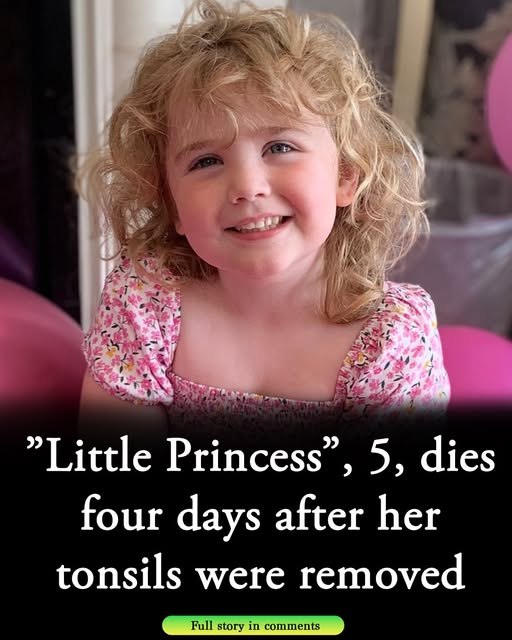
Routine Childhood Surgery Ends in Tragedy, Prompting Scrutiny of Post-Operative Care in Cornwall
In April 2023, a medical procedure commonly regarded as low risk in paediatric care resulted in an irreversible loss for a family in Cornwall. What had been planned as a straightforward operation intended to improve a young child’s quality of life instead ended with the death of five-year-old Amber Milnes. The case led to a detailed inquest, raised questions about clinical decision-making, and highlighted the complexities of caring for children with underlying medical conditions.
Amber, who lived with her parents Sereta and Lewis Milnes in St Just in Roseland, Cornwall, underwent elective surgery to treat obstructive sleep apnoea. The procedure, known as an adenotonsillectomy, involves the removal of the tonsils and adenoids and is one of the most frequently performed surgeries in children across the United Kingdom.
Despite its routine nature, Amber’s case would later demonstrate how rare complications, combined with existing health issues and gaps in clinical awareness, can have devastating consequences.
A Young Life Defined by Joy and Strength
Amber was remembered by her parents as their “magical little princess,” a child whose presence brought warmth and happiness to those around her. She loved music, singing, and imaginative play, often spending time with dolls and princess-themed toys. Family members described her as affectionate and kind, with a natural ability to make others smile.
Despite her young age, Amber had already faced repeated medical challenges. Her parents spoke of her bravery during hospital visits and treatments, recalling how she remained resilient even when unwell. These qualities became a central focus during the inquest, as her family sought to ensure that her story might help protect other children.
An Operation Intended to Improve Health
On 5 April 2023, Amber was admitted to Royal Cornwall Hospital in Truro for her scheduled adenotonsillectomy. The aim of the surgery was to relieve obstructive sleep apnoea, a condition that interferes with breathing during sleep and can affect a child’s development, energy, and overall wellbeing if left untreated.
The operation lasted around 38 minutes. Evidence later presented confirmed that the procedure was considered uneventful. There was no excessive bleeding, no immediate sign of infection, and no complications observed during surgery or in the immediate recovery period.
In many cases, children undergoing this type of operation are discharged on the same day. However, Amber’s parents believed her medical history required additional caution.
A Pre-Existing Condition Raises Concerns
Amber had been diagnosed with cyclical vomiting syndrome, a condition characterised by repeated episodes of severe vomiting that can last for hours and often require hospital treatment. These episodes had frequently resulted in dehydration and the need for medical intervention.
Because of this condition, Sereta and Lewis Milnes repeatedly raised concerns with medical staff ahead of the surgery. They believed Amber should remain in hospital overnight following the operation to reduce the risk of complications and to ensure rapid treatment if her condition worsened.
Despite these concerns, Amber was discharged on the same day. She returned home at approximately 9 p.m., fewer than twelve hours after arriving at the hospital that morning. Her parents later stated that they had expected her to stay overnight because of her underlying condition.
Deterioration During the Night
In the early hours of 6 April 2023, Amber began to vomit. Her parents contacted the hospital for guidance and were advised to monitor her condition and call again if there was no improvement.
The vomiting continued throughout the day. According to later testimony, Amber experienced around 20 episodes. As the hours passed, her parents became increasingly concerned that her condition was deteriorating beyond what could be safely managed at home.
At approximately 10 p.m., they brought Amber back to the hospital for urgent medical attention, alarmed by the persistence and severity of her symptoms.
Readmission and Interrupted Treatment
Following her return to hospital, Amber was treated with intravenous fluids and medications, including pain relief and anti-nausea drugs. She was also prescribed antibiotics after clinicians identified a chest infection.
However, a critical complication soon emerged. Evidence heard during the inquest revealed that Amber’s intravenous line failed around midnight. As a result, she was left without IV fluids, pain relief, antibiotics, or anti-emetic medication.
Because she was unable to tolerate oral medication due to ongoing vomiting, Amber effectively received no treatment for an extended period. Intravenous access was not successfully re-established until the afternoon of 8 April.
During this time, she remained in hospital but continued to experience significant symptoms, leaving her increasingly vulnerable.
A Sudden and Fatal Turn
In the early hours of 9 April 2023, Amber’s condition worsened dramatically. At approximately 3 a.m., she woke and suffered a massive haemorrhage at the surgical site in her throat, where her tonsils and adenoids had been removed.
Medical staff responded immediately and attempted to resuscitate her. Despite urgent efforts, Amber could not be saved. She was pronounced dead at 4:37 a.m.
The rapid sequence of events left her family and hospital staff in shock, marking a tragic end to what had begun as a routine medical intervention.
Findings From the Post-Mortem Examination
A post-mortem examination later revealed that Amber had developed a surgical-site infection at the location of the adenotonsillectomy. The infection had eroded an artery, causing it to rupture and resulting in the fatal haemorrhage.
The rupture was not linked to an injury sustained during the operation itself. Instead, it developed after surgery as the infected tissue became inflamed and weakened.
The official cause of death was recorded as:
Massive haemorrhage with aspiration of blood
Surgical site infection
Enlarged tonsils
Complications following adenotonsillectomy
These findings confirmed that Amber’s death resulted from a known but extremely rare complication of tonsil surgery.
The Inquest and Coroner’s Findings
A two-day inquest into Amber’s death took place in November 2025 at Cornwall Coroner’s Court. Senior Coroner Andrew Cox delivered a narrative conclusion outlining the medical circumstances and sequence of events.
He concluded that Amber died as a result of a “known but very rare complication: catastrophic haemorrhage caused by infection after a surgical procedure (adenotonsillectomy).”
While describing the surgery itself as unremarkable, the coroner raised concerns about whether Amber’s cyclical vomiting syndrome had been fully considered when decisions were made about discharge and post-operative care.
He noted that neither the surgeon nor the anaesthetist had been fully aware of the details of Amber’s CVS prior to the operation, despite her parents having communicated the condition. The coroner indicated that this information could have influenced risk assessment and aftercare planning.
Consent and Clinical Communication
The surgeon who carried out the procedure, Kel Anyanwu, told the inquest that in his 25 years at the hospital, he had never previously encountered a death following a tonsillectomy. He confirmed that Amber’s surgery involved minimal blood loss and showed no signs of infection at the time.
He also confirmed that the consent form signed by Amber’s parents did not explicitly mention the risk of death. This point was highlighted by the coroner during discussions around informed consent and communication of rare but serious risks.
Expert evidence from an ENT specialist concluded that while no definitive failures could be said to have certainly altered the outcome, a clearer discussion about increased risks related to Amber’s CVS should have taken place.
Parents Urge Vigilance From Others
Throughout the inquest and in public statements afterward, Sereta and Lewis Milnes spoke openly about their grief and their daughter’s courage. They described Amber’s strength during repeated hospital visits and treatments over her short life.
They urged other parents to remain vigilant when their children undergo surgery, even procedures considered routine. They said: “If surgery is needed then do go ahead, but if you are worried, don’t be afraid to trust your instincts, ask questions, and work with the doctors. Remember that no operation is risk-free, however common it may be.”
While acknowledging that the coroner could not confirm whether overnight monitoring or earlier intervention would have changed the outcome, the family maintained their belief that different decisions might have helped.
Hospital Trust Response and Changes
Following the inquest, Royal Cornwall Hospitals NHS Trust issued a statement expressing deep condolences to Amber’s family and described the death of a child as “utterly devastating.”
The Trust stated that it fully accepted the coroner’s findings and had introduced new guidelines for caring for children with obstructive sleep apnoea following tonsil and adenoid removal. These changes included increased awareness of associated risks and more individualised post-operative care.
The Trust also invited Amber’s parents to meet with a paediatrician to discuss ongoing support and care.
A Rare Outcome With Broader Implications
Tonsillectomy remains one of the most common paediatric surgeries in the United Kingdom, with serious complications considered extremely rare. However, Amber Milnes’ death has underscored the reality that even routine procedures carry risks, particularly for children with additional medical conditions.
Experts note that conditions affecting hydration, recovery, or immune response, such as cyclical vomiting syndrome, may require more personalised planning and monitoring. Amber’s case has reinforced the importance of clear communication, thorough pre-operative assessment, and careful consideration of parental concerns.
For her family, the loss is immeasurable. For the wider medical community, Amber’s story stands as a sobering reminder that vigilance, individualised care, and transparent communication remain essential, even when a procedure is widely regarded as routine.