
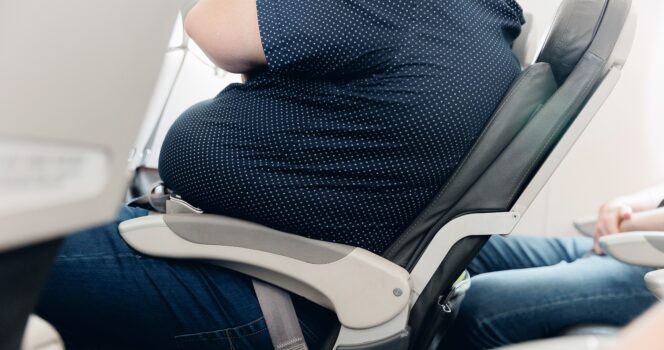
Air Travel Accessibility Debate Grows as Passenger Highlights Challenges with Airplane Bathrooms
A Personal Experience Sparks a Wider Conversation
Air travel is often viewed as the most efficient way to cover long distances, but for some passengers, the experience presents significant challenges beyond the commonly discussed issues of cramped seating and limited legroom.
A recent viral video has drawn attention to one such challenge, focusing on the accessibility of airplane bathrooms for plus-size travelers. The video, shared on TikTok, has generated widespread discussion about airline design and the realities faced by passengers whose needs are often overlooked.
The influencer behind the video described the experience as one that extends beyond discomfort, highlighting a recurring issue that affects her ability to travel comfortably and confidently.
Concerns Over Limited Space in Lavatories
In her video, the influencer explained that the most significant barrier she encounters while flying is not seating arrangements but the inability to use airplane lavatories due to their size.
“Forget the difficulty of having to get two seats to fly, accessibility is the number one roadblock for me especially when it comes to long distance travel,” she said. “Flying while fat – lavatory edition.” “I don’t fit in the standard airport lavatory at all.”
Her remarks resonated with many viewers who shared similar experiences, pointing out that airplane bathrooms are often too small not only for plus-size individuals but also for those with mobility challenges.
The discussion quickly expanded to include broader concerns about how aircraft are designed and whether current standards adequately consider the diversity of passengers.
Industry Trends and Design Decisions
Airlines have faced increasing financial pressures in recent years, including rising fuel costs and higher operational expenses. In response, many have adopted strategies aimed at maximizing revenue within limited cabin space.
One of these strategies involves reducing the size of lavatories to create room for additional seating. By adding even a single row of seats, airlines can significantly increase their annual earnings per aircraft.
Industry analysis suggests that each additional seat can generate substantial revenue over time, making space-saving modifications an attractive option for carriers seeking to improve profitability.
As a result, airplane bathrooms have become smaller, with some designs reducing available space by a noticeable margin compared to older aircraft configurations.
Impact on Passenger Experience
For many travelers, these design changes have gone largely unnoticed. However, for others, they have created real obstacles that affect basic aspects of travel.
The influencer described how navigating the aircraft aisle requires careful movement, often turning sideways to avoid contact with seats and other passengers. This alone adds a layer of stress to the journey.
More significantly, she explained that she avoids using the bathroom entirely during flights due to space limitations, even when faced with urgent situations.
“I can’t use the bathroom, and my maximum flight time is about six hours. I’ve never had a problem with that before except once I came super close to having an accident on a flight from San Francisco to Chicago,” she said.
“There was some bad weather and my plane was rerouted; they tacked on an extra two hours to the flight and things got a little sketch.”
A Growing Discussion on Accessibility
The video has contributed to a larger conversation about accessibility in air travel, particularly regarding how airlines accommodate passengers with varying physical needs.
Accessibility is often associated with accommodations for disabilities, but the discussion now includes a broader range of considerations, including body size and mobility limitations.
Many individuals have shared their own experiences, noting that current airplane designs may not reflect the diversity of the traveling public.
This has led to questions about whether industry standards should evolve to better address these concerns, especially as more people speak openly about their experiences.
Mixed Reactions from the Public
While the video has generated support and empathy from some viewers, it has also sparked debate across social media platforms.
Some individuals argue that airplane design should adapt to accommodate a wider range of passengers, emphasizing the importance of inclusivity and comfort.
Others, however, believe that redesigning aircraft to address these concerns may not be practical or economically feasible.
“When you’re the only one on the plane affected by the narrow aisles, the aisles aren’t the problem,” one user commented in response to the discussion.
Another wrote, “Diet and exercise seem a bit more logical than redesigning aircrafts,” while a third added, “Oh ok – let’s widen aisles – it’s easier than going on diet.”
Additional responses reflected similar sentiments, with some suggesting that personal responsibility should take precedence over structural changes.
Balancing Profit and Passenger Needs
The debate highlights a fundamental tension within the airline industry: the balance between maximizing revenue and ensuring passenger comfort.
As airlines continue to optimize cabin layouts, decisions about space allocation inevitably affect the overall travel experience.
While smaller lavatories allow for increased seating capacity, they may also limit accessibility for certain groups of passengers.
This raises questions about how airlines can address diverse needs without compromising financial sustainability.
The Reality of Long-Distance Travel
For passengers who already face challenges during flights, long-distance travel can become particularly difficult.
Extended flight times increase the likelihood that passengers will need to use onboard facilities, making accessibility issues more pronounced.
In situations involving delays or rerouted flights, these challenges can escalate quickly, adding stress and discomfort to an already demanding experience.
The influencer’s account of nearly facing an emergency situation underscores the importance of considering these factors in aircraft design.
Looking Ahead
The conversation surrounding airplane accessibility is unlikely to fade quickly, as more passengers share their experiences and perspectives.
As awareness grows, airlines may face increasing pressure to consider adjustments that improve inclusivity while maintaining operational efficiency.
Whether through design innovations, policy changes, or new approaches to cabin layout, the issue continues to evolve.
@boberryvip Flying while fat part 1! ✈️🧳🌎 #plussizeedition #plussizetiktok #plussizetravel #plussizeadventure #plussizeadvice #fattravel #fatandfierce #fat ♬ original sound – BoBerryVIP
For now, the discussion serves as a reminder that air travel, while convenient for many, can present significant challenges for others.
A Broader Reflection on Travel Experiences
The debate extends beyond a single issue, touching on broader themes of accessibility, inclusivity, and the role of design in shaping everyday experiences.
As more voices contribute to the conversation, the focus remains on finding solutions that acknowledge and address the diverse needs of travelers.
The viral video has brought attention to a topic that often goes unspoken, encouraging a wider examination of how modern travel can better serve everyone.
Ultimately, the discussion reflects an ongoing effort to balance efficiency with empathy in an industry that connects millions of people around the world.