
Parents Share Heartbreaking Update on 5-Year-Old Liam Conejo Ramos Following ICE Detention
A Life Altered in an Instant
Five-year-old Liam Conejo Ramos and his father, Adrian Alexander Conejo Arias, experienced a life-changing moment in January when they were detained by ICE in Columbia Heights, Minnesota. The incident occurred as the young boy walked home from preschool with his father, an event that quickly sparked global outrage.
Liam and his father were taken to a detention center in Texas, where they spent nearly two weeks before a judge ordered their release. Though now back home, the experience has left lasting emotional scars on the young boy.
Ongoing Emotional Impact
In a recent interview with CBS, translated from Spanish to English, Liam’s parents shared the profound effect the detention has had on their son. They report that he now behaves “very different” and struggles with fears stemming from the experience.
Adrian Alexander Conejo Arias explained that Liam regularly sees a psychiatrist to help process the trauma. “As parents, it worries us a lot that he’s no longer as he was before, and we’re worried this could last a long time,” he said. “It does worry us that this will not heal quickly.”
Erika Ramos added that Liam lives in constant fear, even reacting anxiously to police officers. “He sees police officers, and he says, ‘It’s ICE, Mommy,’” she said. For a child so young, these experiences have been particularly difficult to navigate.
The Global Reaction
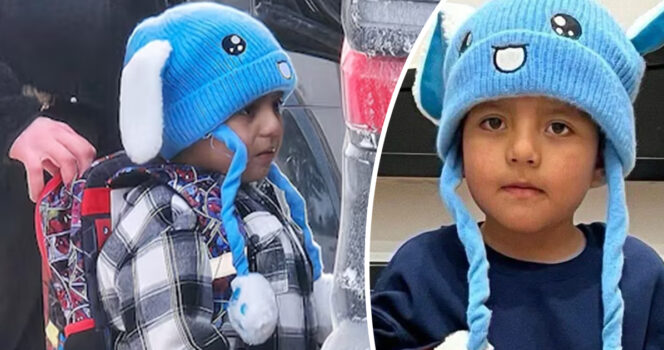
The image of Liam being detained, wearing a buny hat and carrying a backpack, drew worldwide attention. Following their release, Erika explained that her son had begun acting out and showing disruptive behavior. Previously a happy and engaged student, Liam now avoids certain classes and is hesitant to play with other children.
The judge who ordered their release described the detention as rooted in “the ill-conceived and incompetently-implemented government pursuit of daily deportation quotas, apparently even if it requires traumatizing children.” Despite the release, federal authorities have continued pursuing efforts to deport the family.
Legal and Government Developments
Liam and his father’s asylum case has faced challenges even after their release. The federal government has maintained its efforts to deport the family, including contesting the court decision that initially allowed their release from ICE custody.
The Department of Homeland Security stated that the family was ordered to be deported by an immigration judge after receiving “full due process.” The department has continued to encourage parents like Liam’s to self-deport alongside their children.
Responding to False Claims
At the time of their detention, ICE alleged that Liam’s father attempted to evade arrest and left his son behind. Adrian Alexander Conejo Arias strongly rejected these claims in the CBS interview.
“I think it was an injustice that they did that to us, when in reality we were doing everything right,” he said, asserting that the family complied with the law and acted responsibly throughout the process.
A Lasting Mark
The detention and separation have left an enduring impact on Liam’s daily life. While physically safe at home, the young boy continues to struggle emotionally, requiring professional support and ongoing care to help him navigate the aftermath of the traumatic event.
His parents emphasize the importance of understanding the long-term consequences such incidents can have on children, highlighting that legal outcomes do not erase the emotional and psychological effects of such experiences.
Family and Community Support
Throughout this period, Liam’s parents have worked to provide stability and reassurance, while also advocating for broader awareness of the effects of child detention. Their story has drawn attention to the need for careful consideration of the human impact of immigration enforcement actions.
Liam’s case continues to resonate globally, reminding communities and policymakers of the vulnerability of children caught in immigration proceedings and the importance of addressing trauma with sensitivity and care.