
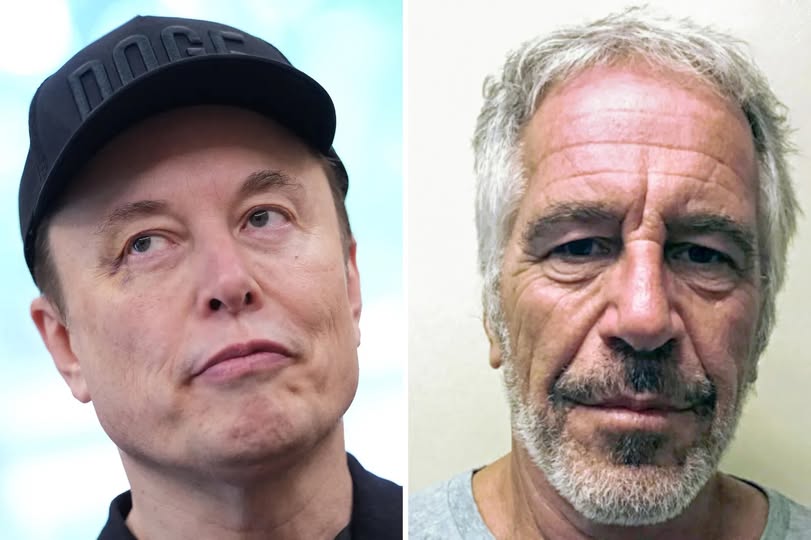
A fresh release of Justice Department records has added new detail to the public record surrounding the network of people who maintained contact with Jeffrey Epstein in the years after his criminal conduct was widely known. The documents include email exchanges and calendar references that show Elon Musk sought to arrange a trip to Epstein’s private island, Little St. James, in the U.S. Virgin Islands.
The material spans several messages and planning notes and places the focus on scheduling rather than casual social overlap. The records indicate that the discussions were not isolated or accidental but occurred more than once, involving Epstein’s staff and touching on specific dates and travel windows.
One of the central items in the release is a December 2013 email written by Epstein’s longtime assistant. The message states: “Just a reminder Elon Musk was asking about coming to your island on Jan. 2.” The wording reflects a follow-up rather than a first inquiry, suggesting that the topic had already been raised and was being tracked.
Another message in the same batch refers to “organizing Elon Musk to the island.” The phrasing again points to active planning and coordination rather than a passing mention or a single, unanswered request. In a separate exchange, Musk himself is shown asking Epstein if there was “a good time to visit,” while noting that he would already be in the Virgin Islands during that period.
Epstein’s reply in the email chain is also included in the documents. He wrote: “Any day 1st–8th… always space for you.” The response is brief and open-ended, indicating that a range of dates was available and that the visit could be accommodated without difficulty.
Together, these messages create a timeline in which a visit was being discussed in practical terms. The focus of the correspondence is not on introductions or general social contact but on the logistics of arranging travel to Little St. James, a property that later became widely known as a central location in Epstein’s activities.
The records also extend beyond Elon Musk himself. Additional emails reference interest from his brother, Kimbal Musk, indicating that the potential visit was not limited to a single individual. Beyond email correspondence, a calendar entry that later became public through a release by House Democrats flagged a tentative Musk visit in December 2014. That date is significant because it falls years after Epstein’s 2008 plea deal, which had already placed his crimes and conduct firmly in the public eye.
The documents do not state that Elon Musk ultimately traveled to the island. Musk has said he did not go. The materials, however, do establish that he sought to arrange such a visit and that the idea progressed into scheduling discussions involving Epstein’s staff and Epstein himself.
The timing of these exchanges is central to the renewed attention they have received. By late 2013 and 2014, Epstein’s legal history was not a secret. His 2008 plea deal had been widely covered, and his name was already associated with serious criminal behavior. The emails therefore situate the planning discussions in a period when the risks and implications of association were already part of the public record.
In recent years, Musk has positioned himself publicly as a critic of secrecy surrounding the Epstein case. During a dispute with Donald Trump last year, Musk claimed that Trump was “in the Epstein files,” and he accused the administration of “a cover-up.” He framed those remarks as part of a broader call for transparency and full disclosure of all related records.
The newly released emails add context to that public stance by showing that Musk himself had sought access to Epstein’s private island years earlier. The documents do not accuse Musk of criminal conduct, and no law enforcement agency has charged him in connection with Epstein. They do, however, contradict any suggestion that he had no interest in being in Epstein’s orbit or visiting one of Epstein’s most infamous properties.
The broader set of records underscores how Epstein’s network extended into many sectors of business, politics, and entertainment. Over decades, Epstein cultivated relationships with powerful and wealthy individuals, often using private jets, luxury properties, and exclusive gatherings as part of that social environment. Little St. James, in particular, became a focal point in investigations because of its role in his operations and the secrecy surrounding activities there.
The release of additional documents continues a pattern that has unfolded since Epstein’s death in custody in 2019. Each new batch of material adds incremental detail to the map of his contacts and the nature of their interactions. Some records reveal social encounters, others show travel arrangements, and still others include direct communications that place specific individuals in planning discussions.
In this case, the focus is narrow but clear: the emails show repeated attempts to schedule a visit. The December 2013 message from Epstein’s assistant functions as a reminder, which implies an ongoing thread of conversation. The reference to “organizing Elon Musk to the island” suggests active coordination. Musk’s own question about “a good time to visit” shows personal involvement in the planning. Epstein’s reply offering availability between the 1st and the 8th completes the logistical loop.
The later calendar entry pointing to December 2014 adds another layer, indicating that the idea of a visit persisted beyond a single year. The inclusion of Kimbal Musk in related correspondence further broadens the scope of interest reflected in the documents.
Public discussion of these records has also been shaped by the contrast between Musk’s earlier public statements and the content of the emails. His comments about Trump being “in the Epstein files” and about “a cover-up” were presented as part of a demand for openness. The newly disclosed material places Musk himself within the set of people whose interactions with Epstein are now being examined in detail.
It is important to separate what the documents do and do not show. They do not establish that Musk committed any crime. They do not confirm that he visited Little St. James. They do, however, provide documentary evidence that he sought to arrange such a visit and that those efforts involved multiple communications and at least one tentative scheduling entry.
The Epstein case has remained a subject of intense public interest precisely because of the number of prominent names that appear in various records connected to him. Flight logs, address books, emails, and witness statements have all been used to piece together a picture of how he operated and who had access to his properties and aircraft. Each new release is scrutinized not only for direct evidence of wrongdoing but also for what it reveals about patterns of association and access.
Little St. James holds a particular place in that history. The island was one of Epstein’s most closely guarded properties and later became synonymous with the crimes for which he was investigated. Any record showing attempts to visit it, especially after his criminal history was well known, is therefore treated as significant in the broader effort to understand how his network functioned.
The current documents also illustrate how administrative staff played a role in managing Epstein’s schedule and visitors. The assistant’s reminder email and the reference to organizing travel show that requests were processed through established channels. Epstein’s own brief response offering a range of dates suggests that such visits were accommodated as part of routine operations at the time.
The release of these materials comes amid continuing debate over the completeness of the public record in the Epstein case. While many documents have been unsealed or disclosed, questions remain about what has not yet been made public and how much more detail could still emerge about the scope of his connections.
For Elon Musk, the emails place his name alongside others whose past interactions with Epstein are now being reviewed in a more critical light. The contrast between his public calls for transparency and the content of the emails has become part of the discussion surrounding this release. The documents do not resolve broader questions about responsibility or knowledge, but they do establish a clear paper trail of interest in visiting Epstein’s island.
The pattern seen here mirrors what has occurred with other figures whose names appear in Epstein-related records. In many cases, the documents show social or logistical contact without proving criminal involvement. At the same time, they contribute to a fuller picture of how Epstein maintained access to influential people and how his properties were treated as destinations within certain elite circles.
As additional records continue to surface, the public understanding of that network is likely to keep evolving. The focus remains on transparency and on building a comprehensive account of how Epstein operated for so long and with such broad reach. Each new disclosure adds another piece to that account, even when it does not answer every question or settle every controversy.
In this instance, the newly released emails and scheduling references establish that Elon Musk sought to arrange a visit to Little St. James and that the effort involved multiple steps and multiple participants. The documents do not go further than that, but they do fix those efforts in time and place, adding a documented chapter to the ongoing examination of Epstein’s extensive web of contacts.