
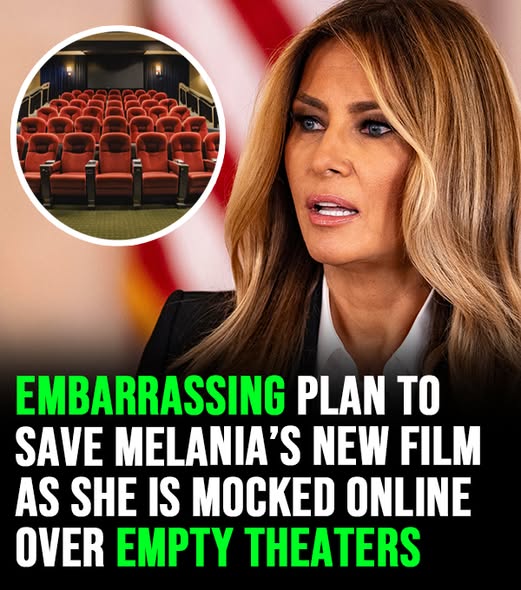
Melania Trump’s long-anticipated documentary film is set to premiere in theaters across the United States on January 29, drawing renewed attention as its release date approaches. Promoted enthusiastically by President Donald Trump as a “must-watch,” the film has nonetheless faced unexpectedly weak ticket sales, prompting online criticism and renewed scrutiny of its commercial prospects.
The documentary, titled Melania, was announced just weeks before Donald Trump’s presidential inauguration one year ago. At the time, the project was positioned as a major cinematic undertaking focused on the life, work, and personal experiences of the former First Lady. The film was produced by Melania Trump’s production company, with Amazon reportedly paying approximately $40 million for licensing rights, signaling strong initial confidence in the project’s potential reach and appeal.
Speaking publicly when the film was first revealed, Melania Trump described the concept as an intimate look at her daily life and responsibilities, offering viewers insight into aspects of her role that she believed were not widely understood.
“So I had an idea to make a movie, to make a film about my life. My life is incredible. It’s incredibly busy, and I told my agent I have this idea so please go out and make a deal for me. We started the production in November and we are shooting right now. So it’s a day-to-day life. What I’m doing, what kind of responsibilities I have, people they don’t really know and they will see it,” she said at the time.
Originally scheduled for release in the fourth quarter of 2025, the documentary’s timeline was later adjusted, moving its theatrical debut to January 29. The shift brought the film into the spotlight sooner than expected, aligning its launch with heightened public attention surrounding the early months of Donald Trump’s new presidential term.
In the days leading up to the premiere, President Trump actively promoted the film on social media. Writing on X, he urged supporters to attend screenings and framed the documentary as a major success even before its release.
“MELANIA, the Movie, is a MUST WATCH,” Trump wrote. “Get your tickets today – Selling out, FAST!”
However, publicly available ticketing data and social media posts have painted a contrasting picture. Images shared online from various cities show theater seating maps with large numbers of unsold seats, and in some cases, entire screenings with no tickets sold. The apparent lack of demand has fueled online commentary and criticism, with some users mocking the film’s commercial performance in the days ahead of its debut.
As discussion intensified, reports emerged suggesting that efforts were being made behind the scenes to bolster attendance figures. Journalist Rob Shuter reported that Republican clubs in several conservative-leaning areas had been encouraged to purchase tickets in bulk in order to fill theaters and avoid the appearance of empty screenings.
“This isn’t organic demand,” one insider told Rob Shuter’s Substack. “It’s about optics. Empty theaters look terrible.”
According to the report, some Republican organizations allegedly purchased large blocks of seats or even entire showings. In certain instances, tickets were offered for free or at sharply reduced prices through GOP-affiliated platforms in an attempt to boost turnout.
Despite these measures, sources indicated that filling seats remained difficult.
“They’re struggling to give the tickets away,” another source said. “Some screenings barely sell unless the party steps in.”
A separate source described the situation in blunt terms, stating, “It feels less like a movie night and more like a loyalty check.”
The reports have not been independently confirmed, but they have added to the broader narrative surrounding the film’s underwhelming pre-release performance. The contrast between the project’s high-profile backing, reported production investment, and muted public response has become a focal point of discussion online.
As images of empty auditoriums circulated, some social media users began asking broader questions about how movie theaters handle screenings that attract little or no audience interest. On the online forum Reddit, one user asked, “If no one buys a ticket to a movie, do they still run it or just call it off?”
Responses from individuals claiming past experience in cinema operations offered insight into standard practices. One user wrote, “When I worked at a theater they would play any movie that was on in the middle of the day but if it was the end of the night they’d let it go 15 minutes then shut er down. They would sometimes turn the lamp off on the projector to save teh bulb until someoen called up to the projectionist that the show was going on.”
Another commenter added, “i worked at a cinema and what they did was start the movie and let it play for twenty minutes, so if anyone showed up to buy last-minute tickets they would still be able to see it. if no one came, they shut it off. on a related note, those were my favorite auditoriums to clean.”
While these anecdotes were not specific to Melania, they became part of the wider conversation surrounding the documentary’s release and the visible lack of pre-sale demand in some markets.
Despite the online criticism and reports of slow sales, Melania Trump has publicly expressed pride and optimism about the project. On January 25, following a private screening at the White House, she shared her thoughts on social media, framing the event as a milestone.
“MELANIA, the film A Historic Moment… I am deeply humbled to have been surrounded by an inspiring room of friends, family, and cultural iconoclasts at the White House last night,” she wrote on X.
She continued by emphasizing the broader meaning she attributes to the project and the people involved.
“Each of these individuals each brought their unique vision to the world, making a lasting impression. Our personal stories endure time and serve as a reminder of our mutual obligation to one another. It was an honor to present my new film, MELANIA, ahead of its global launch.”
The White House screening underscored the film’s significance within Trump-aligned circles, even as questions persist about its reception among the wider public. Supporters view the documentary as an unprecedented look at the life of a First Lady who maintained a relatively private public profile during her time in the White House. Critics, meanwhile, argue that interest in the subject may be more limited than initially anticipated.
Industry observers note that documentaries centered on political figures often face challenges at the box office, particularly when they appeal primarily to a specific political base. While strong support from a dedicated audience can sometimes offset broader indifference, early indicators suggest that Melania may struggle to generate sustained theatrical momentum without significant institutional backing.
The reported $40 million licensing deal has also drawn attention, with commentators questioning whether theatrical performance was ever intended to be the primary measure of success. In some cases, documentaries with guaranteed distribution deals prioritize visibility and prestige over ticket revenue, relying on streaming platforms for long-term viewership.
As the January 29 release date arrives, attention will turn to whether walk-up sales, word of mouth, or additional promotional efforts can reverse the current trend. The first week of screenings is expected to offer a clearer picture of public interest and the film’s financial outlook.
For now, Melania stands at the intersection of high expectations, political loyalty, and uncertain demand. Whether it ultimately finds an audience in theaters or becomes more prominent through other distribution channels remains to be seen. What is clear is that the documentary’s debut has already sparked conversation, debate, and scrutiny well beyond the cinema itself.