
How To Open A Can Without A Can Opener In An Emergency
The topic of How To Open raises many questions. Forgetting a can opener can turn a simple meal into a frustrating problem, especially during camping, travel, storms, power outages, or any situation where supplies are limited. A sealed can may seem useless without the right tool, but there are several emergency methods that can help open it when no standard opener is available.
These methods rely on common items such as a spoon, a chef’s knife, or even a flat piece of concrete. They are not meant to replace a proper can opener, but they can be useful when hunger, limited equipment, or an unexpected situation leaves someone needing access to canned food.
The most important rule is caution. Any improvised can-opening method can create sharp metal edges, unstable pressure, or slipping tools. The goal is to open the can slowly, carefully, and with full attention to hand placement.
Why Emergency Can-Opening Skills Matter
Canned food is common in camping kits, emergency supplies, pantries, and travel bags because it lasts a long time and does not require refrigeration. The problem is that most cans are still designed to be opened with a proper can opener.
When that tool is missing, people may assume the food cannot be used. In reality, the lid can be weakened or punctured with other objects if the person works patiently and understands the risks.
These techniques are useful only in specific situations. A proper opener is safer, faster, and cleaner. Still, knowing a backup option can make a difference when supplies are limited.
Before trying any method, place the can on a stable surface if possible. Keep fingers away from the lid seam and never rush. If gloves are available, especially cut-resistant gloves, they can help reduce the risk of injury.
The Spoon Method
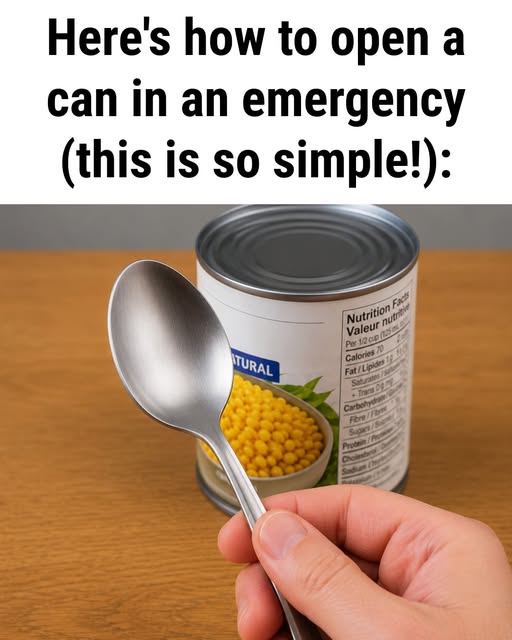
A sturdy metal spoon can be used to open a can by wearing down and puncturing the lid near the rim. This method is useful because spoons are common in kitchens, lunch bags, camping gear, and picnic supplies.
To begin, hold the can firmly with one hand. Keep the hand gripping the can away from the top edge, because the lid can become sharp once it starts to open.
Turn the spoon upside down so the curved side faces the can. Position the tip of the spoon against the lid near the sealed rim. The strongest part of the lid is usually around the edge, so pressure needs to be focused in one spot.
Push down on the spoon handle while moving the spoon tip back and forth in a short seesaw motion. The repeated friction and pressure should eventually weaken the metal enough to make a small puncture.
Once the first puncture is made, continue working around the rim. Make additional punctures close together until enough of the lid has been loosened. The spoon handle can then help lift the lid, but the exposed edge will be sharp.
The spoon method takes patience, but it avoids using a blade. That can make it a practical emergency option when the only available tool is basic cutlery.
The Chef’s Knife Technique
A chef’s knife can also open a can, but this method requires extra care because the blade can slip. It should only be attempted by someone who can control the knife firmly and who has no safer option available.
Hold the can securely and keep the top facing upward. Grip the knife by the handle and place your thumb on the flat surface of the blade above the heel, not near the sharp cutting edge.
The heel of the knife is the lower back portion of the blade close to the handle. That part is stronger and easier to control than the tip. Insert the heel into the groove near the can’s rim and press carefully to create a small opening.
Work slowly around the lid, making small openings along the edge. The goal is not to stab wildly or force the blade through the whole lid at once. Controlled pressure is safer and more effective.
As the lid loosens, use the knife tip only with caution to lift the metal. Keep the blade pointed away from your body and keep fingers clear of the opening.
This method can work well when a chef’s knife is available, but it is also one of the riskier options. A slipping blade can cause serious injury, so slow movement and steady control matter more than speed.
The Concrete Or Flat Rock Method
In an outdoor emergency where utensils are unavailable, a rough flat surface such as concrete or a flat rock can help open a can by wearing away the lid seam.
This method works differently from the spoon or knife methods. Instead of puncturing the top from above, it grinds down the sealed rim until the lid loosens.
Find a sturdy flat rock or a concrete surface. Turn the can upside down so the top seam is pressed against the rough surface. Rub the can back and forth with steady pressure.
After some time, moisture may appear around the rim. That can mean the seal has been worn down enough for the lid to loosen. Wipe away dirt or debris before opening the can.
Once the rim is weakened, squeeze the sides of the can gently. The pressure can help pop the lid loose. The contents should be checked carefully because dirt or metal particles may be present near the opening.
The concrete method is especially useful when no tool is available, but it is messy and should be treated as a last resort. It can also damage the can unevenly, which increases the chance of sharp edges.
Safety Comes First
Every improvised can-opening method creates hazards. The lid can bend, tear, and expose jagged metal. A spoon can slip. A knife can cut. Concrete can leave debris on the rim of the can.
For that reason, these methods should be used only when necessary. If a proper can opener is available, it remains the best choice for regular use.
After opening the can, inspect the lid and rim before eating. Avoid touching the cut edge directly. If pieces of metal or dirt have entered the food, the contents may not be safe to consume.
It is also smart to keep a small manual can opener in emergency kits, camping bags, cars, and kitchen drawers. A lightweight opener takes up little space and prevents the need for risky improvised methods.
How To Open: A Useful Backup Skill
Knowing how to open a can without a can opener is a practical emergency skill. It can help during camping trips, unexpected outages, or moments when supplies are not as complete as planned.
A spoon can puncture and work around the lid. A chef’s knife can open the rim with careful pressure. Concrete or a flat rock can grind down the seal when no utensils are available.
Each method requires patience and caution. The goal is not to prove strength, but to open the can without hurting yourself or contaminating the food.
With care, these simple techniques can turn a frustrating situation into a manageable one. Still, the best lesson is simple: keep a real can opener nearby whenever possible, and treat these hacks as emergency backups only.