
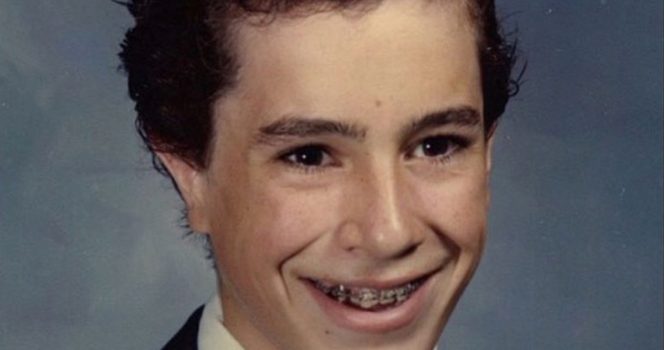
Stephen Colbert’s Journey From Childhood Tragedy to Late-Night Television Success
Early Life in a Large Family
Stephen Colbert grew up in a large household as the youngest of ten children. His early years were spent in Maryland and South Carolina, surrounded by siblings and guided by parents who placed a strong emphasis on faith and education.
His father worked as both a doctor and an academic, creating an environment that valued learning and thoughtful discussion. At the same time, the family maintained strong religious beliefs.
Colbert has described his parents as devout Catholics who also encouraged intellectual curiosity. Their approach to faith included the belief that questioning religious teachings did not conflict with remaining devoted to the Church.
The future television host once described his upbringing as traditional and conservative. He recalled that his mother voted for a Democrat only once in her life, casting her vote for John F. Kennedy.

A Spirited Child With Curiosity
As a child, Colbert displayed a lively personality that stood out to those around him. His mother once described him as “rambunctious,” reflecting the energetic nature he showed during his early years.
Even at a young age, he noticed cultural stereotypes portrayed on television. In particular, he observed that people from the Southern United States were often depicted as less intelligent in media portrayals.
Determined to avoid being judged by those stereotypes, Colbert began practicing the speech patterns he heard from national news anchors. By mimicking their style of speaking, he taught himself to adopt a more neutral broadcast voice.
This early effort to shape how he sounded would later prove useful during his career in television and entertainment.
A Devastating Plane Crash
When Colbert was just ten years old, a tragedy occurred that changed the course of his life.
On September 11, 1974, his father and two of his brothers were passengers on Eastern Air Lines Flight 212. The plane was attempting to land in Charlotte, North Carolina, when it crashed.
The brothers had been traveling so that they could enroll at Canterbury School in New Milford, Connecticut. The short flight departed from Charleston but never reached its intended destination.
The aircraft struck a hillside covered with cornfields approximately three miles from the runway.
Weather conditions played a role in the crash. Dense fog created limited visibility during the approach.
An investigation later concluded that cockpit procedures had not been properly followed. The National Transportation Safety Board determined that the crash resulted from “The flight crew’s lack of altitude awareness at critical points during the approach due to poor cockpit discipline in that the crew did not follow prescribed procedure.”
Of the 82 people on board the aircraft, only 13 survived.
Life After Loss
The crash claimed the lives of Colbert’s father and two of his brothers, Paul and Peter. Their deaths left a deep emotional impact on the family.
Years later, Colbert reflected on how the tragedy affected him during childhood. Speaking about the loss, he said: “I was personally shattered and then you reform yourself in this quiet, grieving world that was created in the house.”
The home environment changed dramatically after the accident.
Colbert explained that his mother focused her energy on caring for him during that period of grief. At the same time, he felt a sense of responsibility toward her as they navigated the difficult years ahead.
He recalled: “My mother had me to take care of, which I think was sort of a gift for her, a sense of purpose at that point. But I also had her to take care of. It became a very quiet house, very dark, and ordinary concerns of childhood kind of disappeared.”
As the youngest child, he found himself spending much of his adolescence with his mother after his older siblings had already left home.

Turning to Books and Faith
In the years following the crash, Colbert struggled to find meaning in everyday routines.
Schoolwork and academic responsibilities no longer seemed important to him. He later recalled that the loss had left him emotionally disconnected from his studies.
“Nothing made any sense after my father and my brothers died. I kind of just shut off,” he said.
During this time, he turned to literature for comfort. Science fiction and fantasy became a refuge where he could temporarily escape the sadness surrounding him.
The works of J.R.R. Tolkien became particularly meaningful to him, and he has continued to express admiration for those stories throughout his life.
His Catholic faith also played an important role during this period. It offered a framework through which he tried to understand and cope with the devastating loss his family had experienced.
Discovering Performance and Creativity
While he struggled academically after the tragedy, Colbert eventually found a creative outlet that gave him renewed purpose.
Improvisation and theater began to capture his interest. Through performance, he discovered a way to express himself and connect with others.
This new passion led him to change the direction of his education.
He transferred from Hampden-Sydney College in Virginia to Northwestern University in Chicago, where he pursued performing arts.
Even then, the emotional weight of his childhood experiences continued to influence him.
During his freshman year in college, he lost 50 pounds and struggled emotionally as he processed the grief that had been building for years.
In a 2012 conversation with Oprah Winfrey, he described that period of his life as difficult and emotionally overwhelming.
“I was just green. I was just so sad about it. I just had time to sort of, I suppose, to be alone with the idea”.

Aiming for a Career in Acting
While studying at Northwestern University, Colbert initially hoped to become a dramatic actor.
At that time, comedy was not his main focus. His ambition centered on serious acting roles rather than humor.
However, an opportunity soon shifted the path of his career.
He joined the touring company of Second City, a well-known improvisational comedy group. Colbert started as an understudy for performer Steve Carell.
During this period, he formed creative friendships that would shape his future work.
Among those collaborators were Amy Sedaris and Paul Dinello. The partnerships developed during those early years would continue to influence his projects later in his career.
Breakthrough in Television
Although Colbert did not immediately achieve the dramatic acting career he originally imagined, his path eventually led him to television.
His national recognition began with appearances on The Daily Show.
From there, he launched his own program, The Colbert Report, which became known for its satirical approach to political commentary.
The success of that show established Colbert as a major figure in late-night television.
His career reached another milestone when he was chosen to succeed David Letterman as host of The Late Show.

Taking Over The Late Show
CBS premiered The Late Show with Stephen Colbert on September 8, 2015, following Letterman’s retirement.
Letterman had hosted the program for more than two decades and had spent over thirty years working in late-night television.
When Colbert stepped into the role, the network allowed him considerable freedom to shape the program’s direction.
CBS told audiences they would finally see “the real Stephen Colbert,” marking a departure from the satirical persona he had played on The Colbert Report.
The new version of The Late Show blended political commentary with traditional late-night entertainment.
Monologues often addressed current events, while interviews with celebrities, cultural figures, and newsmakers remained central to the program.
Live music performances also continued as a regular feature.
Success and Financial Achievement
The combination of sharp humor, thoughtful discussion, and musical performances helped Colbert build a strong audience.
The show eventually rose to the top of the late-night ratings.
His success on television also brought significant financial rewards.
Colbert’s net worth has been estimated at $75 million.
Despite his high-profile career, he has maintained a stable family life outside the spotlight.
He married Evelyn “Evie” McGee-Colbert in 1993.
Together they have three children: Madeleine, born in 1995; Peter, born in 1998; and John, born in 2002.
The family lives in Montclair, New Jersey.
The End of an Era for The Late Show
In 2025, CBS announced that The Late Show with Stephen Colbert would conclude in May 2026.
The decision would also bring the long-running Late Show franchise to an end after 33 years on television.
Network representatives acknowledged the program’s success, noting that it had led late-night ratings for nine consecutive seasons.
In a statement, CBS said: “Our admiration, affection, and respect for the talents of Stephen Colbert and his incredible team made this agonizing decision even more difficult.”
Health Challenges Along the Way
Throughout his career, Colbert has also faced several health issues.
During the production of his show, he once experienced a burst appendix while recording multiple episodes.
Despite the intense pain, he continued working before eventually undergoing surgery.
After the procedure, he relied on strong pain medication and later joked about the unusual hallucinations he experienced during recovery.
Colbert was also diagnosed with benign paroxysmal positional vertigo, commonly known as BPPV.
This condition can cause dizziness and balance problems, requiring him to perform regular exercises to manage the symptoms.
Remembering His Mother
In 2013, Colbert faced another profound personal loss when his mother, Lorna Elizabeth Colbert (née Tuck), passed away at the age of 92.
He shared a heartfelt tribute while speaking about her life and resilience.
Reflecting on the tragedies she endured, he said: “She knew more than her share of tragedy, losing her brother and her husband and three of her sons