
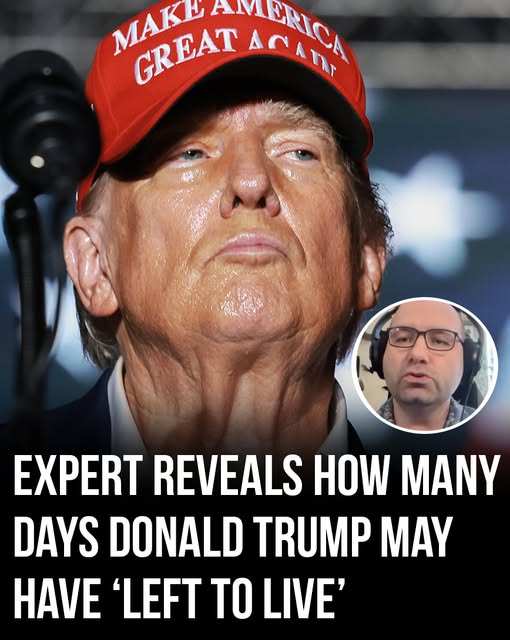
In the modern American presidency, personal health rarely stays private for long. Physical stamina and mental clarity are widely viewed as measures of national steadiness, especially during periods of global tension. As President Donald Trump moves toward his 80th birthday this June, attention to his physical and cognitive condition has intensified, turning routine public appearances into closely watched events.
The President continues to project confidence and has insisted he is “healthier than ever.” At the same time, a growing number of observers have begun to study his movements, speech, and public behavior with unusual intensity. The debate has gained new momentum after comments from Adam James, a licensed physical therapist with 14 years of experience, who offered a clinical interpretation of the President’s recent appearances during a segment on The David Pakman Show, where he uses the professional handle “Epistemic Crisis.”
James’s remarks introduced a more technical lens to a discussion that has often been driven by political commentary. His assessment focused on physical indicators and behavioral patterns rather than political performance, and it quickly became a focal point in a broader conversation about aging, leadership, and the demands of the presidency.
The immediate spark for renewed scrutiny came during the President’s recent visit to the World Economic Forum in Davos. Cameras captured visible bruising on his hands, a detail that spread rapidly across media platforms. The White House explanation pointed to a minor accident involving a table combined with the President’s regular use of aspirin, a medication known to increase the likelihood of bruising. While the marks themselves faded, the episode sharpened public attention on his overall condition.
For James, the bruises were not the central issue. His focus stayed on what he described as deeper neurological indicators. Drawing on years spent in home healthcare and neurological rehabilitation, he outlined a series of physical and cognitive signs that he believes merit serious consideration.
At the center of his analysis is Frontotemporal Dementia, commonly abbreviated as FTD. This progressive neurological condition affects the frontal and temporal lobes of the brain, areas associated with behavior, language, and executive function. Medical literature generally places life expectancy after diagnosis in a range of seven to twelve years. James suggested that if the President were experiencing this condition, the pace of visible changes could imply a more accelerated course, potentially reducing that window to two to four years.
No official diagnosis of FTD or any other degenerative illness has been announced by the President’s medical team. Even so, the discussion has drawn attention to specific observations that James believes are relevant to neurological health.
One area he highlighted involves gait and balance. He pointed to what he described as an unusual walking pattern, including a swinging motion of one leg. In clinical settings, such a movement can indicate unilateral weakness, sometimes associated with a minor stroke or a localized neurological deficit. Changes in gait are often among the first physical signs that prompt further neurological evaluation, especially in older adults.
Speech and language formed another part of the assessment. James noted instances of slurred speech and moments of apparent confusion involving basic geopolitical facts, including situations in which Greenland and Iceland appeared to be mixed up. He also described a pattern of relying on a smaller set of familiar words and phrases, sometimes referred to in clinical practice as “comfort words,” which can emerge when language processing becomes more difficult.
Behavior and impulse control rounded out the list of concerns. The frontal lobe plays a central role in judgment, planning, and the regulation of socially appropriate behavior. James argued that the President’s tendency to discuss sensitive military matters in public settings could reflect changes in that region of the brain. In neurological contexts, reduced inhibition and altered decision-making can be signs of frontal lobe impairment.
These observations have circulated widely, not only because of their clinical framing but also because of the broader context in which they appear. At 79, President Trump holds the distinction of being the oldest individual ever sworn into the office. The presidency is a role defined by relentless schedules, high-pressure decision-making, and constant public exposure, conditions that can magnify even subtle changes in health.
Age alone does not determine capacity, and many individuals remain vigorous and mentally sharp well into their later years. Still, the responsibilities of the office make the health of its occupant a matter of public interest. In this case, the contrast between the President’s confident public persona and the more cautious interpretations offered by some medical professionals has become a defining feature of the conversation surrounding his second term.
James also addressed the broader medical landscape that often accompanies advanced age. He warned that chronic conditions, even when managed with the best available care, can carry significant risks. Cardiovascular issues such as congestive heart failure, as well as kidney disease, become more prevalent with time and can turn life-threatening if treatment plans are not followed with precision. Access to top-tier medical resources can mitigate many dangers, but it does not eliminate them.
The discussion has unfolded against a backdrop of heightened political sensitivity. Supporters emphasize the President’s continued engagement, frequent travel, and willingness to maintain a demanding schedule. Critics point to moments of verbal missteps, physical stiffness, or apparent fatigue as evidence that age is exerting its influence. The entry of a clinical voice into this debate has shifted some attention from partisan interpretation to medical possibility, even as it remains speculative in the absence of formal diagnoses.
Public interest in presidential health is not new. History offers multiple examples of leaders whose medical conditions became matters of national concern, sometimes only fully revealed after they left office. In the modern media environment, however, every appearance is recorded, replayed, and analyzed in detail, creating a level of scrutiny unmatched in earlier eras. Small changes that might pass unnoticed in other contexts can become subjects of extended discussion when they involve the occupant of the Oval Office.
The focus on neurological health also reflects a growing public awareness of cognitive disorders and their impact. Conditions like FTD differ from more commonly discussed forms of dementia in both symptoms and progression, often affecting personality and behavior before memory. This characteristic makes behavioral changes particularly visible and, in political leaders, especially controversial.
Despite the intensity of the debate, the official position from the President’s medical team remains unchanged, with no announcement of any degenerative condition. Regular health evaluations have been presented as evidence of fitness for duty, and the President continues to maintain a full schedule of public events, meetings, and international engagements.
As the calendar moves through 2026 toward the milestone of his 80th birthday, the tension between public assurance and clinical speculation shows little sign of easing. Each appearance is likely to be examined not only for policy content but also for physical cues. Each verbal stumble or moment of apparent confusion will be weighed against explanations ranging from fatigue to normal aging to more serious neurological concerns.
The conversation surrounding presidential health sits at the intersection of medicine, politics, and public trust. On one hand, transparency can reinforce confidence in leadership. On the other, speculation without definitive medical confirmation can deepen divisions and fuel uncertainty. In this case, the remarks from a seasoned physical therapist have added a layer of technical detail to a debate that was already emotionally and politically charged.
For now, the President’s own message remains one of resilience and strength, encapsulated in his claim that he is “healthier than ever.” Whether that assertion continues to shape public perception or is gradually overshadowed by ongoing scrutiny will depend on a complex mix of medical assessments, political dynamics, and the unpredictable course of time itself.
What remains clear is that the health of a president approaching 80 is no longer a peripheral topic. It has become a central theme of the current political moment, reflecting broader questions about longevity, leadership, and the physical and cognitive demands of holding the most powerful office in the country. As the months pass, that theme is likely to stay in focus, shaping both public discussion and the historical record of this period in American politics.