
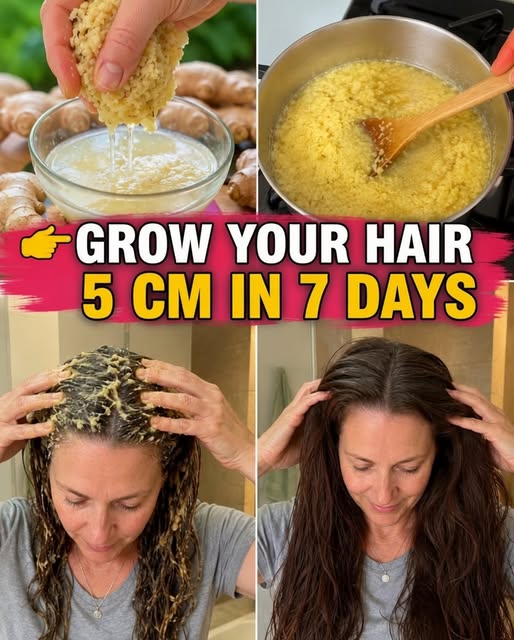
Ginger for Hair Growth: Realistic Benefits, Safe Use, and What Results to Expect
Ginger has become a popular ingredient in homemade hair treatments, with countless online videos claiming that it can produce rapid growth, reverse thinning, or transform damaged hair within days.
Those promises may be appealing, but the reality is less dramatic. Ginger is not a proven miracle treatment for hair loss, and strong scientific evidence does not show that applying it to the scalp can make human hair grow several inches in a short period.
It may still have a place in a thoughtful hair-care routine. When properly diluted and combined with a suitable carrier oil, ginger can provide a warming scalp sensation, encourage gentle massage, and help condition dry or difficult-to-manage hair.
The most useful approach is to understand what ginger can realistically offer while avoiding exaggerated expectations.
Why Hair Changes Over Time
Hair naturally changes throughout a person’s life. Many people begin noticing differences in thickness, texture, shine, or volume after their 40s or 50s.
Individual strands may become finer, the scalp may become more visible, and hair may feel drier or less manageable than it did in earlier years.
These changes can be influenced by genetics, hormones, aging, stress, nutrition, illness, medications, environmental exposure, and the way hair is styled or treated.
Frequent use of hot tools, chemical straighteners, bleach, permanent dyes, and tight hairstyles may also contribute to breakage or thinning.
Seasonal shedding can occur as well and is often temporary. Because so many factors affect the hair-growth cycle, no single kitchen ingredient can address every possible cause.
Hair develops slowly, and meaningful improvement usually depends on consistent care over several months rather than a quick treatment used for a few days.
Why Scalp Health Is Important
Healthy-looking hair begins with a comfortable, well-maintained scalp.
The scalp contains hair follicles, oil glands, blood vessels, and nerve endings. Keeping this area clean and free from severe irritation supports the normal environment in which hair grows.
Excess oil, dandruff, dryness, scratching, and heavy product buildup can make hair appear dull or unhealthy even when the follicles remain active.
Basic scalp care includes gentle cleansing, avoiding harsh chemicals, treating persistent dandruff appropriately, and protecting exposed areas from excessive sunlight.
Homemade oils may complement these habits, but they should not replace regular washing, balanced nutrition, or medical treatment for an underlying condition.
Why Ginger Became Popular in Hair Care
Fresh ginger has a strong aroma and a naturally warm sensation that many people find refreshing during scalp massage.
The root contains compounds including gingerol, shogaol, zingerone, polyphenols, and natural antioxidants.
These substances have attracted scientific attention because they display biological activity in laboratory environments.
Laboratory findings, however, do not automatically prove that rubbing ginger onto the scalp will produce faster hair growth in people.
Many users enjoy ginger treatments because the scent and warming feeling make the routine seem invigorating. An enjoyable routine may also encourage someone to care for the scalp more consistently.
That consistency can be useful even when the ingredient itself does not directly increase the speed of hair growth.
Can Ginger Make Hair Grow Faster?
Current evidence does not demonstrate that topical ginger can dramatically accelerate human hair growth.
Hair commonly grows at an average rate of about half an inch, or approximately 1.25 centimeters, per month. The exact rate varies among individuals.
Claims that ginger produces several inches of growth within days or weeks should therefore be viewed cautiously.
When people believe a treatment has made their hair grow much faster, the improvement may actually come from reduced breakage, better moisture retention, smoother strands, or a different styling method.
Hair that breaks less often retains more length. This can create the appearance of accelerated growth even though the follicles are producing hair at their normal rate.
Preserving existing length is still valuable, but it is different from changing the biological growth cycle.
The Value of Gentle Scalp Massage
The massage used to apply ginger oil may be as useful as the ingredient itself.
Slow, gentle movement with the fingertips can create a relaxing routine and help distribute oils across the scalp and hair.
Massage may also make someone more aware of flaking, tenderness, excessive oiliness, or areas of irritation that had previously gone unnoticed.
This increased attention can lead to better hair-care decisions, such as adjusting washing frequency or avoiding products that cause discomfort.
Pressure should remain light. Aggressive rubbing, pulling, or scratching with the nails can irritate the scalp and damage fragile strands.
Changes People May Notice First
Visible length is not always the first improvement after beginning a new hair-care routine.
Some people notice that their hair feels softer, looks shinier, tangles less easily, or becomes easier to style.
Others may experience less visible frizz, reduced snapping during brushing, or a cleaner-feeling scalp after washing.
These changes can make the hair appear fuller and healthier even when the number of follicles has not increased.
Improved manageability can also reduce the amount of force needed during detangling, helping preserve length over time.
Hair Health Depends on the Whole Body
Hair follicles require a steady supply of nutrients to support their normal growth cycle.
Protein, iron, zinc, vitamin D, vitamin B12, biotin, and omega-3 fatty acids all contribute to processes involved in healthy hair.
A deficiency in one or more nutrients may contribute to excessive shedding in some individuals.
Chronic stress, poor sleep, smoking, illness, and certain medications can also influence hair quality and density.
This is why one homemade oil cannot replace a balanced diet or address every cause of hair loss.
Sudden, severe, or unexplained shedding should be evaluated by a qualified healthcare professional rather than managed only with cosmetic treatments.
Eight Practical Benefits of a Ginger Hair Routine
Ginger may not create dramatic overnight growth, but people may still appreciate several practical effects when it is used carefully.
1. A Refreshed Scalp Sensation
The aroma and warming quality of ginger can make the scalp feel refreshed during and after a treatment.
This sensation does not prove that follicles are growing faster, but it may make the routine more enjoyable.
2. More Consistent Massage
Applying an infused oil encourages users to spend several minutes gently massaging the scalp.
Turning this into a regular habit may improve awareness of dryness, buildup, or sensitivity.
3. Reduced Appearance of Dryness
When ginger is combined with coconut, jojoba, olive, or another conditioning oil, the mixture can coat the hair shaft.
This may temporarily smooth rough strands and improve the appearance of dry hair.
4. Easier Detangling
Conditioning oils can reduce friction between strands, making knots easier to separate.
Gentler detangling may lower the risk of snapping and help preserve existing length.
5. A Relaxing Self-Care Ritual
The preparation and application process can provide a quiet moment of personal care.
An enjoyable ritual may support relaxation, which can be valuable for overall well-being.
6. Fuller-Looking Hair
Smoother, shinier strands often reflect light more evenly and appear healthier.
Reduced frizz and breakage can also make the hair look fuller without creating new follicles.
7. Greater Awareness of Hair Habits
People who begin using scalp treatments often become more conscious of heat damage, tight hairstyles, rough brushing, split ends, and product accumulation.
That awareness may lead to healthier choices beyond the treatment itself.
8. More Realistic Long-Term Care
A consistent routine can shift attention away from viral promises and toward gradual improvements in softness, shine, comfort, and strength.
This long-term mindset is generally more useful than repeatedly changing products in search of instant results.
How to Prepare Homemade Ginger Hair Oil
A simple ginger-infused oil can be prepared as a conditioning treatment rather than a medical remedy.
Use two tablespoons of freshly grated ginger and half a cup of extra-virgin olive oil, coconut oil, or jojoba oil.
One teaspoon of vitamin E oil may also be included, although it is optional.
Wash and peel the ginger before grating it finely.
Combine the ginger and chosen carrier oil in a small saucepan.
Warm the mixture over very low heat for approximately 10 to 15 minutes. The oil should not be allowed to boil.
Remove the saucepan from the heat and allow the mixture to cool completely.
Strain it through cheesecloth or a fine mesh strainer into a clean glass container.
Seal the container and store it away from heat and direct sunlight. For best quality, use the mixture within several weeks.
How to Apply the Oil
Begin by gently brushing or detangling the hair.
Place a small amount of the oil on the scalp rather than saturating the entire head.
Massage with the fingertips for about five minutes using light, controlled pressure.
Avoid scratching with the nails.
Any remaining oil can be worked through the middle and ends of the hair, particularly if those areas feel dry.
Leave the treatment in place for approximately 20 to 30 minutes during the first few uses.
Wash thoroughly with a mild shampoo afterward and condition the ends if necessary.
Using excessive amounts may make the oil difficult to remove and can leave buildup on the scalp.
Choosing a Carrier Oil
Different carrier oils provide different textures and conditioning effects.
Olive oil is rich and may be suitable for coarse or very dry hair.
Coconut oil is commonly used for moisture retention and may help reduce protein loss in certain hair types.
Jojoba oil has a lighter texture and may be preferred by people who dislike heavy products.
Argan oil can add softness and shine without coating the hair as heavily as some alternatives.
The best choice depends on individual hair texture, scalp condition, and personal preference.
Always Perform a Patch Test
Natural ingredients can still cause irritation or allergic reactions.
Before using ginger oil on the scalp, apply a small amount behind the ear or on the inner arm.
Wait 24 hours and observe the area for redness, burning, itching, swelling, or another reaction.
If irritation develops, wash the area and discontinue use.
A patch test reduces risk but does not guarantee that the scalp will tolerate the treatment perfectly.
Do Not Apply It to Damaged Skin
Ginger preparations should not be used on cuts, open wounds, infections, or severely irritated areas.
The warming compounds may intensify discomfort and worsen sensitivity.
People with psoriasis, severe eczema, scalp infections, a known ginger allergy, or recent scalp surgery should seek professional guidance before trying a homemade treatment.
Persistent itching, pain, flaking, or inflammation may require medical evaluation.
How Often to Use Ginger Oil
For most users, once or twice a week is sufficient.
Applying oil too often may cause buildup, especially when it is not removed thoroughly.
Frequent treatment does not necessarily produce better results and may increase the risk of irritation.
Consistency over time is more important than using large amounts or applying the mixture every day.
Common Mistakes to Avoid
Expecting rapid growth is one of the most common reasons people become disappointed with ginger treatments.
Other mistakes include applying too much oil, rubbing aggressively, leaving the mixture on for extremely long periods, and ignoring signs of irritation.
Homemade treatments should never replace prescribed medication or professional care for diagnosed hair or scalp conditions.
Viral claims should also be treated cautiously, particularly when they promise dramatic changes within a few days.
Everyday Habits That Support Healthy Hair
Hair should be washed with a shampoo appropriate for the scalp type.
Extremely hot water may contribute to dryness, so comfortably warm water is usually a gentler choice.
Conditioner helps smooth the outer layer of the hair and reduce friction during brushing.
Frequent use of straighteners, curling irons, and high-temperature dryers can increase breakage.
Allowing the hair to dry partially before heat styling may reduce unnecessary exposure.
Tight braids, ponytails, and extensions can place repeated tension on the roots and may contribute to traction-related thinning.
A balanced diet containing protein, vegetables, fruit, healthy fats, and whole grains supports the body systems involved in hair production.
Frequently Asked Questions About Ginger and Hair
Topical ginger has not been proven to make hair grow dramatically faster. It may complement a scalp-care routine but should not be considered a guaranteed growth treatment.
Ginger-infused oil can be used on many hair types when properly diluted, although individual tolerance varies.
Once or twice weekly is generally enough for a homemade treatment.
Ginger cannot guarantee that hair loss will stop. Shedding may be connected to genetics, hormones, stress, nutrition, medication, or illness.
Fresh ginger is usually preferred for homemade oils because it contains natural moisture and aromatic compounds.
Men and women can both use a diluted treatment if they do not have allergies or scalp conditions that make it unsuitable.
Ginger oil cannot replace shampoo or conditioner. It is an occasional treatment that must be washed out appropriately.
Improvements in softness or manageability may appear within several weeks, while changes in retained length generally require months.
Focus on Hair Health Instead of Hype
A homemade ginger treatment will not transform hair overnight.
Its greatest value may come from encouraging a careful routine that includes gentle massage, conditioning, reduced heat exposure, and closer attention to scalp comfort.
Healthy-looking hair is normally the result of many small habits maintained consistently.
Nutrition, sleep, stress management, careful styling, regular cleansing, and protection from unnecessary damage have a greater overall influence than any one ingredient.
Anyone choosing to use ginger should do so with realistic expectations and stop immediately if burning, swelling, persistent redness, or another reaction occurs.
Sudden hair loss, scalp pain, severe dandruff, or signs of infection should be discussed with a healthcare professional or dermatologist.
Ginger may provide a pleasant addition to a weekly self-care ritual, but patience and informed choices remain the foundation of healthier hair.