
From Troubled Youth to Infamy: The Life and Crimes of Charles Manson
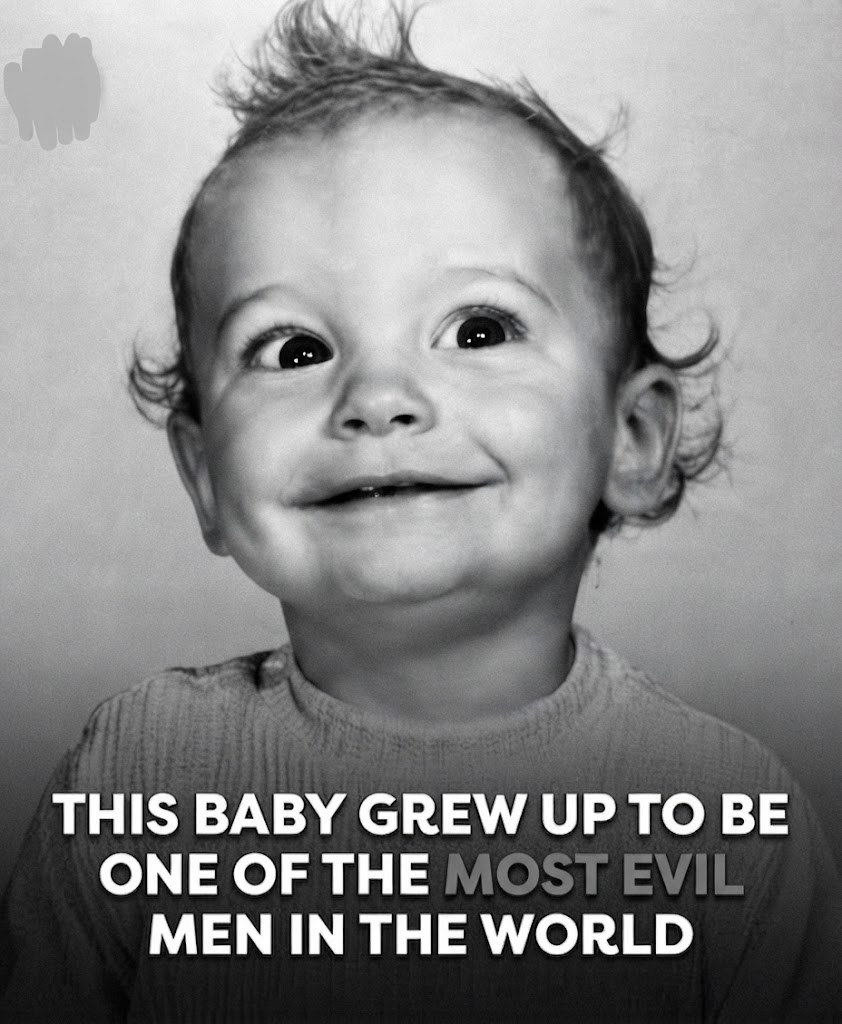
The topic of From Troubled Youth raises many questions. A single photograph from the mid-1950s captures a 15-year-old boy with a distant look, unaware of the dark path that lay ahead. That boy was Charles Manson, a name that would become synonymous with one of the most shocking and brutal chapters in American criminal history. His journey from a neglected child to the orchestrator of a murder spree that terrified a nation is a story of systemic failure, manipulation, and chilling ideology.
Manson’s early life did little to set him on a path toward stability. Born to a teenage mother, he spent his formative years shuttling between relatives and state institutions. Neglect was a constant companion, and his teenage years were marked by a series of arrests that led to repeated stays in reform schools. These institutions, intended to correct behavior, often served only to harden his resolve and teach him the tricks of the criminal underworld.
By the time he was released from these facilities, Manson had developed a deep-seated resentment for a society he felt had rejected him. His life on the margins of society was punctuated by petty crimes, car theft, and forgery, leading to multiple prison sentences. It was within the walls of the prison system that Manson began to refine the manipulative skills that would later define his notoriety. He immersed himself in various self-help philosophies and Scientology techniques, learning how to read people and exploit their vulnerabilities with unnerving precision.
The Rise of the Manson Family
Upon his release from prison in 1967, Manson found himself in the midst of the counterculture movement sweeping across California. The Summer of Love in San Francisco provided a fertile ground for his ideas. He began to attract a following, primarily composed of young, disaffected women and men who were searching for meaning and belonging. This group, which would soon be known as the Manson Family, was drawn to his charismatic yet domineering presence.
Manson presented himself as a spiritual leader and a prophet of sorts, weaving together elements of the Beatles’ music, the Book of Revelation, and his own twisted interpretations of the social upheaval of the era. He preached a philosophy that was apocalyptic and rooted in a deeply racist worldview. He spoke of an impending race war, which he called “Helter Skelter,” a term borrowed from a Beatles song, predicting that the conflict would decimate the world and leave his followers to inherit the earth.
The Family settled at the Spahn Ranch, a dilapidated movie ranch in the Santa Susana Mountains outside Los Angeles. There, Manson exercised absolute control over his followers, using a combination of drugs, isolation, and psychological manipulation. The lines between reality and Manson’s fantasy world blurred as his followers became increasingly devoted to his every word. He dictated their daily lives, controlled their relationships, and fostered an environment where violence was seen not only as acceptable but as a necessary tool for their survival and eventual ascendancy.
The Night of Terror
The summer of 1969 marked the culmination of Manson’s descent into madness. On the night of August 9, 1969, under Manson’s direct orders, several members of the Family drove to a home in the upscale Benedict Canyon neighborhood of Los Angeles. The house belonged to director Roman Polanski and his wife, actress Sharon Tate, who was eight months pregnant.
Inside, the group encountered Tate and several of her friends who were visiting. The intruders, armed with knives and a gun, carried out a series of brutal killings. Sharon Tate, along with Jay Sebring, Wojciech Frykowski, and Abigail Folger, were murdered in a frenzy of violence. The scene was so horrific that it shocked even the most hardened investigators. The word “Pig” was written in blood on the front door, a chilling signature of the killers’ motives.
The following night, the violence continued. A second team of Family members was dispatched to the Los Feliz home of supermarket executive Leno LaBianca and his wife, Rosemary. The couple was stabbed to death in their own home, with the killers again leaving behind blood-smeared messages. The attacks appeared to be random, leaving the city in a state of panic. There was no apparent connection between the victims and their attackers, which made the crimes all the more terrifying to the public.
The Investigation and Trial
The initial investigation into the Tate-LaBianca murders was chaotic. The Los Angeles Police Department struggled to find leads, and the case remained unsolved for months. It was a routine traffic stop and a jailhouse confession that finally broke the case open. One of the Family members, Susan Atkins, began talking to a cellmate, revealing details of the crimes and implicating Manson and the others.
The subsequent trial was a media circus. Manson appeared in court with an “X” carved into his forehead, which he later changed to a swastika, as a sign of his defiance against the establishment. He frequently disrupted the proceedings, turning the courtroom into a platform for his bizarre rants. His followers, who had been excluded from the courtroom, set up a vigil outside the courthouse, shaving their heads and carving X’s into their own foreheads in a show of solidarity.
In 1971, Manson and three of his followers—Susan Atkins, Patricia Krenwinkel, and Leslie Van Houten—were found guilty of murder. The jury initially sentenced them to death, but the sentences were commuted to life in prison in 1972 when the California Supreme Court abolished the death penalty. Manson would spend the remainder of his life behind bars, a figure of enduring fascination and horror for the public.
From Troubled Youth: A Legacy of Darkness
Charles Manson’s prison years were marked by a series of parole hearings, all of which he refused to attend in his later years. He remained unrepentant, continuing to spout his twisted philosophies to anyone who would listen. He gave occasional interviews, using them as a platform to reinforce his image as a master manipulator and to relive his notoriety.
His health declined in his final years. He was hospitalized in 2017 after suffering from gastrointestinal bleeding. On November 19, 2017, Manson died of cardiac arrest, a complication of colon cancer, at the age of 83. His death marked the end of an era, but the specter of his crimes continues to haunt American culture.
The case of Charles Manson remains a stark reminder of the power of manipulation and the fragility of the human psyche. His ability to convince his followers to commit murder in the name of a warped ideology has been the subject of countless books, films, and academic studies. The name “Manson” has become a byword for evil, a reference point for the darkest potential of the human soul. While the man is gone, the questions he raised about authority, belief, and violence remain as relevant today as they were in the turbulent summer of 1969.