
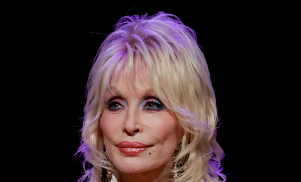
For more than seventy years, Dolly Parton has stood as one of the most enduring and instantly recognizable figures in American popular culture. Few artists have managed to evolve so visibly, deliberately, and unapologetically across decades. In recent years, renewed attention has focused on her changing appearance, often sparking online commentary and speculation. Yet reducing Dolly’s story to cosmetic changes misses the heart of her journey. Her evolution has always been about agency, artistry, and self-definition—not about trends, age, or public opinion.
Born in a one-room cabin in rural Tennessee, Dolly grew up in extreme poverty as one of twelve children. Music was not a luxury in her household; it was a lifeline. By the age of ten, she was performing publicly on local radio and television, demonstrating not only her remarkable vocal ability but a confidence and presence beyond her years. From the start, Dolly understood that talent alone was not enough—how she carried herself mattered just as much.
By her teenage years, she was already writing songs with emotional depth, melodic intuition, and narrative richness far beyond her age. After graduating high school, Dolly moved to Nashville with a clear goal: to carve out a career in music on her own terms. Her debut album, Hello, I’m Dolly, released in 1967, marked the beginning of a steady rise. She built her reputation incrementally, song by song, tour by tour, refusing to conform to the limited roles typically assigned to women in country music at the time.
Dolly’s songwriting catalog is extraordinary. With more than 3,000 compositions, she has created songs that have become cultural landmarks. Hits like “Jolene,” “Coat of Many Colors,” and “I Will Always Love You” have transcended genre and generation. They have been covered extensively, studied academically, and continue to influence both artists and audiences decades after their initial release.
Equally deliberate has been Dolly’s image. Her towering blonde hair, dramatic makeup, and flamboyant wardrobe were never accidental. Particularly during the 1970s and 1980s, she embraced a hyper-stylized look that challenged conservative expectations in country music while making a broader cultural statement. Critics mocked it, fans celebrated it, and Dolly herself remained unbothered. She famously referred to her appearance as “costly trash,” signaling that she controlled the narrative and was fully aware of the attention she commanded.
Photographs from that era show hair piled high in curls, bold fashion choices, and a visual persona that was impossible to ignore. Those looks were imitated, parodied, and remembered—not because they were subtle, but because they were fearless. Dolly understood an essential truth of celebrity: if people are going to talk, make it unforgettable.
Her career expanded over the decades without ever slowing. She crossed into pop music, conquered film and television, and became a significant box-office presence. She has won multiple Grammy Awards, earned countless industry honors, and achieved the rare feat of remaining relevant without chasing trends. Her brand has only grown stronger because it has remained consistent.
In recent years, attention has once again focused on her appearance. New photographs circulate online, accompanied by headlines marveling at how “different” she looks. The reality is simple: Dolly has never claimed to age naturally, nor has she ever apologized for her choices. She has openly discussed cosmetic procedures, wigs, makeup, and personal maintenance, treating them as tools of performance, not secrets. For her, appearance is part of her artistry, and artistry is part of joy.
What fascinates people is not that she has changed, but that she has changed intentionally. At an age when many entertainers fade or retreat into nostalgia, Dolly remains visible, active, and creatively engaged. She continues to record new music, exploring genres far outside traditional country, including recent projects in rock that have earned critical acclaim. Her ongoing experimentation demonstrates a refusal to settle, even after decades of success.
Beyond entertainment, Dolly’s impact extends into philanthropy and cultural leadership. Her literacy initiatives, most notably the Dolly Parton Imagination Library, have provided millions of free books to children worldwide. She has invested in her home state, supporting education, disaster relief, and economic development. These efforts are not promotional gestures—they represent sustained, long-term commitments that have transformed lives.
Dolly Parton’s transformations over the years are not stories of reinvention for the sake of attention. They are stories of ownership. She has never allowed the public to dictate who she should be, how she should look, or when she should step back. Every hairstyle, costume, and career pivot has been intentional. That consistency of purpose explains her lasting appeal across generations.
In a culture obsessed with youth and a narrow vision of authenticity defined by minimalism, Dolly stands apart. She is artificial by design, sincere by nature, and candid about both. Audiences remember her not just as a symbol of the 1980s or a country music legend, but as a woman who created a life, career, and image entirely on her own terms.
That is why she endures. Not because she resists change, but because she has always been precisely who she chose to be.