
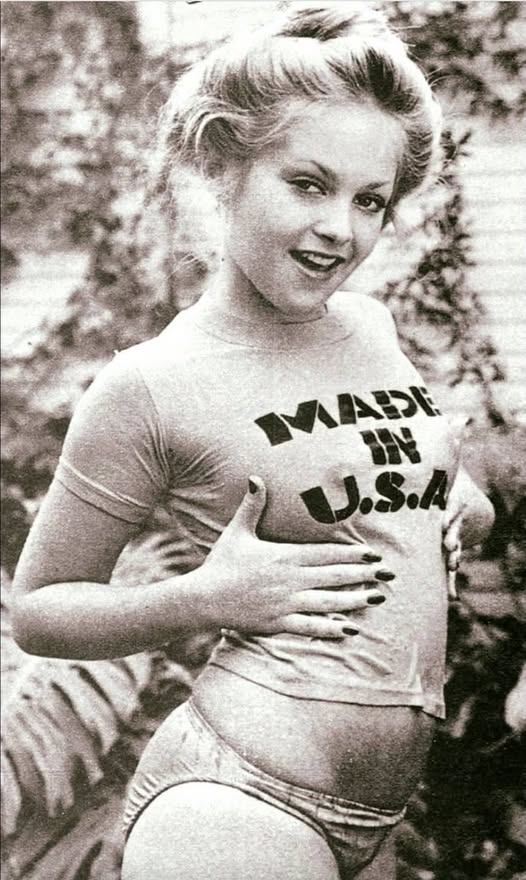
Charlene Tilton’s Journey From a Painful Childhood to Television Fame and a Life of Resilience
The Actress Who Brought Lucy Ewing to Life
To millions of viewers, Charlene Tilton appeared to be living the ultimate Hollywood success story.
She became famous as Lucy Ewing on Dallas, one of the most successful television dramas of its era. Her character was energetic, unpredictable, charming, and capable of bringing excitement into almost every scene.
Behind the glamour, however, Tilton’s life had been shaped by abandonment, instability, public pressure, financial hardship, and devastating personal loss.
Her rise to fame was not the result of an easy childhood or powerful family connections. It came from determination developed during years in which she often felt unwanted and learned that she could not depend on others to protect her.

Why Lucy Ewing Became So Memorable
Dallas was more than a popular television series. It became an international cultural event built around the wealthy and powerful Ewing family.
The show combined family conflict, betrayal, romance, business rivalries, and dramatic surprises. Its characters became recognizable far beyond the United States.
Tilton’s Lucy Ewing occupied a special place in that world. She was not present in every storyline, but her appearances often brought humor, tension, and emotional energy.
Lucy was more than J.R. Ewing’s niece. She had her own ambitions, frustrations, romantic struggles, and rebellious personality.
Tilton brought warmth and intensity to the character, helping transform Lucy into a favorite among viewers.
Her bright appearance and natural charisma made her stand out among a cast that included Linda Gray, Steve Kanaly, Larry Hagman, Victoria Principal, and Patrick Duffy.
Yet the confidence she displayed on screen hid a childhood defined by uncertainty.

An Absent Father and an Unstable Home
Charlene Tilton was born on December 1, 1958, in San Diego, California.
Her mother, Katherine, worked as a secretary and lived with severe mental health problems. Tilton’s father, a U.S. Air Force pilot stationed at the Pentagon, was absent from her life.
Tilton grew up knowing that her biological father had made no effort to build a relationship with her.
”My biological father didn’t want anything to do with me,” Tilton has shared. ”He had to have known about me — Dallas was so huge — but he never reached out.”
The rejection created an emotional wound that remained with her even after she became internationally famous.
Her early experiences also taught her to become self-reliant. She remembered hearing adults discuss where she might be sent and whether anyone was willing to care for her.
”I remember the kids saying, ‘When is she going to go?’ and the parents said, ‘We’re trying to send her off but we can’t get anyone to take her.’ I thought, ‘I’m never going to depend on anybody to take care of me.’”
That conclusion became one of the guiding principles of her young life.

A Childhood Marked by Mental Illness
When Tilton was only 6 years old, she witnessed her mother being restrained in a straitjacket inside a mental hospital.
The image remained deeply embedded in her memory.
For a child, the experience was frightening and difficult to understand. The person who was supposed to provide safety was instead struggling with an illness that made daily life unpredictable.
Tilton found comfort in movies and faith.
Films including Mary Poppins and The Sound of Music offered her a temporary escape from the instability surrounding her.
They also encouraged her dream of becoming an actress. On screen, she saw music, imagination, order, and emotional resolution that were often missing from her real life.
Her faith became another source of strength, helping her endure experiences over which she had little control.

Returning Home Did Not End the Struggle
When Tilton was nearly 8, her mother was released from institutional care, and they returned to California.
The reunion did not create a stable household.
Medication bottles remained common throughout the apartment, and her mother continued displaying troubling behavior.
The home was frequently unclean. Her mother also refused to use the bathroom normally and instead urinated into Tupperware containers.
”That went on for years. I could never bring friends over,” she said.
The conditions left Tilton embarrassed and isolated.
She could not invite classmates into her home or participate in ordinary childhood friendships without worrying that someone would discover what was happening.
The situation made her even more determined to leave and create a different life.
Embarrassment Followed Her Into School
Tilton later enrolled at Hollywood High School and became deeply involved in drama.
Acting was not simply a hobby. It represented a path out of poverty, instability, and dependence.
”I was only interested in getting out and becoming an actress. That’s all I ever thought about,” she once said.
Her mother’s condition remained visible even in public settings.
During one junior high dance, her mother served as a chaperone and began arguing aloud with herself while carrying on an entire conversation.
Tilton remembered wanting to ”die of embarrassment.”
The incident reflected the difficult balance she faced. She cared about her mother but also felt overwhelmed by behavior she could neither control nor explain to others.

Early Acting Roles Opened the Door
Tilton’s focus on acting eventually led to small television opportunities.
She appeared in programs including Happy Days and Eight is Enough.
In 1976, she also appeared in Disney’s Freaky Friday alongside Jodie Foster.
Those parts suggested that her career was beginning to move forward, but none brought the level of recognition that would soon follow.
In 1978, she was considered for the role of Lucy Ewing on Dallas.
The process was not easy. Producers initially believed she was too young and inexperienced.
Tilton refused to accept the rejection.
She Fought for the Role of Lucy Ewing
By age 15, Tilton was already living independently in her own apartment.
That level of self-reliance had made her unusually persistent.
After being dismissed for the Dallas role, she reportedly found ways to remain around the production for nearly two weeks.
She wanted the people making the show to see that she had the determination and personality required for Lucy.
Her persistence eventually worked.
The producers reconsidered and gave her the part.
The decision changed her life and made her one of television’s most recognizable young performers.
Dallas Turns Her Into a Household Name
Dallas became a major success, and Tilton’s portrayal of Lucy earned her widespread attention.
The character’s wedding episode attracted approximately 65 million viewers, demonstrating the enormous scale of the program’s popularity.
Tilton’s image appeared in magazines, newspapers, and promotional campaigns.
She had achieved the fame she had dreamed about as a child.
Success, however, did not provide the peace or stability she had imagined.
Her private life became increasingly difficult to protect, and the attention surrounding her created new pressures.
Marriage and Public Scrutiny
In 1982, Tilton married country singer Johnny Lee.
The marriage lasted only two years before ending in divorce.
Their relationship difficulties became tabloid material, leaving Tilton with little privacy during an already painful period.
She also received obscene phone calls and faced intrusive behavior from strangers.
Some people attempted to touch or grab her blonde hair in public.
When she visited restaurants with her young daughter, customers stared, pointed, and treated her as though she were part of the entertainment rather than a person trying to have a meal.
Although many fans were kind, constant recognition made ordinary life difficult.
Financial Problems Deepen
Tilton’s personal struggles were accompanied by growing financial pressure.
Despite having starred in a hugely successful series, she eventually faced the foreclosure of her home.
The situation showed that fame did not automatically guarantee long-term financial security.
By the middle of the 1980s, her acting career had also entered a difficult period.
She hosted an episode of Saturday Night Live that became one of the least successful installments of that season.
Then, in the spring of 1985, she was released from Dallas.
The loss of the role that had defined her career was a major blow.
Fans Wanted Lucy Ewing Back
Many viewers were disappointed by Tilton’s departure.
She received thousands of letters from fans who wanted Lucy Ewing to return.
For several years, rumors circulated that producers might invite her back.
Larry Hagman was also unhappy about her absence.
Tilton later recalled a conversation with him in 1988.
“He called me and said, ‘You’re certainly a good actress, we never realized.’ I think Larry went to bat for me to come back on the show.”
That same year, she returned to Dallas.
She remained for two additional seasons before leaving again in 1990, one year before the series ended.
A Lasting Friendship With Larry Hagman
Tilton and Hagman remained close after their time together on the show.
She became deeply concerned as his health declined.
In 1995, Hagman was diagnosed with liver cancer and required a transplant.
He received the organ and survived the medical crisis.
Tilton did not appear in the Dallas reunion films, but she took part in Dallas Reunion: The Return to Southfork in 2004.
The appearance allowed her to reconnect publicly with a series that had shaped both her career and identity.
The Sudden Death of Cheddy Hart
Another devastating loss came in 2009 when Tilton’s fiancé, cinematographer Cheddy Hart, died suddenly from heart failure.
He was 54 years old.
His death shattered the sense of stability Tilton had built.
She later described how she responded during the first period of grief.
”I just sat on the couch drinking and smoking cigarettes,” she told People.
The loss left her emotionally overwhelmed and uncertain about how to move forward.
Eventually, she chose not to allow grief to define the rest of her life.
Finding Purpose Through Autism Advocacy
Tilton redirected some of her pain into helping others.
She became an advocate for autism awareness and used her public platform to support people and families affected by the condition.
She also began teaching acting to children and adults on the autism spectrum.
The work gave her a renewed sense of direction.
Acting had once provided her with an escape from hardship. Teaching it allowed her to offer confidence, expression, and connection to others.
The experience became part of her own healing after years of personal loss.
A Quieter Life in Nashville
Tilton later settled in Nashville, Tennessee, where she embraced a more peaceful routine.
Now 66, she remains close to her daughter, Cherish, and her two grandsons.
She affectionately refers to herself as “Glamma.”
Grandmotherhood brought a sense of family continuity that had been largely missing from her own childhood.
After years of instability, fame, and public pressure, she found happiness in a quieter life surrounded by loved ones.
Discovering Half-Siblings Through DNA
Tilton also learned more about her biological family through a DNA test.
The results revealed that she had three half-siblings.
Like Tilton, none of them had ever met their biological father.
When they eventually located information about him, they discovered that he had died six months earlier at age 93.
The timing meant Tilton never had the opportunity to speak with the father who had remained absent throughout her life.
Despite that final disappointment, she said she had reached a place of acceptance.
”I don’t carry a chip on my shoulder. I don’t get into self-pity. I see the bright side of things, and that’s served me well during tumultuous times.”
Choosing Hope Instead of Bitterness
Tilton’s refusal to remain trapped in resentment became one of the defining qualities of her later life.
She had experienced rejection from her father, instability caused by her mother’s illness, embarrassment during childhood, career setbacks, financial problems, divorce, public intrusion, and the sudden death of her fiancé.
Any one of those experiences could have left a lasting sense of defeat.
Instead, she continued seeking purpose and connection.
Her outlook did not deny the pain she endured. It reflected a decision not to allow that pain to control every part of her future.
A Life Far More Complicated Than Hollywood Fame
From the outside, Tilton’s early success on Dallas could appear to be a simple story of a young actress becoming famous.
The reality was far more complicated.
She reached television stardom after growing up in circumstances where she often felt unwanted and unsafe.
She learned independence before most children had even begun imagining adult life.
When producers initially rejected her, she relied on the same persistence that had helped her survive childhood.
Her performance as Lucy Ewing became memorable because Tilton brought real energy, vulnerability, humor, and toughness to the role.
Those qualities were not merely acting techniques. They had been shaped by her own experiences.
Her Story Continues to Inspire
Charlene Tilton’s life is a story of survival behind a famous face.
She endured a childhood marked by mental illness and abandonment, then entered an industry known for rejection and instability.
She achieved extraordinary success but discovered that fame created its own forms of loneliness and pressure.
Even after losing career opportunities, financial security, relationships, and people she loved, she continued rebuilding.
Her later work with people on the autism spectrum showed how personal pain could be transformed into service.
Her relationship with her daughter and grandsons gave her the family closeness she had long wanted.
Today, her story is not defined only by Lucy Ewing or Dallas.
It is also defined by a woman who repeatedly faced circumstances capable of breaking her and continued choosing hope, humor, faith, and perseverance.
Tilton’s journey demonstrates that a glamorous public image can hide years of struggle, but it also shows that a painful beginning does not have to determine how a life ends.