
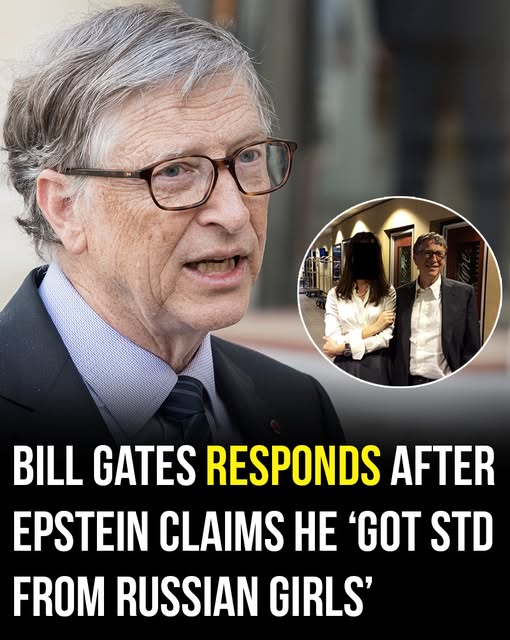
A fresh wave of scrutiny has swept across prominent figures after a large batch of newly released records connected to Jeffrey Epstein entered the public sphere last week. Among the names that immediately drew attention was Bill Gates, the Microsoft co-founder, after documents circulating online highlighted claims involving sexually transmitted diseases and references to “Russia girls.” The renewed focus placed Gates back into a controversy he has previously described as a serious personal and professional error.
The release involved millions of pages made public by the Department of Justice, adding to an already vast archive related to Epstein, the disgraced financier whose criminal conduct and network of associations have continued to reverberate years after his death. Within that material, a 2013 email attributed to Epstein surfaced and quickly spread across social media and news discussions. The message contained graphic and explicit assertions about Gates and medical treatment, reigniting debate about the nature and consequences of Gates’ past contact with Epstein.
Gates, now 70, has addressed the situation directly, rejecting the claims and describing the email at the center of the controversy as untrue. He has also reiterated his regret for ever engaging with Epstein, a connection he has previously labeled a “huge mistake.”
In a prior interview with the Wall Street Journal, Gates had already spoken about his decision to meet Epstein, offering a blunt assessment of his own judgment. “In retrospect, I was foolish to spend any time with him,” he said at the time. That earlier admission resurfaced alongside the new document release, framing the current discussion around both past decisions and present allegations.
The newly public material includes approximately 3.5 million documents. Among them is the 2013 message that appears to have been written by Epstein and addressed to “Bill,” though evidence indicates it was never actually sent. The text includes the following statement:
”To add insult to the injury you them [sic] implore me to please delete the emails regarding your std, your request that I provide you antibiotics that you can surreptitiously give to Melinda and the description of your penis.”
The language and tone of the message are explicit, and its circulation fueled immediate speculation and commentary. Gates responded in an interview with 9News, denying the substance of the claims and challenging the authenticity and intent of the email.
“Apparently, Jeffrey wrote an email to himself. That email was never sent. The email is false,” he said.
He added further context to his reaction and his view of the situation: ”I don’t know what his thinking was there. Was he trying to attack me in some way? Every minute I spent with him, I regret, and I apologize that I did that.”
Gates’ comments place the focus not only on the specific allegation but also on the broader issue of his association with Epstein. The Microsoft co-founder has stated that he first met Epstein in 2011 and that the two had several dinners over a period of time. He has consistently maintained that he never visited Epstein’s private island and never engaged in any sexual activity with women connected to Epstein.
”The focus was always, he knew a lot of very rich people, and he was saying he could get them to give money to global health. In retrospect, that was a dead end,” Gates said.
This explanation aligns with earlier descriptions Gates has given of those meetings, portraying them as centered on potential fundraising for philanthropic causes, particularly in global health, an area where the Bill & Melinda Gates Foundation has invested significant resources over many years. Gates has repeatedly stated that those expectations did not materialize and that the association ultimately brought only reputational damage.
The renewed attention arrives at a time when public interest in the Epstein case remains intense. The financier’s crimes, the failures that allowed them to continue for years, and the web of social and professional connections surrounding him have made each new document release a focal point for public debate. For many observers, the latest disclosures are less about uncovering new crimes and more about understanding how influential figures navigated their relationships with Epstein before his full criminal history was widely acknowledged.
Gates’ former wife, Melinda French Gates, also addressed the subject recently during an appearance on NPR’s Wild Card podcast. Her remarks did not focus on the specific email but rather on the broader moral and personal impact of Epstein’s actions and the lingering questions surrounding those who were connected to him.
”Whatever questions remain there of what I don’t — can’t even begin to know all of it — those questions are for those people and for even my ex-husband. They need to answer to those things, not me,” she said.
She continued by reflecting on the wider social implications of the Epstein case and the experiences of the victims.
”I think we’re having a reckoning as a society, right? No girl, no girl should ever be put in the situation that they were put in by Epstein and whatever was going on with all of the various people around him. It’s beyond heartbreaking, right? I remember being those ages those girls were, I remember my daughters being those ages.”
Her comments also touched on the personal toll such revelations can take, particularly given her own history and family circumstances.
”So for me, it’s personally hard whenever those details come up, right, because [it] brings back memories of some very, very painful times in my marriage.”
Bill and Melinda Gates were married for 27 years before their divorce was finalized in 2021. Their separation drew global attention not only because of their public profile but also because of the scale and influence of the philanthropic work they had pursued together. After the divorce, Melinda later disclosed that Gates had an affair with a Microsoft employee in 2019, a claim that Gates himself confirmed in 2021. That admission added another layer of public scrutiny to his personal life and leadership history.
The current controversy, however, centers on the authenticity and meaning of the Epstein email. Gates’ position is that the message does not reflect reality and that it was neither sent nor based on fact. By describing it as something Epstein wrote to himself, Gates has suggested the possibility of fabrication, manipulation, or an attempt to create leverage or cause harm.
The Department of Justice release has brought renewed attention to how documents are interpreted once they enter the public domain. In large collections of records, drafts, notes, and unsent messages can appear alongside verified communications, creating challenges for readers trying to distinguish between substantiated facts and untested claims. In this case, the email’s existence has been treated by some as evidence in itself, while Gates has emphasized that the content is false and that the message was never transmitted.
Gates’ broader legacy includes decades at the helm of Microsoft, where he helped build one of the most influential technology companies in history, and years of high-profile philanthropic work focused on global health, education, and poverty reduction. That public image has already been complicated in recent years by personal disclosures and by criticism of his past association with Epstein. The latest document release has again placed those issues side by side, prompting debate about judgment, accountability, and the lasting consequences of professional choices.
For many, the central question is not only whether specific claims are true or false, but also what standards should apply when evaluating historical associations with figures later revealed to have committed serious crimes. Gates has been clear that he views his decision to meet Epstein as a serious error, one he says he regrets deeply. He has also stated that the expected philanthropic outcomes never came to pass, leaving little to show for the risk he took in maintaining that connection.
At the same time, Melinda French Gates’ remarks highlight a different dimension of the story: the impact of Epstein’s actions on victims and on families whose lives were indirectly affected by the fallout from his crimes. Her comments frame the issue less as a dispute over documents and more as part of a broader reckoning with abuse, power, and accountability.
The public response to the newly released records underscores how enduring the Epstein case remains in public consciousness. Each new batch of documents is likely to generate renewed debate, particularly when it includes the names of well-known figures. For Gates, the immediate focus has been on rejecting the specific allegations in the 2013 email and reiterating his regret over any association with Epstein.
As the discussion continues, the episode serves as another reminder of how past decisions can resurface years later, especially when tied to one of the most notorious criminal cases of recent decades. Gates’ denial of the claims and his acknowledgment of past mistakes now sit alongside a growing archive of records that will continue to be examined and debated.