
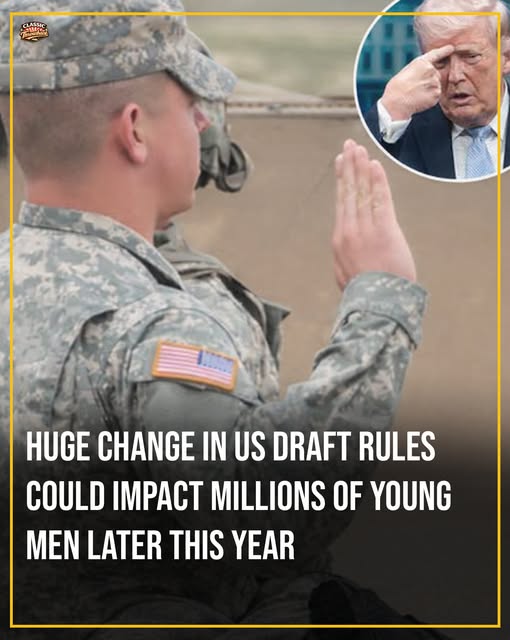
U.S. Moves Toward Automatic Draft Registration System Affecting Millions of Young Men
A Significant Change in Registration Policy
A major shift is underway in how draft registration is handled in the United States, with federal authorities advancing a plan that would automatically enroll eligible men into the system. The proposed change represents a move away from individual responsibility toward a centralized, government-managed process.
The update is expected to impact millions of individuals, many of whom would be registered without needing to take any action themselves. The change reflects an effort to modernize and streamline an existing requirement that has long been part of federal law.
Proposal Submitted for Implementation
The plan originates from the Selective Service System, which recently submitted a proposal for automatic registration to the Office of Information and Regulatory Affairs. The submission, made on March 30, outlines a transition toward integrating federal data sources to complete registrations automatically.
This proposal follows legislative approval, signaling that the federal government is moving forward with preparations to implement the system in the coming years.
“This statutory change transfers responsibility for registration from individual men to SSS through integration with federal data sources,”
“SSS will implement the change by December 2026, resulting in a streamlined registration process and corresponding workforce realignment.”
Approval Through Defense Legislation
The policy shift was approved by Congress as part of the 2026 National Defense Authorization Act. This legislation, which funds military operations and personnel, often includes provisions that shape broader defense-related policies.
By including the automatic registration measure in this bill, lawmakers ensured that the change would move forward as part of a larger framework of military planning and resource allocation.
The approval reflects a broader effort to align administrative systems with modern data capabilities and reduce reliance on manual processes.
Current Requirements and Limitations
Under existing law, most men between the ages of 18 and 25 are required to register with the Selective Service System. This requirement exists in case a military draft is reinstated in the future.
Currently, individuals are expected to complete registration within 30 days of turning 18. Late registration is allowed until age 26, but failure to comply can carry serious consequences.
Penalties for not registering include potential fines of up to $250,000, imprisonment for up to five years, and restrictions affecting access to federal student aid, government employment, and certain immigration opportunities.
The shift to automatic registration would eliminate the need for individuals to complete this step themselves, reducing the risk of noncompliance.
Declining Registration Rates Prompt Action
Officials have pointed to declining registration rates as a key reason for the proposed change. Data shows that registration levels dropped from 84 percent in 2023 to 81 percent in 2024.
This downward trend has raised concerns about the effectiveness of the current system, which relies on individuals to take action within a specific timeframe.
While some states already automatically register individuals when they apply for a driver’s license or identification card, the new proposal would extend this approach nationwide.
By using federal data sources, the system aims to ensure that all eligible individuals are included without requiring additional steps.
Efficiency and Cost Considerations
Supporters of the change argue that automatic registration will improve efficiency and reduce administrative costs. By eliminating the need for outreach campaigns and manual processing, resources can be redirected toward other priorities.
One lawmaker supporting the measure emphasized that the shift would allow more focus on military readiness rather than maintaining registration compliance efforts.
This perspective reflects a broader trend toward using technology and data integration to simplify government processes and improve accuracy.
The change is also expected to result in adjustments to workforce needs within the agency responsible for managing the system.
Ongoing Discussion Around the Draft
The move toward automatic registration comes at a time when discussions about military preparedness have gained renewed attention. Although the United States has not used a draft since the Vietnam War, the system remains in place as a contingency.
Officials have stated that there are no immediate plans to reinstate a draft. The current changes are focused on improving the registration process rather than signaling an active shift in military policy.
“It’s not part of the current plan right now,”
At the same time, leadership has indicated that maintaining flexibility remains important.
“wisely keeps his options on the table.”
Implications of Automatic Enrollment
The introduction of automatic registration represents a fundamental change in how the system operates. By shifting responsibility from individuals to the government, the process becomes more consistent and comprehensive.
For eligible individuals, the change means that registration would occur without direct involvement. This could reduce confusion and eliminate the risk of missing deadlines.
However, it also raises broader questions about how government systems manage personal data and responsibilities. The integration of federal data sources will play a central role in ensuring accuracy and efficiency.
The transition is expected to take place over time, with full implementation targeted for December 2026.
A System Designed for Readiness
The Selective Service System exists to maintain readiness in the event that a draft becomes necessary. While such a scenario is not currently anticipated, the system remains a component of national defense planning.
Automatic registration is intended to strengthen this readiness by ensuring that records are complete and up to date. By removing barriers to compliance, the system becomes more reliable.
This approach reflects a focus on preparedness, even in the absence of immediate need. It ensures that administrative systems are capable of supporting potential future requirements.
Looking Ahead
As the proposed changes move closer to implementation, attention is turning toward how the new system will operate in practice. The integration of data sources and the transition away from manual registration will require careful coordination.
The shift represents both a modernization effort and a response to declining participation under the current model. It aims to create a system that is more efficient, consistent, and aligned with modern capabilities.
For many, the change will take place quietly, without direct involvement. Yet its impact will be widespread, affecting millions of individuals across the country.
Conclusion
The move toward automatic draft registration marks a significant development in federal policy. By transferring responsibility from individuals to the government, the system is being reshaped to reflect new priorities and capabilities.
While there are no immediate plans to reinstate a draft, the updated approach emphasizes readiness and efficiency. It ensures that the necessary framework remains in place should it ever be needed.
As the implementation date approaches, the change stands as a reminder of how long-standing systems can evolve in response to shifting needs and technological advancements.