
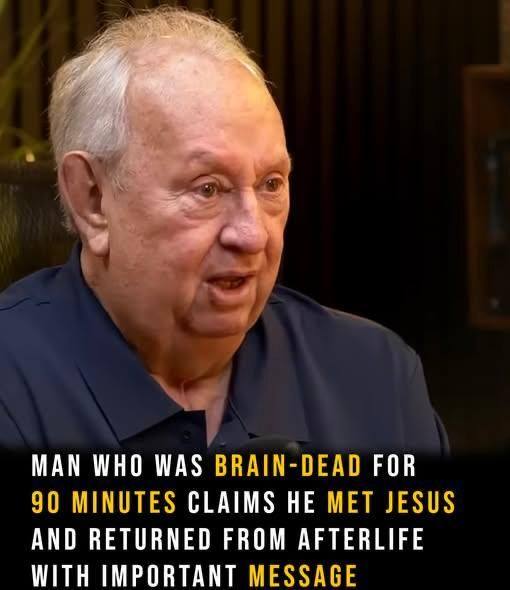
Human beings have long been captivated by what lies at the threshold of existence, those fleeting moments when the boundary between life and death appears almost imperceptible. Across cultures and generations, people have asked profound questions: What does consciousness experience when the body is on the brink of collapse? Is there a glimpse of a reality beyond the material? What meaning, if any, exists in survival itself?
For some, these questions remain philosophical exercises. For others, they take on urgent, personal significance when a medical crisis forces the body and mind to confront mortality directly. One such story comes from Robert Marshall, a writer, husband, and contemplative thinker, whose near-death experience in 2024 profoundly shaped his understanding of life, purpose, and the human connections that define it.
Robert shares his story not as scientific proof of an afterlife or supernatural truth, but as a deeply personal reflection informed by recovery, gratitude, and a reoriented perspective on the world.
A Sudden Crisis
In the spring of 2024, Robert noticed swelling on his neck. At first, it appeared minor, but the condition rapidly escalated. Within hours, the swelling began to compromise his breathing and place pressure on his heart and lungs. What initially seemed manageable quickly became life-threatening, prompting an emergency rush to the hospital.
Medical staff acted with urgency, aware that his condition could deteriorate further at any moment. Despite swift intervention, Robert’s body began to fail across multiple systems. His lungs struggled to oxygenate his blood effectively, and his heart exhibited dangerous irregularities.
Over the course of hours, a multidisciplinary team worked tirelessly to stabilize him. Respiratory support, precise medication management, and constant monitoring were employed to address the cascading complications. Eventually, Robert slipped into a coma, which lasted several days. For his family, this period was filled with fear, uncertainty, and the anguish of seeing a loved one caught between life and death.
The Coma: A Threshold of Consciousness
While his body remained in critical condition, Robert’s mind experienced events he would later describe as vivid and transformative. Unlike ordinary dreams, which are often fragmented or illogical, his recollections were clear, coherent, and immersive.
He described entering a space of profound calm, clarity, and unconditional love. It was a luminous, serene environment that conveyed both peace and vitality. In this realm, he experienced no fear, confusion, or disorientation—emotions that had dominated his physical state.
Such phenomena are consistent with accounts of near-death experiences, which often include sensations of moving through light, out-of-body awareness, or encounters interpreted as spiritual. For Robert, the experiences felt distinctly spiritual, shaped by his personal beliefs and reflective nature.
The Encounter: Love and Connection
Central to Robert’s experience was an encounter with a presence he identified as Jesus. Unlike depictions of judgment, this figure conveyed unconditional love, acceptance, and understanding. In that space, Robert felt completely safe, deeply known, and profoundly connected.
He recalled a sense of relational awareness: past actions, intentions, and relationships seemed acknowledged and embraced. The experience emphasized the value of love, responsibility, and human connection—lessons that would resonate far beyond his return to consciousness.
Choosing to Return
A pivotal moment in Robert’s near-death experience involved a conscious decision to return to the physical world. In his recollection, he considered his wife, whom he deeply loved, and felt an imperative to return to care for and support her.
This choice aligns with observations from psychological research on near-death experiences: many individuals report a moment of clarity in which relationships, unfinished responsibilities, and life purpose become central considerations. For Robert, this decision highlighted the duality of existence—the profound peace of the spiritual realm contrasted with the human duty to love and engage meaningfully in the material world.
Recovery: Healing Mind, Body, and Spirit
After regaining consciousness, Robert faced an intensive recovery. Physically, he underwent rehabilitation to strengthen his lungs, rebuild stamina, and restore overall health. Nutritional support, therapeutic interventions, and ongoing medical oversight were essential components of his care.
Emotionally, the ordeal left him contemplative. He described experiencing awe, fear, gratitude, and a renewed appreciation for life’s fragility. Psychological research shows that such crises often catalyze deep reflection, prompting individuals to reassess priorities, relationships, and personal goals.
For Robert, the experience became a cornerstone of his life philosophy. Rather than dismissing the near-death experience as inexplicable, he embraced it as a source of insight, highlighting the importance of presence, intentionality, and the nurturing of human relationships.
Spiritual and Philosophical Insights
Through a spiritual lens, Robert interprets his experience as a profound reminder of connection, love, and renewal. Key themes he emphasizes include:
Compassion and empathy: Recognizing the significance of caring for others.
Responsibility: Understanding the impact of choices on loved ones and community.
Acceptance of life’s fragility: Acknowledging unpredictability as inherent to human existence.
Gratitude: Valuing survival as an opportunity for growth and purpose.
Importantly, Robert presents these reflections as subjective insights, acknowledging that others may interpret similar experiences through psychological, neurological, or secular perspectives.
Psychological Perspectives
Near-death experiences are well-documented in scientific literature. Individuals who undergo comas or life-threatening medical crises often report:
Heightened awareness of moral and relational priorities
Vivid imagery, sometimes interpreted as encounters with spiritual beings
Life review experiences, emphasizing core values and personal legacy
Reduced fear of death and a stronger appreciation for life
Neuroscientists suggest that such experiences may arise from extreme brain stress, oxygen deprivation, or altered neurotransmitter activity. Regardless of physiological explanations, these experiences frequently have lasting psychological and behavioral effects.
Lessons in Life and Love
For Robert, the near-death experience reshaped his worldview. Core lessons he draws include:
Relationships are central: Love, empathy, and connection give life enduring meaning.
Responsibility matters: Duties and commitments to others create lasting significance.
Resilience is essential: Recovery requires patience, courage, and reliance on support systems.
Life’s preciousness: Confronting mortality reinforces the value of everyday moments.
By internalizing these principles, Robert aims to live intentionally, fostering compassion and mindful engagement with others.
The Broader Context
Robert’s story reflects a broader phenomenon observed across cultures. Near-death experiences often share common elements:
Encounters with loving or luminous presences
Out-of-body sensations or detachment from the physical body
Nonlinear perception of time and events
Profound emotional and spiritual clarity
While interpretations vary—from religious and spiritual to neurological—the transformative effect on individuals is consistent. Many report increased generosity, deeper relationships, and a renewed sense of purpose following such events.
Conclusion: Living With Awareness
Robert Marshall’s near-death experience demonstrates the intersection of physical vulnerability and human consciousness. His reflections, emerging from genuine danger and recovery, highlight themes of love, responsibility, and intentional living.
Whether interpreted as spiritual revelation, psychological insight, or both, the story underscores the potential for moments at the edge of life to inspire profound transformation. Surviving the crisis became a catalyst for living with mindfulness, valuing relationships, and embracing each day with gratitude.
Through sharing his experience, Robert invites readers to consider life’s unpredictability as inseparable from its beauty and meaning. Even amid medical crises and uncertainty, opportunities for growth, reflection, and renewed purpose exist. His story serves as a testament to resilience, love, and the enduring strength of the human spirit.