From Infertility to Miracles: A Family’s Journey Through Adoption, Embryo Donation, Loss and the Birth of Twins
A Devastating Diagnosis That Changed Everything
In 2018, after more than a year of trying to conceive without success, one couple made the difficult decision to consult a fertility specialist. Like many families facing uncertainty, they hoped for answers — and perhaps a treatment plan that would lead them toward the future they had always imagined.
After a series of tests, doctors delivered unexpected and life-altering news: the husband had Azoospermia, a condition in which no sperm is present in semen. In simple terms, he was sterile and would not be able to biologically father children. Their infertility was classified as male factor infertility — a reality many people are unaware even exists.
For countless couples, such a diagnosis can bring family planning to a halt. Dreams shift. Timelines collapse. The grief can feel unbearable. For this couple, there was heartbreak — but there was also determination.
“We had to grieve the loss of the family we imagined,” the mother later reflected. “But we weren’t ready to give up on becoming parents.”
Exploring Sperm Donation — and Facing Barriers
After allowing themselves time to process the diagnosis, the couple began exploring sperm banks and donor options. What they encountered was another unexpected obstacle: limited diversity.
There were very few African American donors available, and even fewer who allowed the possibility of contact with children conceived from their donation once those children turned eighteen. The couple strongly believed in openness. If they were going to build their family through donation, they wanted their future children to have access to their full story.
Eventually, they selected a donor and prepared for insemination. But each attempt was met with setbacks. Shipping issues. Scheduling conflicts. Delays beyond their control. Every single time they prepared to move forward, something went wrong.
“It felt like the universe was telling us no,” she recalled.
Discouraged and emotionally drained, they began reconsidering whether donor sperm was truly the right path for them.
An Unexpected Phone Call That Changed Their Lives
Just as they were preparing to pivot away from donor insemination, a phone call changed everything.
Her best friend reached out with a surprising question: “If it came down to it, would you ever foster or adopt a baby?”
Confused but open-hearted, she responded honestly. Of course they would. But adoption, they believed, could be just as financially demanding as IVF.
That’s when her friend delivered the news: a couple she knew was considering placing their baby boy for adoption — and they believed this couple would be the perfect fit.
“One day we were told we’d never have children,” she said. “A week later, we were told we already had one.”
Meeting Ezra in the NICU
Their son, Ezra, was born seven weeks early and was being cared for in the Neonatal Intensive Care Unit (NICU). The first time they met him, a nurse stopped them at the door and instructed them to wash their hands carefully.
 asvdxz
Ezra was tiny, connected to wires and feeding tubes. He needed time to grow and learn to eat on his own. For three weeks, his new parents visited before work and after work, sitting beside his incubator, whispering promises of love and protection.
Seeing him surrounded by medical equipment was heartbreaking — but they understood it was necessary.
One day, she noticed a red mark on his face and immediately panicked in full “mama bear” mode. A nurse cheerfully asked if she noticed anything different.
Then it clicked.
His feeding tube was gone.
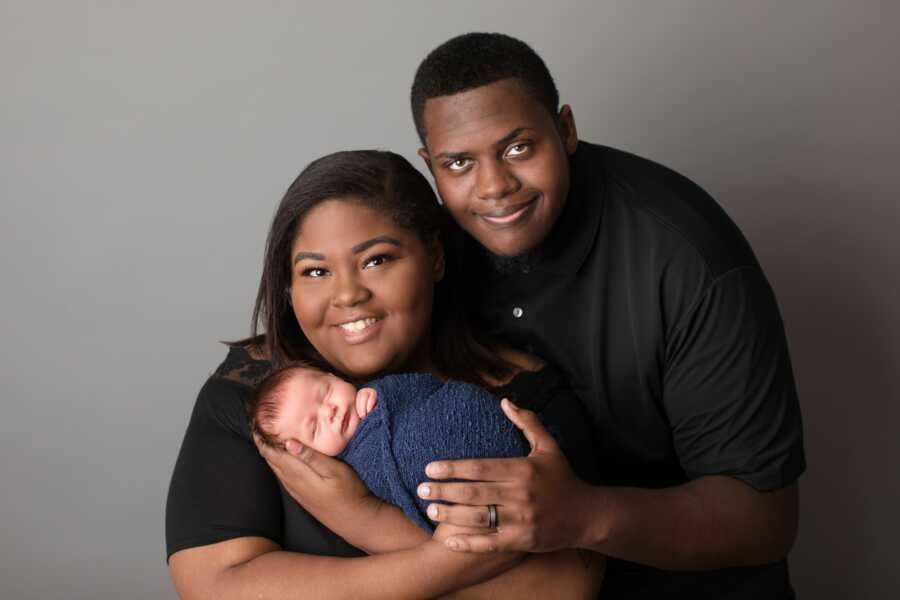
The very next day, they brought him home.
Navigating Criticism and Racial Bias
After sharing their adoption story on social media, the response was overwhelming. Thousands of messages poured in — many filled with encouragement and love. But not all were positive.
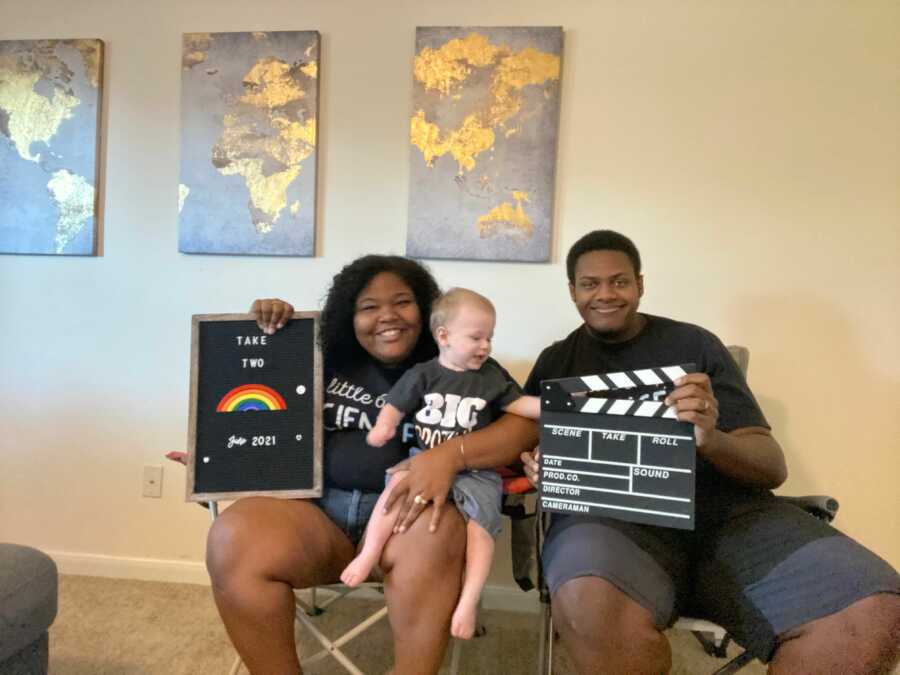
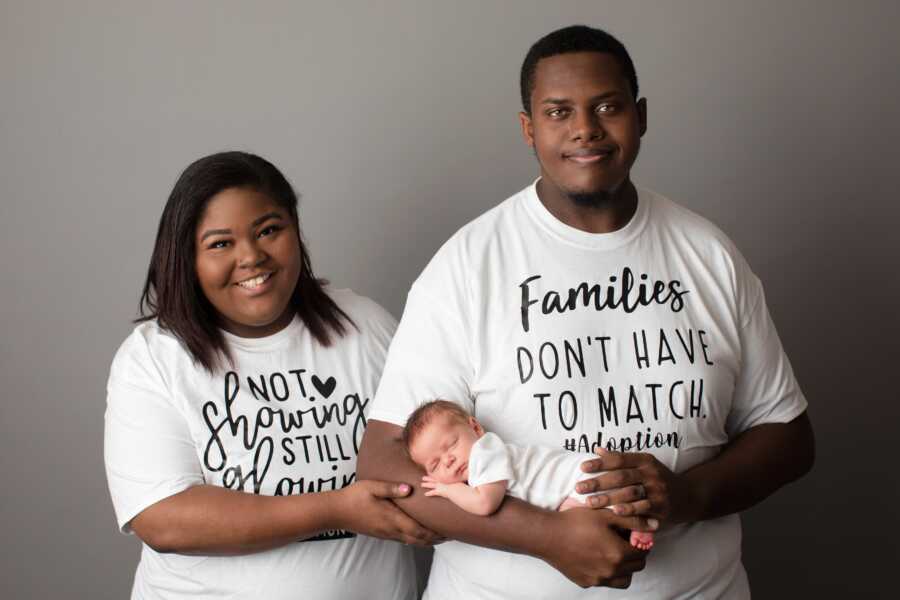
Because they are a Black couple who adopted a white baby, criticism followed. Some questioned their decision, asking why they didn’t adopt a Black child. Others assumed she was babysitting or that he was the nanny. Some even had the audacity to ask, “Where are his real parents?”
Nearly two and a half years later, the stares and comments had not completely stopped.
But neither had their resolve.
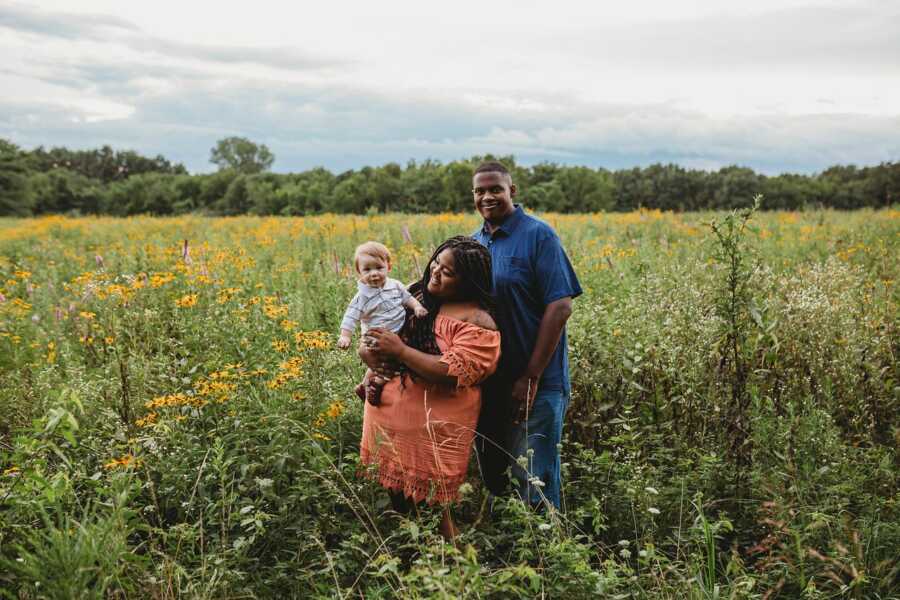
“We just wanted to grow our family,” she said. “Love doesn’t have a color.”
Discovering Embryo Donation
When Ezra was about three months old, the couple began discussing the future again. Though male factor infertility had prevented them from conceiving biologically, she still longed to experience pregnancy and childbirth.
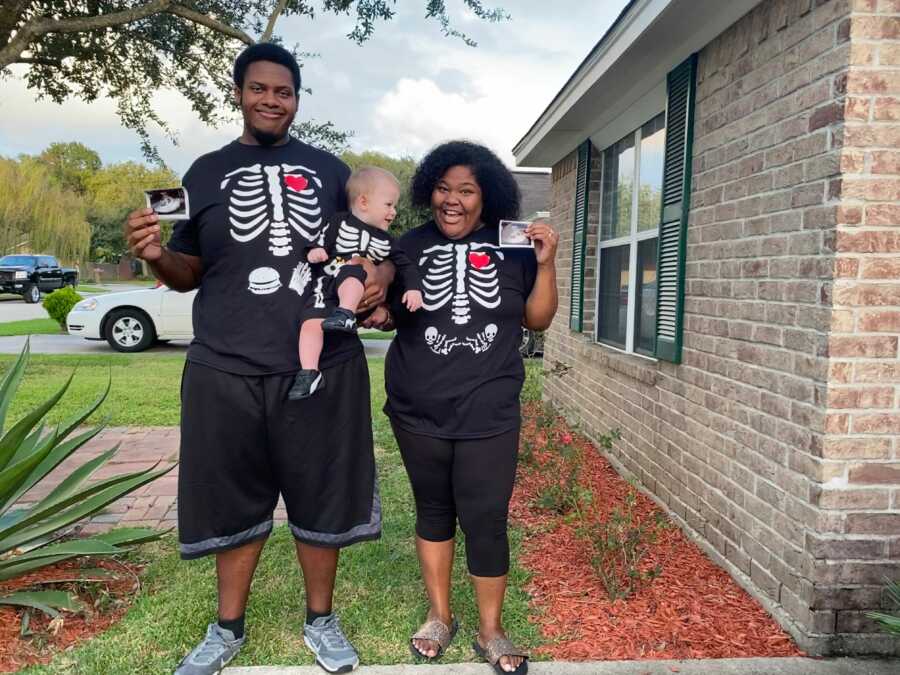
That’s when they discovered embryo donation.
Families who undergo in vitro fertilization (IVF) often have remaining embryos after completing their family. They are typically given three options: donate the embryos to scientific research, discard them, or donate them to another family hoping to conceive.
For this couple, the choice felt clear. They had already embraced adoption. Biology was secondary. Parenthood was the goal.
They wanted an open embryo donation arrangement — one in which any children conceived could one day connect with their genetic family, know their origins, and potentially grow up knowing their biological siblings.
Two Donor Families, Eight Embryos, and Renewed Hope
They created a profile on an embryo matching website and within three weeks were matched with a donor family who had completed their own IVF journey and welcomed twin boys. That family chose to donate their three remaining embryos to them.
Then, in an unexpected twist, a second local couple reached out. After conceiving one child via IVF and later welcoming a surprise natural pregnancy, they decided to donate five of their remaining embryos.
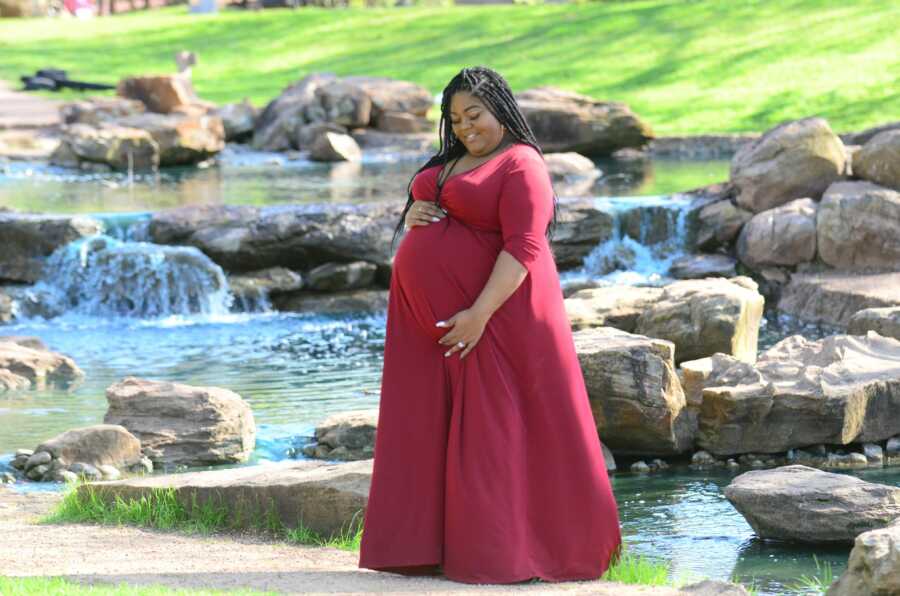
In a matter of weeks, the couple went from believing they would never conceive to potentially having eight chances at pregnancy.
“It felt unreal,” she said. “From zero hope to so much possibility.”
First Pregnancy — and Heartbreak
After months of testing and preparation, two embryos were transferred on August 19, 2020.
A week later, a home pregnancy test came back positive.
For the first time in her life, she was pregnant.
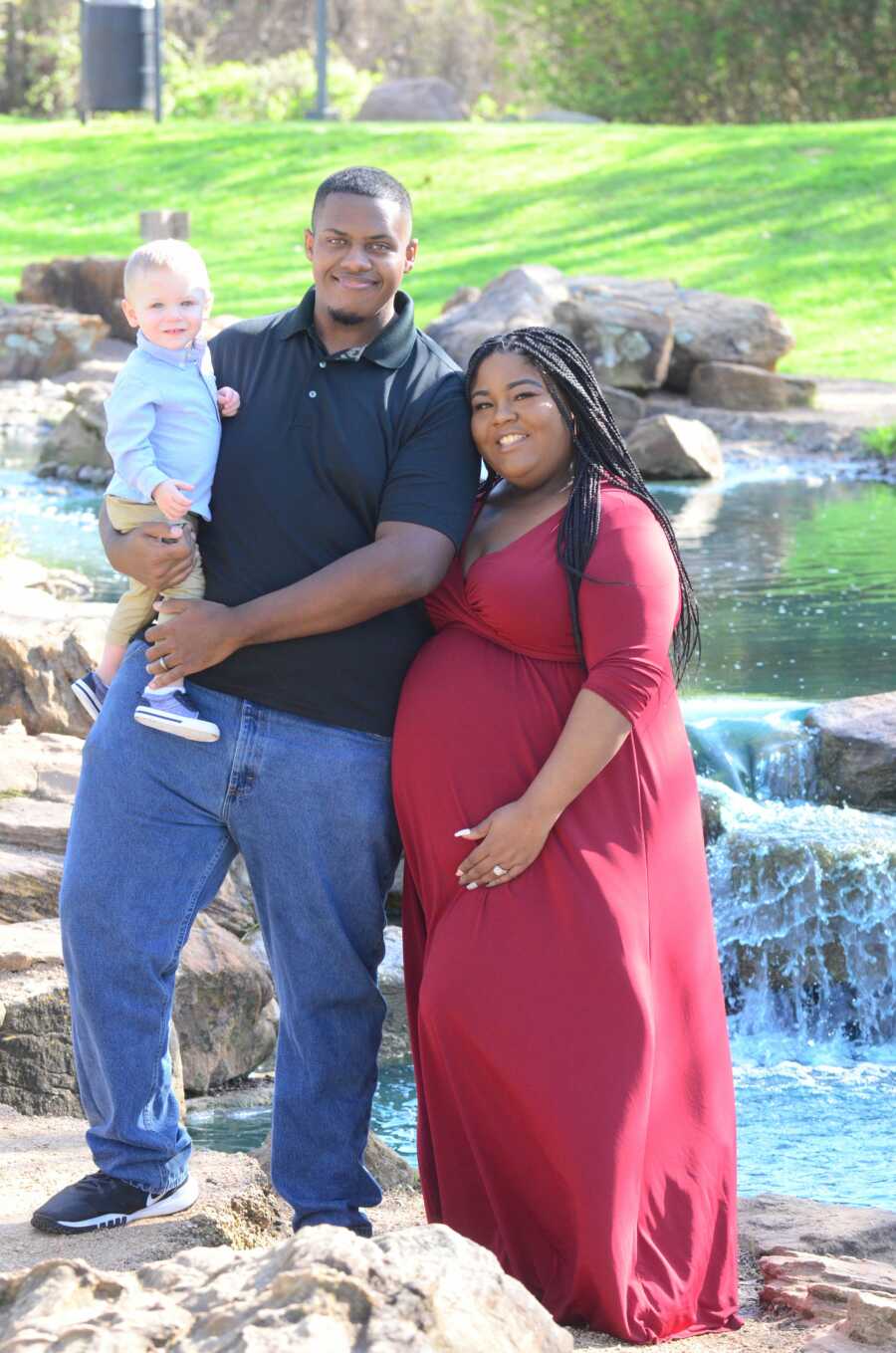
Because they had shared their fertility journey publicly, they announced the pregnancy right away. Friends, family, and followers celebrated with them.
But three days later, tragedy struck. She miscarried.
The loss was devastating — made even more painful by having to publicly share the heartbreak after celebrating so openly.
“It felt cruel,” she said. “Like we were finally rewarded just to have it taken away.”
A Second Chance — and a Faint Line
Determined not to give up, they prepared for another embryo transfer using embryos from the second donor family.
On September 25, 2020, two more embryos were transferred.
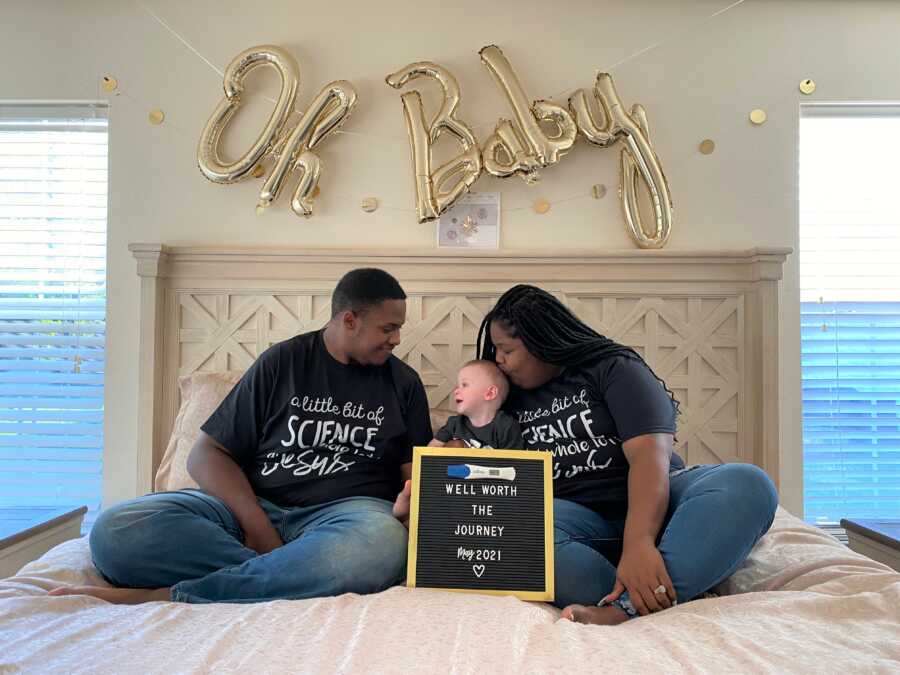
Four days later, she took a pregnancy test. The line was barely visible — more shadow than confirmation. They assumed it was negative.
The next day, while her husband was at work, she called their embryo donor, Sara, on FaceTime before taking a digital test.
They waited together.
Then the word appeared clearly on the screen: “PREGNANT.”
They both screamed with joy.
Twins Confirmed
Blood work confirmed the pregnancy. At six weeks, they went in for the first ultrasound.
Two dark sacs appeared on the screen.
“We’ve got twins!” the technician announced.
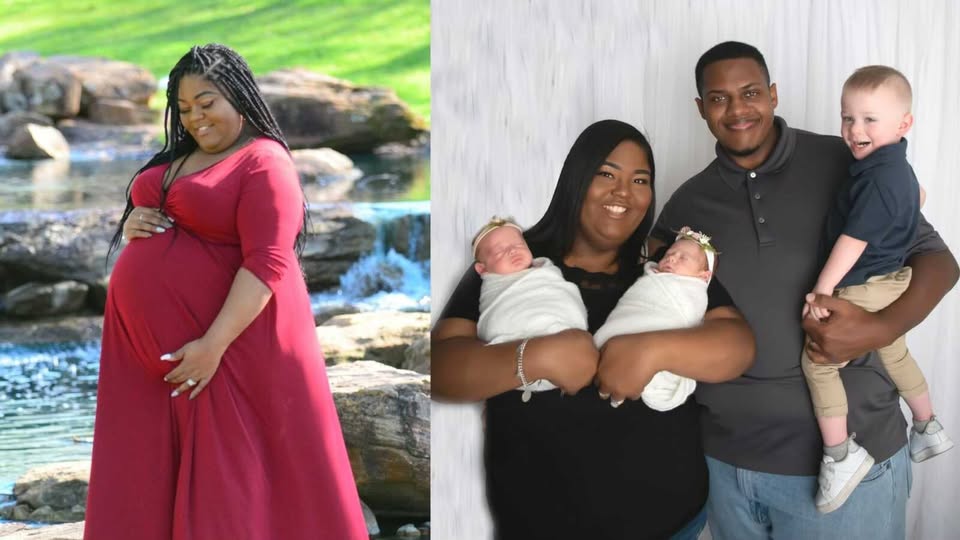
After everything they had endured — infertility, delays, adoption, miscarriage — they were now expecting twin girls.
Each milestone felt monumental: 15 weeks, 20 weeks, viability at 24 weeks. With every passing week, hope grew stronger.
An Emergency at 31 Weeks
At 31 weeks and four days pregnant, she began experiencing pressure. Having previously been diagnosed with a short cervix, she initially assumed it was normal — but decided to get checked.
At the hospital, doctors discovered she was already four centimeters dilated.
Suddenly, everything moved fast.
Because no ambulances were available, she was airlifted to a larger hospital better equipped for premature births. Doctors attempted to stop her contractions for two days, but ultimately decided to proceed with a planned C-section.
Journee and Destinee Arrive
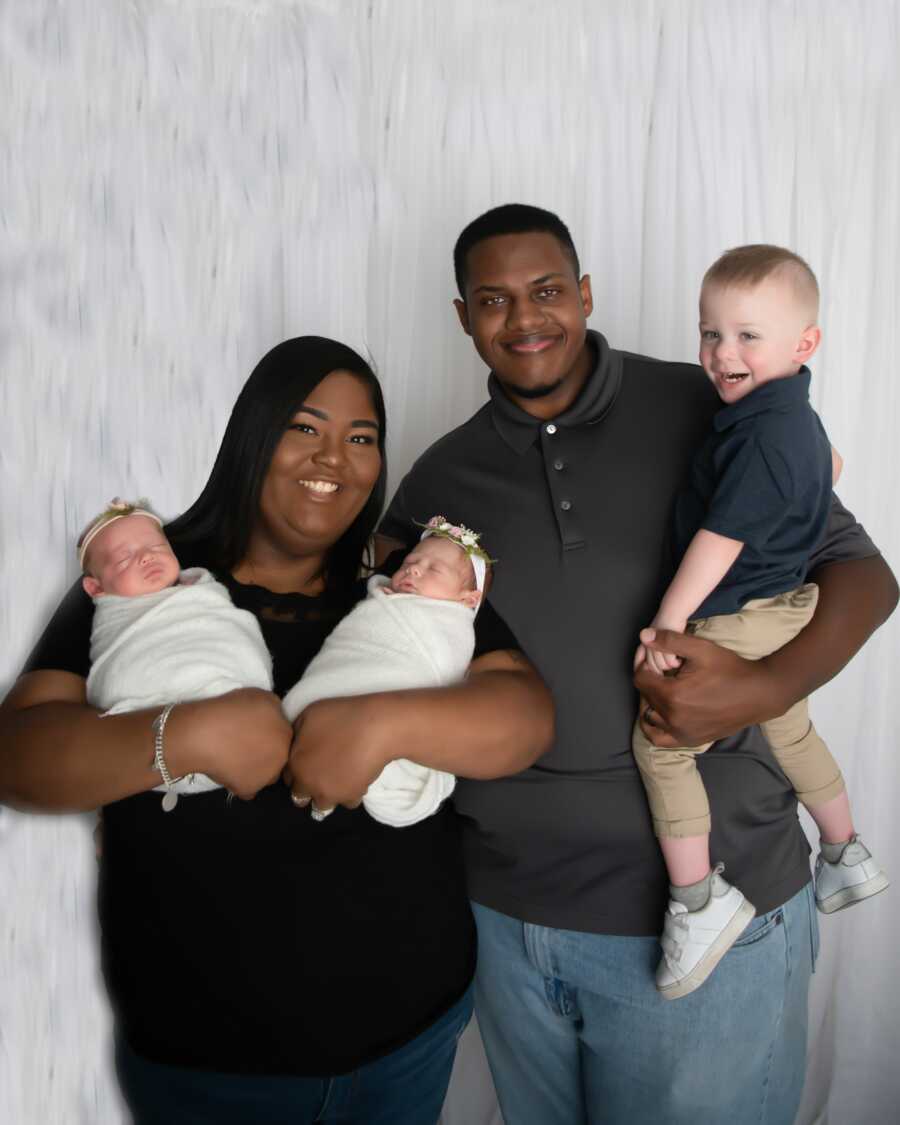
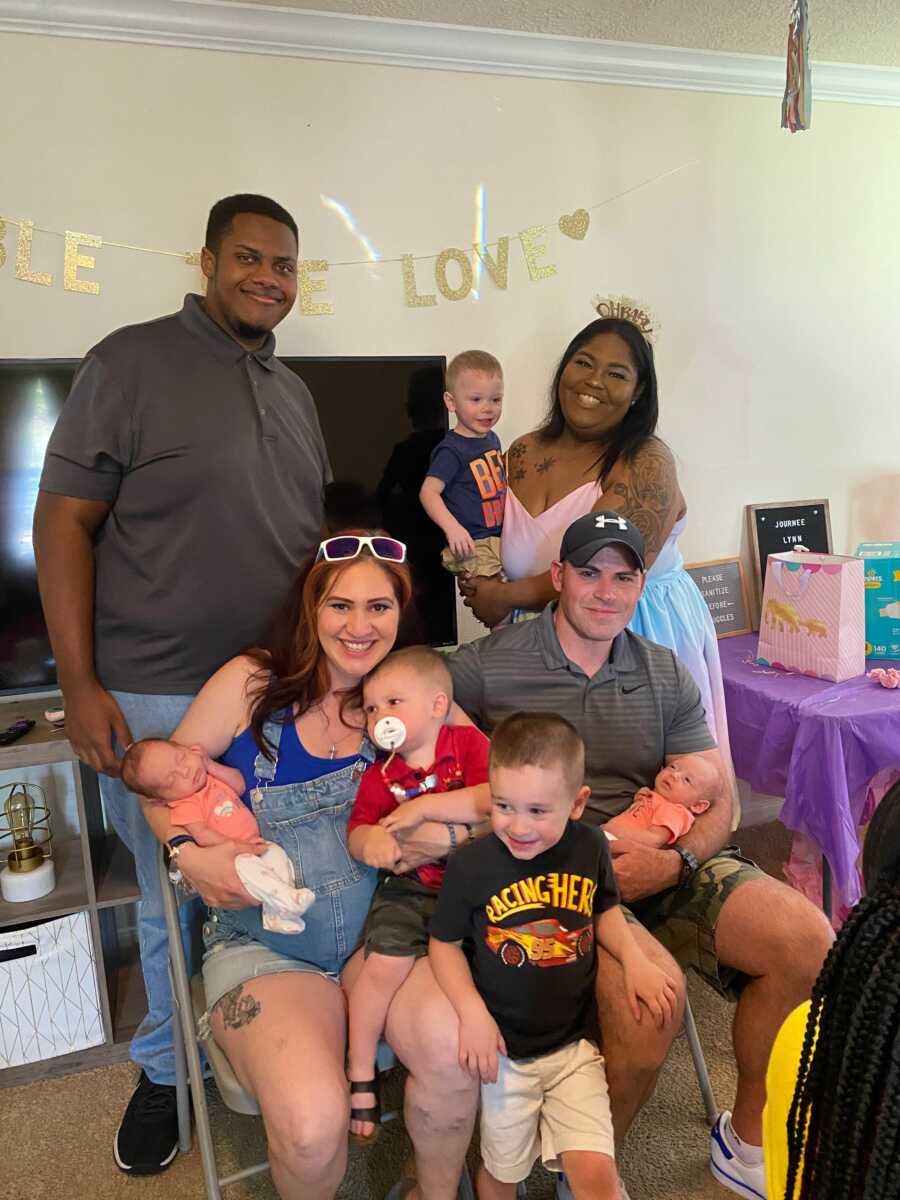
On April 17, 2021, she delivered twin girls: Journee, weighing 3 pounds 3 ounces, and Destinee, weighing 3 pounds 8 ounces.
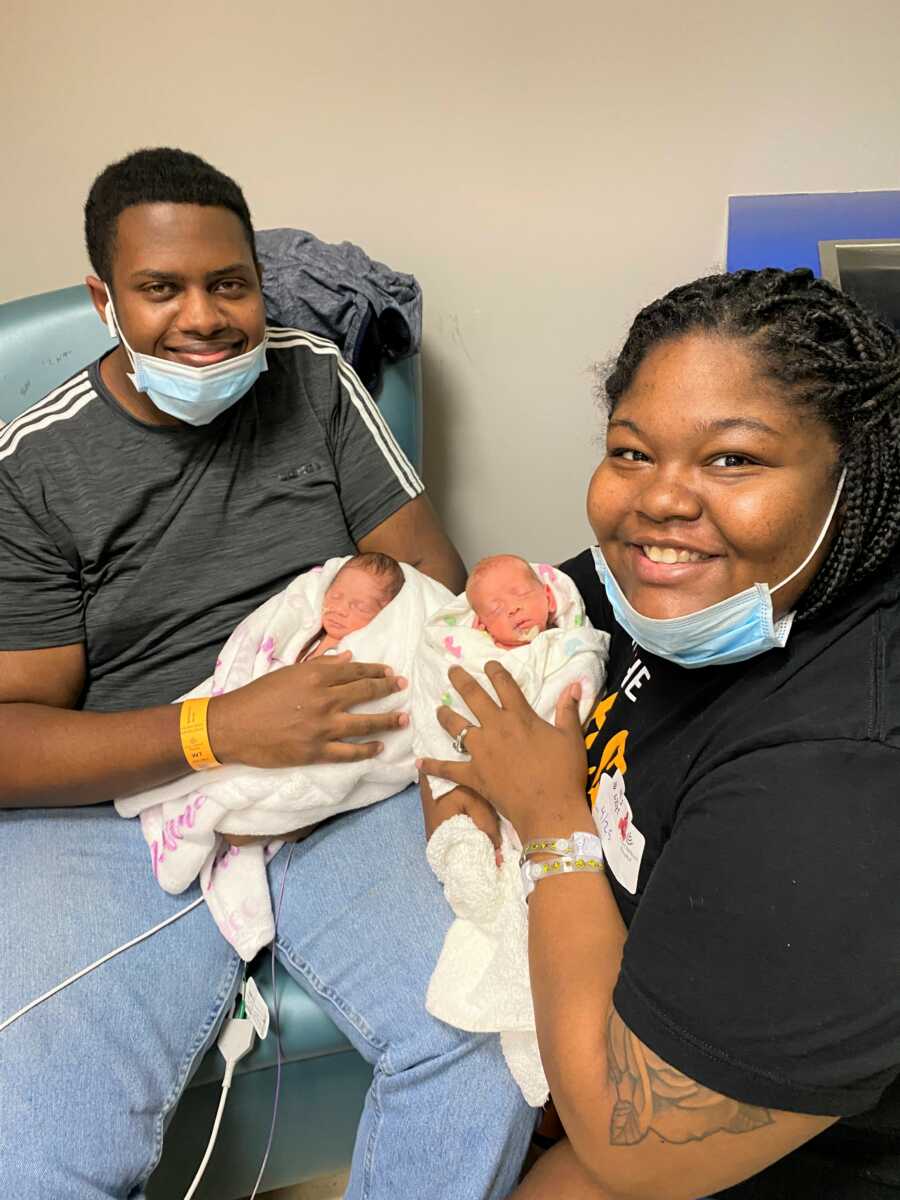
They were born nine weeks early and required time in the NICU — another emotional chapter for parents already familiar with the neonatal unit.
After recovering from her C-section, she was discharged while her daughters remained hospitalized for specialized care.
“All the tears, all the heartbreak, all the waiting — it finally made sense,” she said.
A Story of Resilience and Redefined Family
Their journey to parenthood was anything but conventional. It included male factor infertility, racial bias, open adoption, embryo donation, miscarriage, premature birth, and unwavering faith.
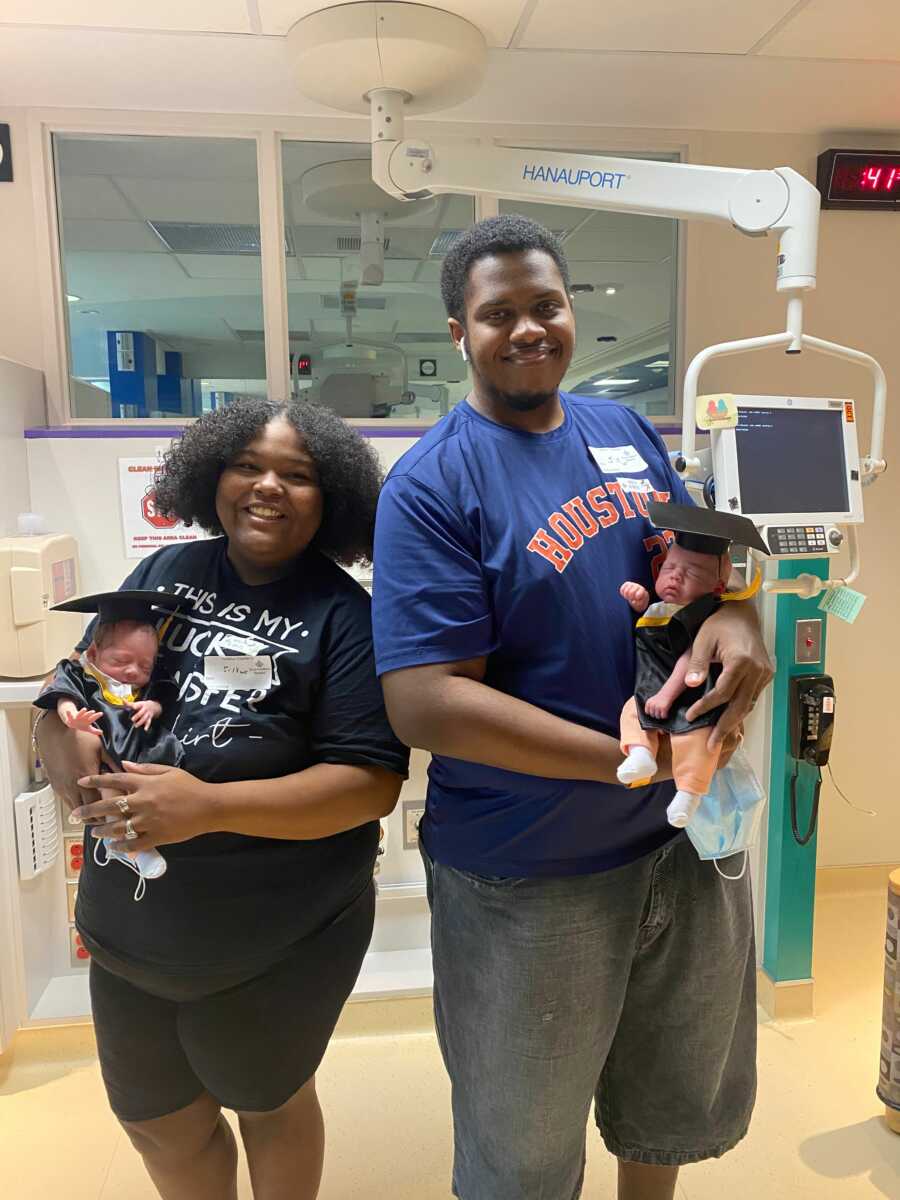
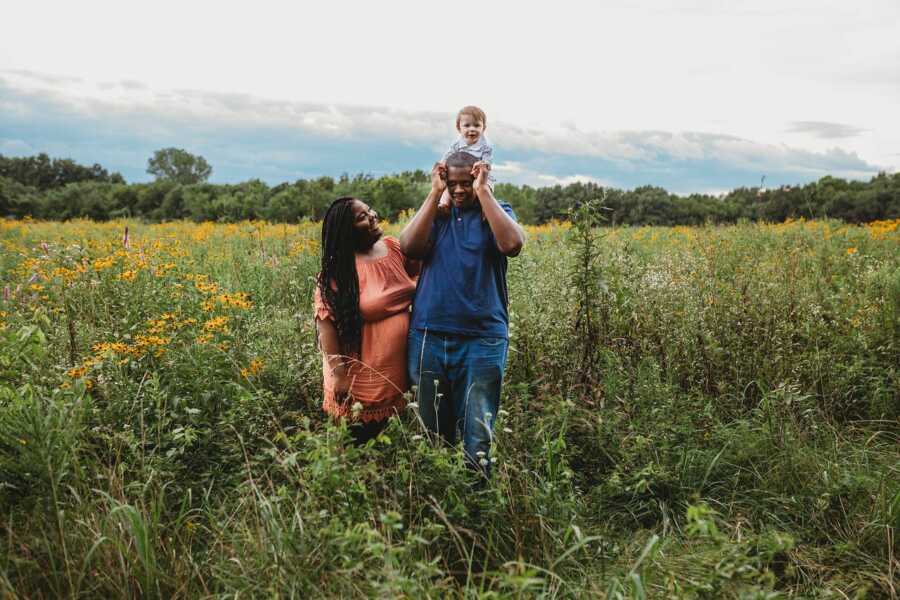
Today, their family stands as a testament to resilience and the many ways love can build a home.
Parenthood did not arrive the way they once imagined — but it arrived abundantly.
“We didn’t care how our children came to us,” she reflected. “We just wanted to be their parents.”
And through loss, hope, science, and courage — they became exactly that.