
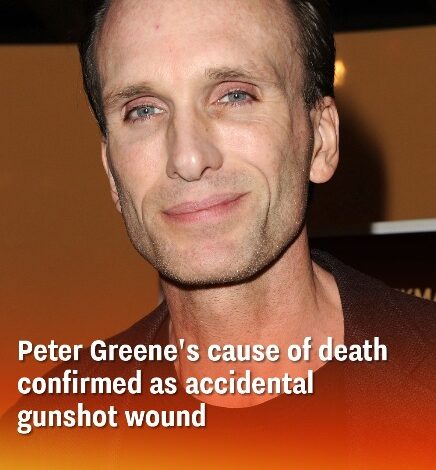
Medical Examiner Confirms Accidental Death of Actor Peter Greene at Age 58
Final Clarification Brings Closure After Months of Speculation
The circumstances surrounding the death of actor Peter Greene have been officially clarified in early 2026, following the release of findings by the New York Medical Examiner’s Office. The confirmation has brought a somber resolution to a case that had remained the subject of speculation since his passing in December.
The 58-year-old performer, widely recognized for his intense screen presence and memorable villain roles, was found dead in his New York apartment on December 12. Authorities have now ruled his death a tragic accident caused by a self-inflicted gunshot wound.
This official determination has reframed the narrative surrounding his passing, shifting focus from earlier rumors to a forensic explanation grounded in medical analysis.
The Events Leading to the Discovery
Police were initially called to Greene’s residence after neighbors reported hearing loud music continuously playing from his apartment for nearly 24 hours. The persistent noise raised concern and ultimately prompted a welfare check by authorities.
Upon entering the apartment, officers discovered the actor’s body. At the time, investigators noted that the scene did not immediately suggest suspicious activity, though the presence of a firearm and a note referencing a neighborhood group fueled online speculation.
The combination of these elements led to a wave of theories circulating across social media and online forums. However, the forensic report released in February 2026 provided a definitive technical explanation that clarified the nature of the incident.
The official findings concluded that Greene died from an accidental gunshot wound to his left axilla, the area beneath the shoulder commonly known as the armpit.
The Medical Findings and Fatal Injury Mechanics
The medical examiner’s report detailed the severity of the injury and the rapid medical consequences associated with it. The projectile struck and severed the brachial artery, a major blood vessel responsible for supplying oxygenated blood to the arm.
Medical experts note that damage to this artery can result in rapid and catastrophic blood loss due to the high pressure within the vessel. In such cases, fatal hemorrhaging can occur within minutes without immediate medical intervention.
This clinical explanation has helped dispel earlier sensational claims and clarified that the death was not the result of deliberate action but rather a tragic accident involving firearm safety.
The forensic clarity provided by the report has allowed both the public and the film community to better understand the circumstances of the incident.
A Man in Positive Spirits Before His Passing
According to individuals close to Greene, the accidental ruling aligns with his mindset in the period leading up to his death. His manager shared that the actor had been in notably positive spirits during his final months.
He was actively promoting a recently released film and had been participating in the production of a documentary centered on his life and career. These projects reflected a renewed sense of engagement with his craft and professional future.
Rather than retreating from the industry, Greene was experiencing a late-career resurgence that suggested continued artistic momentum. Those who worked with him described a performer who remained deeply committed to storytelling and character work.
This context has added another layer of tragedy to the accidental nature of his passing.
A Career Built on Intensity and Memorable Roles
Peter Greene established himself as a distinctive presence in Hollywood, particularly within the realm of character acting. He became widely known for his portrayal of the villainous Zed in Pulp Fiction and the menacing Dorian Tyrell in The Mask.
His ability to convey menace, complexity, and emotional depth with minimal screen time made him one of the most recognizable supporting actors of his generation. Greene’s performances often relied on subtle expressions and a commanding gaze that left lasting impressions on audiences.
Throughout his career, he frequently portrayed antagonists, including crooked law enforcement figures, criminal masterminds, and dark, morally ambiguous characters. Despite these intense roles, colleagues consistently described him as thoughtful and professional off-screen.
His commitment to authenticity and disciplined performance style earned him the respect of directors, co-stars, and industry professionals alike.
Respect Among Peers and Industry Colleagues
In the months following his passing, fellow actors and collaborators from projects such as The Usual Suspects and Under Siege 2 have shared reflections on his character and work ethic. Many described him as kind, focused, and deeply dedicated to his craft.
Colleagues noted that he was the opposite of the intimidating figures he portrayed on screen. Between takes, he was often quiet and supportive, understanding the importance of ensemble performance in filmmaking.
His professionalism and reliability made him a valued scene partner, particularly in roles where the emotional intensity of the story depended heavily on strong supporting performances.
These personal accounts have contributed to a broader appreciation of his contributions to the film industry.
Forensic Clarity in the Digital Age
The rapid dissemination of the medical examiner’s report reflects the media environment of 2026, where public interest in forensic details is heightened and misinformation can spread quickly. Official confirmation played a crucial role in addressing rumors that had circulated online.
By providing a precise medical explanation, authorities were able to prevent continued speculation and protect the integrity of Greene’s legacy. The report underscored the importance of factual clarity in high-profile cases involving public figures.
In an era marked by widespread digital discussion and rapid news cycles, verified forensic findings serve as a stabilizing source of truth. The confirmation of accidental death allowed attention to shift away from conjecture and back to his life and work.
This transparency has also allowed fans and colleagues to grieve without the burden of lingering uncertainty.
Context of Loss Within a Broader Cultural Moment
The confirmation of Greene’s cause of death arrives during a period when public attention has frequently centered on unexpected tragedies and the pursuit of factual resolution. His passing adds to a broader narrative of loss and reflection shaping early 2026.
For the film community, however, the focus remains on his artistic legacy rather than the circumstances of his death. His body of work continues to resonate with audiences across generations.
The closure provided by official findings has helped reframe public discourse, emphasizing remembrance over speculation. Fans have increasingly revisited his performances as a way to honor his contributions to cinema.
This renewed interest highlights the enduring impact of his roles within both cult classics and mainstream productions.
A Lasting Legacy in Character Acting
Peter Greene’s filmography stands as a testament to the power of supporting roles in shaping cinematic storytelling. From King of New York to The Mask, his performances consistently added depth and tension to the narratives he joined.
He belonged to a generation of actors who demonstrated that a few minutes of screen time could leave a permanent impression on viewers. His performances were marked by intensity, nuance, and an unmistakable presence.
Even when cast as antagonists, he brought layers of humanity and complexity that elevated the characters beyond simple stereotypes. This ability distinguished him within a highly competitive industry.
His contributions to film remain a masterclass in character acting, illustrating the significance of dedication and craft over leading-role prominence.
Remembering the Artist Beyond the Tragedy
While the circumstances of his passing were sudden and deeply tragic, the official ruling of accidental death offers a sense of clarity and closure. It reinforces the understanding that his death resulted from a moment of human error rather than intentional harm.
The quiet apartment where he was found now stands in contrast to the global reach of the films that continue to showcase his talent. His work endures in theaters, streaming platforms, and film archives around the world.
As audiences revisit his performances in the months and years ahead, his legacy will be defined not by the manner of his death but by the depth he consistently brought to the screen.
Peter Greene’s life was marked by artistic intensity and professional dedication, ensuring that his impact on cinema remains lasting and intentional despite the tragic circumstances of his passing.