
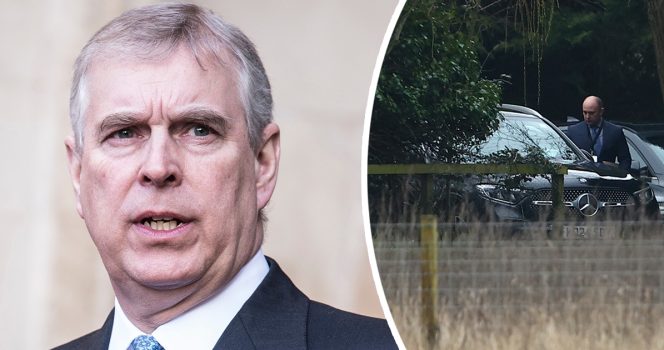
Arrest of Andrew Mountbatten-Windsor Sparks National Attention as New Details Emerge
High-Profile Arrest on His 66th Birthday
The arrest of former senior royal Andrew Mountbatten-Windsor, previously known as Prince Andrew, has drawn widespread attention across Britain and beyond.
He was taken into custody on February 19, 2026, coinciding with his 66th birthday, in a development that quickly reverberated through political and royal circles.
Authorities confirmed that the arrest was carried out as part of an ongoing investigation into allegations tied to his former role as a UK trade envoy.
Serious Allegations Under Investigation
According to Thames Valley Police, Mountbatten-Windsor was arrested on suspicion of misconduct in public office, an uncommon and serious allegation for a figure of his former rank.
The inquiry centers on claims that he may have passed sensitive government information to disgraced financier Jeffrey Epstein during the period he served as a trade envoy.
Misconduct in public office is classified among the most serious criminal offenses in the United Kingdom.
If a conviction were to occur, the offense could carry a life sentence, with any potential trial expected to take place at a Crown Court due to the gravity of the case.
Detention and Release Under Investigation
Mountbatten-Windsor remained in custody for nearly 11 hours before being released under investigation.
Officials emphasized that the release does not indicate the conclusion of the inquiry, which is continuing to examine a range of evidence.
Authorities are currently reviewing properties linked to him in Norfolk, along with his former residence at Royal Lodge, as part of a broader investigative process.
Investigators have been focusing on communications, including emails and related materials, connected to Epstein.
A Symbolic Departure from Royal Lodge
The legal developments unfolded during a period of personal transition, as Mountbatten-Windsor was already in the process of leaving Royal Lodge, the estate he had occupied for decades.
He was relocating to a smaller cottage on the Sandringham Estate following earlier palace decisions that removed his royal titles and official duties.
Investigators were observed at both his former residence and his new accommodation as part of ongoing evidence review efforts.
This dual focus on multiple properties reflects the expansive scope of the inquiry into his past activities and communications.
Reported Remarks During the Arrest Process
Amid the arrest and relocation, a moment described by sources and reported in British media rapidly became a focal point of public discussion.
One insider claimed, “He refused to leave or take any responsibility,” during the tense exchange with officials.
When instructed to leave, he was reportedly heard shouting, “But I’m the Queen’s second son, you can’t do this to me.”
The remark, attributed to sources present during the process, has drawn significant attention due to its reference to his royal background.
Another insider indicated that discussions surrounding his removal from Royal Lodge were strained, noting that he “did not want to leave.”
Observers have suggested that the reported comments highlight the contrast between his former privileged status and his current legal situation.
Political Implications and Legislative Discussions
The case has extended beyond legal and royal matters into the political arena.
Some UK lawmakers have begun discussing the possibility of introducing legislation to formally remove Mountbatten-Windsor from the line of succession.
Such a move would require parliamentary approval and could mark a significant constitutional step.
The discussions reflect the broader institutional impact of the investigation and the public scrutiny surrounding the former royal figure.
Ongoing Review of Evidence and Communications
Police continue to analyze documents and correspondence, including materials released by United States authorities.
The investigative process is expected to include interviews with former aides and security personnel as enquiries expand.
Officials are conducting a detailed examination of digital records and historical communications in an effort to establish a comprehensive timeline of events.
This stage of the investigation is considered critical in determining whether further legal action may be warranted.
Monarchy Distances Itself from the Controversy
King Charles III has publicly emphasized the importance of due process, stating that “the law must take its course.”
The statement has been interpreted as a signal of institutional distance between the monarchy and the ongoing legal proceedings.
By underscoring adherence to the legal process, the royal household appears to be reinforcing the principle that the investigation will proceed independently of royal influence.
Government Weighs Possible Changes to Succession Status
The British government is now considering legislative measures that could formally remove Mountbatten-Windsor from the line of succession.
Defence Minister Luke Pollard indicated that barring him from ever becoming king would be the “right thing to do,” regardless of how the police investigation ultimately unfolds.
Any such legislative change would represent a significant constitutional development and would require careful parliamentary deliberation.
The discussions highlight the broader institutional implications of the case beyond the immediate legal concerns.
Current Status and Denial of Wrongdoing
At present, no formal charges have been filed against Mountbatten-Windsor, and the investigation remains ongoing.
He continues to deny any wrongdoing as authorities pursue further lines of inquiry.
Despite being stripped of his titles, including “prince,” last October amid mounting scrutiny over his connections to convicted sex offender Jeffrey Epstein, he remains eighth in line to the throne.
The evolving situation continues to attract intense public and political scrutiny as investigators review evidence and determine potential next steps.
With legal proceedings still at an early stage and multiple agencies involved, the case remains one of the most closely watched developments in Britain’s legal and constitutional landscape.