
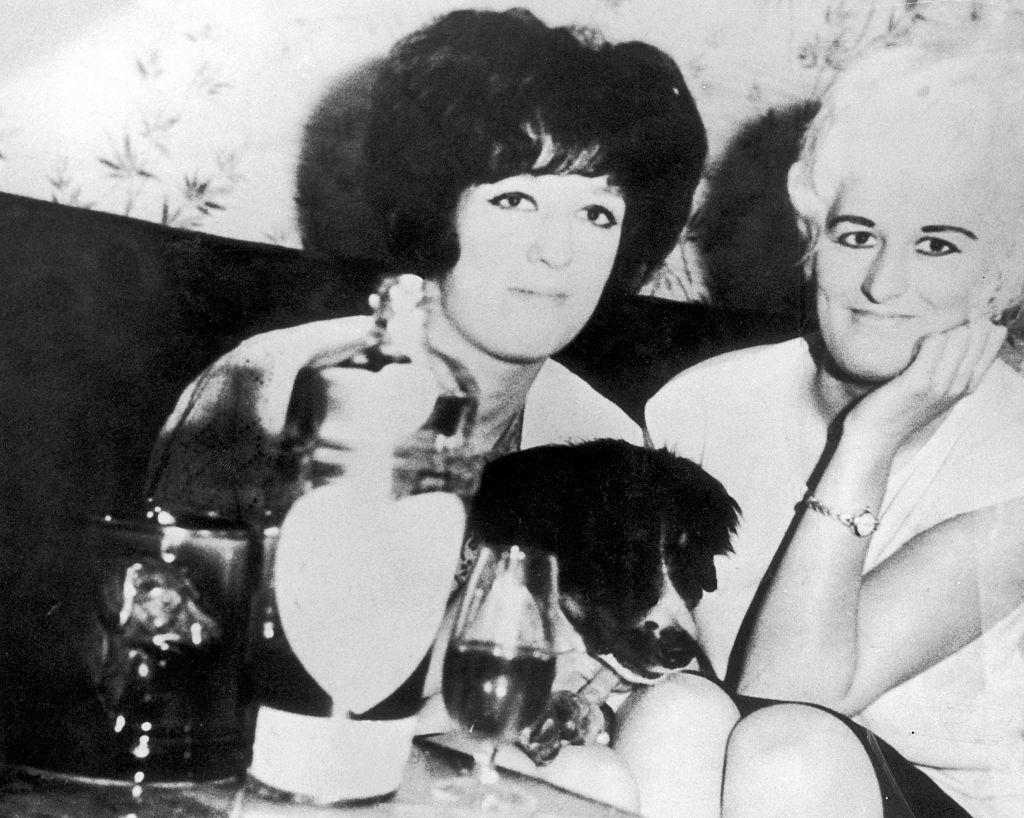
The Chilling Origins and Crimes of Myra Hindley: From Troubled Childhood to Infamous Conviction
A Childhood That Appeared Ordinary
At first glance, she seemed like any other young girl growing up in postwar Britain — quiet, shy, and unremarkable to those around her.
Yet behind that outward appearance lay a complex and deeply troubled upbringing that would later draw national attention and horror.
In later years, early photographs of her childhood would take on an unsettling significance, viewed by many as haunting reminders of the life she once lived before becoming one of the most infamous figures in British criminal history.
Family Life in 1940s Manchester
She was born on July 23, 1942, in Gorton, Manchester, into a working-class household marked by hardship and instability.
Her mother, Nellie, worked as a laborer, while her father, Bob, was employed as an aircraft fitter during World War II and spent extended periods away from home serving in North Africa, Cyprus and Italy.
The family lived in cramped and deteriorating housing conditions, and as a child, she slept in a single bed placed beside her parents’ double bed.
After the war, her father returned home suffering from depression and increasingly turned to heavy drinking, which intensified his volatile behavior.
His verbal and physical abuse toward Nellie became a recurring presence in the household, creating an atmosphere of fear and tension.
Because of the frequent violence, she was often sent to live with her grandmother, Ellen, though she continued to move back and forth between homes depending on the situation.
Whenever arguments escalated into physical confrontations, she would leave, a pattern that became a regular part of her early life.
Early Lessons in Toughness
Despite harboring resentment toward her father’s behavior, she later acknowledged that he played a role in shaping her resilience.
He encouraged both her and her sister, Maureen, to defend themselves against bullies and to adopt a hardened attitude toward confrontation.
A notable incident occurred when she was about eight years old and a local boy scratched her cheeks, leaving her bleeding.
She ran home in tears, only to be told by her father that she would be punished if she did not fight back.
Following his instruction, she confronted the boy and physically retaliated, later recalling, “At eight years old I’d scored my first victory.”
Bob had been a champion boxer, and elements of his combative mindset appeared to influence the upbringing of his daughters.
However, the persistent exposure to domestic violence and emotional instability left psychological impressions that would linger well into adulthood.
A Personal Tragedy in Adolescence
During her teenage years, she formed a close bond with a thirteen-year-old neighborhood boy named Michael.
She later reflected on their relationship by saying, “I became very protective of him.”
In the summer of 1957, Michael invited her to join him for a swim at a local reservoir, but she declined the invitation.
Later that same evening, she learned that he had drowned.
The loss deeply affected her, and she reportedly blamed herself for not being present that day.
In the aftermath of the tragedy, she sought emotional solace in Roman Catholicism and, just over a year after finishing secondary school, received her first Holy Communion in 1958.
Despite this, her teenage life outwardly appeared typical, filled with social outings such as dancing, attending the cinema, and playing bingo.
Beneath the surface, however, subtle behavioral shifts began to emerge.
Early Employment and Emerging Patterns
Her first job was as a junior clerk at a local electrical engineering firm, where she carried out routine office tasks such as running errands, typing documents, and making tea.
Colleagues initially described her as well-liked and helpful.
When she lost her first week’s wages, coworkers sympathized and collected money to replace the amount she claimed to have misplaced.
Concerns later arose when the same story of lost wages was repeated.
During this period, she also took judo lessons and became known for her refusal to release her grip during practice sessions.
Her personal life included a brief engagement to her 16-year-old boyfriend, Ronnie Sinclair, who proposed on her seventeenth birthday in late 1958.
Although she initially accepted, she ended the engagement a few months later, stating that he was immature and incapable of providing the lifestyle she desired.
The Meeting That Changed Everything
Approximately a year later, while attending a job interview for a typist position at a small chemical company in Gorton, she met Ian Brady.
The connection between them was immediate and intense, later described by her as a “fatal attraction.”
By this stage, the girl had grown into Myra Hindley, and her relationship with Brady would become inseparably linked to a series of crimes that would shock the United Kingdom for decades.
Initially, their bond revolved around shared intellectual interests, including admiration for poets such as William Wordsworth and William Blake.
Over time, their outlook became increasingly detached and elitist, as they began to see themselves as intellectually superior to those around them.
Brady immersed himself in nihilistic philosophy and the writings of the Marquis de Sade, promoting a worldview centered on acting without moral restraint.
These ideas gradually influenced both their personal relationship and behavior.
Hindley later described experiences of humiliation and physical abuse at Brady’s hands.
He also attempted to manipulate her ideological beliefs, encouraging hostility toward Black and Jewish people while mocking her religious faith.
At one point, Brady openly declared: “I want to commit the perfect murder.”
The Beginning of the Murders
Initially, the pair acquired firearms with the intention of committing robberies, but their ambitions escalated into far more disturbing territory.
Brady introduced Hindley to a book titled Compulsion, which focused on the abduction and murder of a 12-year-old girl named Myra, an eerie parallel that later drew attention.
On July 12, 1963, Hindley became aware of Brady’s plan to carry out what he called the “perfect murder.”
She drove a van while Brady followed on his motorcycle, using his headlight as a signal when he identified a potential victim.
The first intended target was a young girl she recognized as a neighbor, prompting her to drive away.
Shortly afterward, however, she picked up 16-year-old Pauline Reade, a classmate of her sister, Maureen, under the pretense of helping search for a lost glove.
Brady later met them on Saddleworth Moor and led Reade into a wooded area while Hindley remained in the van.
Approximately thirty minutes later, Brady returned alone.
Reade had been brutally attacked, her throat cut with “considerable force.”
When Hindley asked whether Reade had been assaulted, Brady chillingly responded: “Of course I did.”
He buried the body on the moor, and Hindley later admitted to participating in the sexual assault.
A Pattern of Calculated Crimes
Over the following two years, the pair lured additional victims, including John Kilbride (12), Keith Bennett (12), Lesley Ann Downey (10), and Edward Evans (17).
Some of the victims were taken to their home on Wardle Brook Avenue, while others were transported to the moor.
Downey and Evans were killed inside the house, with their bodies later buried on Saddleworth Moor.
The crimes followed a consistent pattern of deception, manipulation, and calculated execution.
The Arrest and a Key Witness
The murder of Edward Evans involved Hindley’s brother-in-law, David Smith, who witnessed Brady attacking Evans with a hatchet before strangling him.
During the incident, Hindley cried out: “Dave, help him.”
Smith was initially too shocked to intervene, but after Brady left, he returned home, drank tea prepared by Maureen, became physically ill, and ultimately reported the events to the police.
Two officers, disguised as bread delivery men, later visited Wardle Brook Avenue and discovered Evans’ body.
Hindley was arrested on October 11, 1965, as an accessory to murder.
Further investigation connected her and Brady to other missing children, with neighbors providing critical information.
While most of the victims’ bodies were eventually recovered, the remains of 12-year-old Keith Bennett were never found.
Brady admitted to the murders of Bennett and Reade in 1985, yet Bennett’s remains remained missing, and searches continued as recently as 2022.
The Trial That Captivated a Nation
When Brady and Hindley appeared in court in 1966, public attention reached an extraordinary level.
The fourteen-day trial drew widespread shock and outrage across Britain.
Security measures were so strict that the courtroom was fitted with bulletproof glass amid fears that members of the public might attempt to attack the defendants.
Brady displayed no remorse, openly embracing his role and later describing himself as “evil” while expressing pride in his actions.
During the proceedings, Hindley sat in the witness box beside her mother, Nellie.
When questioned about Brady, she stated, “I loved him, and I still…. I love him.”
Life Sentence and Lasting Infamy
Hindley was sentenced to life imprisonment and remained incarcerated for the rest of her life.
The press labeled her “the most evil woman in Britain,” a title that would follow her for decades.
Throughout her time in prison, she repeatedly appealed her sentence, insisting that she had reformed and no longer posed a danger to society.
Despite these appeals, she was never released.
She died of bronchial pneumonia in 2002 at the age of 60.
Ian Brady died 15 years later, in 2017.
A Legacy That Still Haunts Public Memory
Hindley’s bleached-blonde mugshot became one of the most recognizable images in British criminal history, symbolizing betrayal, violence, and public horror.
Her crimes remain among the most shocking cases in the United Kingdom, continuing to provoke strong emotional reactions decades later.
Her image has left a lasting imprint on popular culture and public discourse, often associated with representations of extreme criminality and moral transgression.
Even years after her death, the case continues to be revisited due to its profound psychological, cultural, and historical impact on British society.