
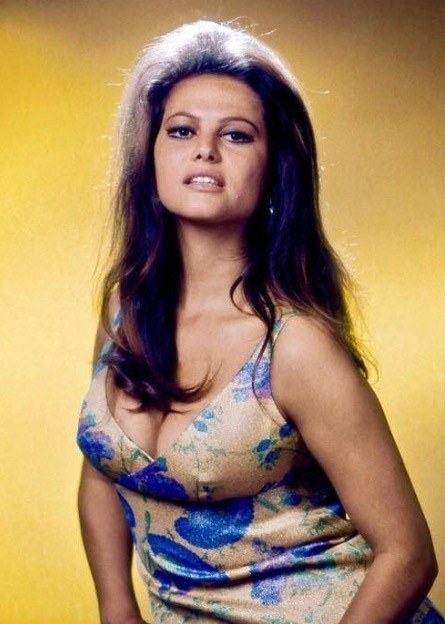
Claudia Cardinale: A Life of Resilience, Talent, and Enduring Influence in International Cinema
An Icon of Global Film
For more than sixty years, Claudia Cardinale has remained one of the most respected and enduring figures in international cinema. Known for her striking screen presence and emotional depth, she rose to prominence during the golden age of European film and built a career that spanned continents and generations.
While audiences often celebrated her beauty during the 1960s, her path to global recognition was shaped by personal hardship, unwavering determination, and a strong commitment to preserving her identity within an industry defined by intense scrutiny.
Her legacy extends far beyond appearance, reflecting a life defined by resilience, artistic integrity, and thoughtful career choices.
Early Life in Tunisia
Claudia Cardinale was born Claude Joséphine Rose Cardinale on April 15, 1938, in Tunis, Tunisia, at a time when the region was under French protectorate rule. Her upbringing took place in a culturally rich environment influenced by Italian, French, and North African traditions.
Her parents were Italian immigrants from Sicily, and her early education was conducted primarily in French. As her career later developed in European cinema, she became fluent in Italian, further strengthening her connection to the film industry.
Unlike many future stars, she did not initially aspire to act. As a young woman, she was focused on her studies and planned to pursue a career as a teacher, unaware that her life would soon take an unexpected turn.
A Turning Point at a Film Festival
Her entry into the world of cinema occurred unexpectedly in 1957 while she was attending and helping organize an Italian film festival in Tunisia. Encouraged by friends to participate in a public appearance, she took the stage and was crowned “Most Beautiful Italian Girl in Tunisia.”
The recognition included a trip to the Venice Film Festival, an opportunity that would prove transformative. During the event, film producers quickly noticed her natural charisma and photogenic presence.
Despite the attention and growing offers, Cardinale initially hesitated. Acting had not been part of her life plan, and the sudden spotlight felt overwhelming and unfamiliar.
A Personal Trauma and the Start of Her Career
Behind the early excitement of her emerging career, Cardinale was facing a deeply personal challenge. As she later revealed publicly, she became pregnant as a teenager following a violent sexual assault by an older man.
The emotional impact was significant, especially during a time when social attitudes toward unwed motherhood were often harsh and unforgiving. Rather than retreat from public life, she made the courageous decision to continue forward.
In 1958, she gave birth to her son, Patrick. For many years, however, his true parentage was concealed, and he was publicly presented as her younger brother.
This narrative was largely shaped by film producer Franco Cristaldi, who became her manager and later her husband. He played a central role in guiding her career and managing her public image during her early rise to fame.
Management, Image, and Industry Pressures
Cristaldi’s influence helped launch Cardinale into the film industry while carefully protecting her reputation in a competitive and often unforgiving environment. He structured her contracts, shaped her public persona, and shielded her from potential scandal.
While his guidance contributed to her professional success, Cardinale later described this period as restrictive. Her image was crafted to reflect both allure and respectability, aligning with industry expectations of the era.
Despite comparisons to other European sex symbols, she maintained clear personal boundaries. She consistently refused to appear nude on screen, distinguishing herself from many contemporaries and reinforcing her commitment to dignity and self-respect.
The Rise of a European Star
Cardinale’s early performances in Italian cinema demonstrated that she possessed far more than visual appeal. She began appearing in films in the late 1950s, including “Three Strangers in Rome” (1958), which introduced her to a broader audience.
Her true breakthrough came in the early 1960s through collaborations with some of the most influential directors in European cinema. In 1963, she starred in two landmark productions that solidified her reputation.
She appeared in 8½, directed by Federico Fellini and starring Marcello Mastroianni. The film explored themes of creativity and memory, and her role represented purity and inspiration within the protagonist’s imagination.
That same year, she starred in The Leopard, directed by Luchino Visconti and co-starring Burt Lancaster and Alain Delon. Set during the unification of Italy, the film became a celebrated historical drama.
Her portrayal of Angelica, a character embodying beauty, intelligence, and social ambition, received critical acclaim and established her as a leading figure in European art cinema.
Transition to International and Hollywood Cinema
By the mid-1960s, Cardinale’s reputation had expanded beyond Europe and reached Hollywood. She began appearing in English-language productions alongside prominent international actors.
In 1963, she starred in The Pink Panther with David Niven and Peter Sellers, a commercially successful film that introduced her to a global audience. Her performance was noted for its elegance and understated humor.
She later appeared in “Circus World” (1964) opposite John Wayne and Rita Hayworth, further demonstrating her versatility in large-scale productions.
One of her most significant roles came in Once Upon a Time in the West, directed by Sergio Leone. In the epic Western, she portrayed Jill McBain, a resilient woman seeking a new life on the American frontier.
The performance captured vulnerability, strength, and determination, and it remains one of the defining portrayals of a female character in the Western genre.
Maintaining Independence in a Competitive Industry
Despite her success in Hollywood, Cardinale never fully committed to the traditional studio system. Instead, she balanced projects between American and European cinema, prioritizing artistic quality over purely commercial opportunities.
This independence allowed her to avoid typecasting and maintain control over the direction of her career. She selected roles that offered depth and complexity rather than relying solely on glamour.
Her approach distinguished her from many actresses of her time, who often faced limited creative agency within major film industries.
Comparisons and Personal Philosophy
Throughout her career, Cardinale was frequently compared to Brigitte Bardot, particularly after their collaboration in The Legend of Frenchie King. While Bardot embraced a more overtly provocative image, Cardinale cultivated a different professional identity.
She believed that leaving room for imagination was more powerful than explicit display, a philosophy that guided her artistic decisions. By refusing roles that emphasized objectification, she maintained a reputation grounded in sophistication and authenticity.
This perspective reinforced her status not only as a symbol of beauty but as a serious and nuanced performer.
Personal Life and Emotional Milestones
Cardinale’s marriage to Franco Cristaldi ended in 1975, marking a significant transition in her personal life. That same year, she met Italian director Pasquale Squitieri, with whom she formed a long-term partnership.
The couple had a daughter together, also named Claudia, and remained together until Squitieri’s death in 2017. Over time, Cardinale openly acknowledged her son Patrick as her child, reclaiming her personal narrative after years of secrecy.
This acknowledgment represented an important emotional step, allowing her to address past experiences with honesty and strength.
Speaking Openly About the Past
In 2017, Cardinale spoke candidly about the assault she endured as a teenager. Her reflections were measured and focused on resilience rather than victimhood.
She emphasized her determination to move forward and build a life centered on family, work, and personal dignity. Her willingness to address such experiences highlighted her strength and emotional clarity.
Rather than allowing trauma to define her identity, she framed her story as one of perseverance and personal growth.
Humanitarian Work and Public Engagement
Beyond her cinematic achievements, Cardinale has devoted significant energy to humanitarian causes. She has served as a goodwill ambassador for UNESCO, advocating for women’s rights and cultural preservation.
Her advocacy reflects her long-standing commitment to dignity, education, and equality. Through public appearances and engagements, she has continued to promote social awareness and cultural dialogue.
In 2022, she publicly dismissed false rumors suggesting she had been hospitalized or was in declining health, affirming that she was living peacefully in France with her family and in good health.
An Enduring Cultural Legacy
Now in her late eighties, Claudia Cardinale remains a respected presence in cinematic and cultural discussions. Although her on-screen appearances have become less frequent, retrospectives of her films continue to attract admiration from new audiences.
Her career cannot be defined solely by glamour or celebrity. She worked with some of the most influential directors of the twentieth century and appeared in films that shaped cinematic history.
Her journey from a student in Tunisia with no initial interest in acting to an internationally recognized film icon reflects both transformation and determination.
A Symbol of Resilience and Artistic Integrity
Claudia Cardinale’s life story embodies resilience in the face of personal hardship and industry pressures. She navigated trauma, secrecy, and public scrutiny while preserving her sense of self and professional integrity.
By refusing to compromise her values, she built a career defined by substance as well as beauty. Her performances continue to resonate because they combine emotional depth with quiet strength.
Today, she stands as a symbol of artistic integrity and enduring influence. Her legacy serves as a reminder that behind the glamour of classic cinema are deeply human stories of courage, perseverance, and unwavering dignity.