
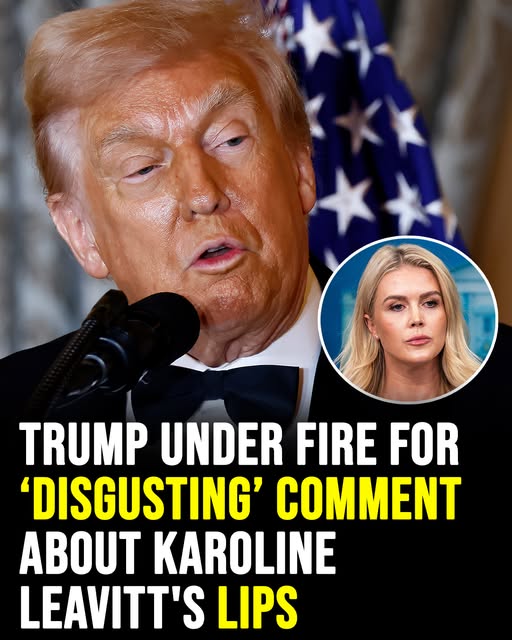
Karoline Leavitt Draws Attention After Rally Remarks From Donald Trump Ignite Online Debate
A Rising Presence in the White House Briefing Room
At 28, Karoline Leavitt has rapidly emerged as one of the most recognizable figures in the White House briefing room.
Her communication style has attracted significant attention from both supporters and critics, making her a highly visible presence during press interactions.
Supporters often describe her as energetic, disciplined, and assertive in her role, while critics view her approach as sharply combative.
Regardless of perspective, her visibility in political communications has continued to grow as she maintains a steady and confident public presence.
Rally Comments That Sparked Immediate Reaction
Leavitt returned to the national spotlight following remarks made by Donald Trump, 79, during a rally held in Mount Pocono, Pennsylvania.
Speaking to supporters on December 9, Trump acknowledged his press secretary from the stage in a moment that quickly captured public attention.
“We even brought our superstar today, Karoline,” he told the crowd. “Isn’t Karoline great?”
He then added further comments that circulated widely online, referring to her “beautiful face” and “those lips that don’t stop-op-op-op, like a little machine gun.”
The remarks were delivered in a complimentary tone as part of a broader message praising her on-camera performance.
Trump connected her visible confidence during press briefings to what he described as strong administration policies, suggesting that defending those positions made her role easier.
Despite being framed as praise, the focus on her appearance, particularly her lips, quickly became the center of public discussion.
Online Response and Divided Opinions
Reaction on the social media platform X was swift and varied, reflecting sharply divided public opinion.
Some users described the comments as inappropriate within a professional context, arguing that referencing physical traits in such a setting undermines the seriousness of a senior communications role.
Others labeled the remarks “disgusting,” expressing concern about how female officials are discussed in political environments.
Several critics questioned whether similar language would be used if a male staff member were being praised on stage.
At the same time, supporters defended the comments as consistent with Trump’s long-established rhetorical style.
They characterized his language as blunt, exaggerated, and personality-driven, particularly during campaign-style rallies designed to energize audiences.
For many observers, the differing reactions mirrored a broader pattern seen in responses to Trump’s public speaking over the years.
A Pattern of Public Praise and Controversy
This was not the first instance in which Trump publicly commented on Leavitt’s appearance or communication style.
In earlier interviews and informal exchanges, he has similarly referred to her as a standout figure on television, frequently describing her as a “star” in media appearances.
Each of those moments reignited discussion about the boundaries between professional praise and commentary on personal attributes.
Supporters often interpret such statements as enthusiastic recognition of her visibility and performance in a demanding public role.
Critics, however, argue that emphasizing physical features, even in a flattering context, risks overshadowing professional achievements.
The recurring nature of these discussions has contributed to ongoing scrutiny surrounding public language used in political settings.
Broader Scrutiny Over Language Toward Female Reporters
The controversy surrounding the rally remarks comes amid renewed attention on Trump’s language toward female reporters and media figures.
In recent weeks, he has faced criticism for calling a Bloomberg correspondent “Quiet, piggy” and referring to a CNN reporter as “nasty” and “stupid.”
These incidents have intensified broader conversations about tone and respect in political discourse, particularly in interactions involving women in journalism and politics.
For critics, the pattern reinforces concerns about how women are addressed in high-profile political environments.
They argue that repeated use of personal or appearance-focused language can shift attention away from professional credentials and responsibilities.
Supporters, on the other hand, view such exchanges as consistent with Trump’s longstanding confrontational relationship with the press.
They maintain that his language reflects a direct and combative communication approach rather than a targeted critique based on gender.
Leavitt’s Continued Public Silence on the Remarks
As of now, Karoline Leavitt has not directly responded to the rally comments that sparked the online reaction.
Her public communications since the event have remained focused on White House activities and official responsibilities.
She has continued posting about events and policy messaging without referencing the controversy or addressing the remarks publicly.
This approach aligns with her broader pattern of maintaining a composed and confident public image amid political scrutiny.
There has been no indication from her public statements that she has expressed discomfort regarding previous comments about her appearance.
Personal Life and Additional Public Attention
Alongside her professional role, Leavitt has also drawn media interest for aspects of her personal life discussed in recent interviews.
During an appearance on the podcast Pod Force One with Miranda Devine, she spoke openly about her marriage and her experiences navigating relationships.
She addressed the challenges of dating men her own age and spoke candidly about her personal perspective on relationships.
Her husband, who is 32 years older than she is, has also been a topic of separate public discussion.
These personal revelations added another dimension to the broader media focus surrounding her growing public profile.
The Ongoing Debate Over Praise and Professional Boundaries
The reaction to the rally comments highlights a recurring question in contemporary political discourse: where the line exists between praise and objectification.
Some observers argue that emphasizing physical traits, even when intended as compliments, can diminish perceptions of professional authority.
Others contend that intent plays a central role and interpret the remarks as enthusiastic support expressed in an informal rally setting.
The differing interpretations underscore how language used in political arenas can carry varied meanings depending on audience perspective.
In high-visibility roles such as press secretary, public image and communication style often become subjects of broader scrutiny.
As a result, even brief remarks delivered in a rally environment can quickly evolve into wider national conversations.
A Familiar Dynamic in Modern Political Communication
The episode reflects a larger trend in which statements made during political rallies gain rapid attention across digital platforms.
Short remarks, especially those referencing public figures directly, can spread widely and prompt immediate public analysis.
For figures like Leavitt, whose role places them regularly in front of cameras and journalists, public commentary about their performance or presence often receives heightened attention.
Trump’s communication style, characterized by spontaneous and personality-driven remarks, has frequently generated both strong approval and sharp criticism.
This dynamic has become a defining feature of his public appearances, particularly during large rallies.
Continuing Visibility in a Polarized Environment
As Karoline Leavitt’s visibility continues to grow, moments such as the Mount Pocono rally illustrate how closely her public role is observed.
Supporters see her as a disciplined and confident communicator defending administration positions with consistency.
Critics, meanwhile, remain focused on the tone and framing of commentary surrounding her public appearances.
The intersection of political rhetoric, media scrutiny, and personal visibility ensures that discussions about her role are likely to persist.
In today’s political climate, even a single sentence delivered from a rally stage can ignite widespread debate.
The reaction to these remarks demonstrates how quickly political language can shape public discourse and reinforce ongoing conversations about professionalism, communication style, and public perception.