
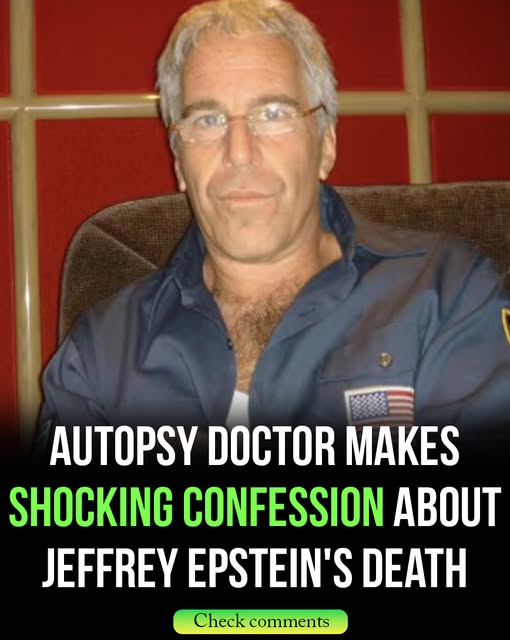
New Debate Emerges Over Jeffrey Epstein’s 2019 Death Following Document Releases and Expert Commentary
Renewed Scrutiny Surrounding a Controversial Case
The circumstances of Jeffrey Epstein’s 2019 death continue to generate debate years after the initial ruling, particularly following the release of millions of documents connected to the broader investigation into the convicted sex trafficker.
Recent attention has focused once again on forensic interpretations and longstanding disagreements among experts regarding the cause of death.
Despite official conclusions, the case remains a subject of intense public interest and ongoing controversy.
Attorney General’s Description of a “Perfect Storm”
Then-Attorney General William Barr previously described Epstein’s death as “a perfect storm of screw-ups,” referencing a series of procedural failures at the Metropolitan Correctional Center where Epstein was being held.
He was in federal custody awaiting trial on sex trafficking charges when he was found unresponsive in his cell.
Correctional officers reportedly discovered him around 6:30 a.m., hanging from the side of his bunk.
Emergency Response and Pronouncement of Death
Staff members began CPR immediately before Epstein was transported to NewYork-Presbyterian Lower Manhattan Hospital, formerly known as New York Downtown Hospital.
He arrived in cardiac arrest and was pronounced dead at 6:39 a.m., according to reports from the time.
The rapid sequence of events, combined with the high-profile nature of the case, led to immediate global attention and widespread scrutiny.
Pathologist Raises Concerns Over Autopsy Findings
Dr. Michael Baden, a veteran forensic pathologist who witnessed Epstein’s autopsy, has repeatedly voiced skepticism about the official conclusion. Drawing on more than 50 years of experience, he stated he had “never seen a death like this.”
In interviews, Baden described the injuries to Epstein’s neck as unusual and significant, particularly noting the presence of three separate fractures.
“Even one fracture, we have to investigate the possibility of a homicide. Two definitely warrant a full investigation,” he said. “Findings in textbooks never see those fractures, and neither have I.”
Details of the Reported Neck Injuries
According to the official autopsy report, Epstein suffered three distinct breaks: one to the left hyoid bone, one to the thyroid cartilage on the right side, and another fracture on the left.
Baden argued that the combination and severity of these injuries raised immediate questions and warranted deeper investigative scrutiny.
His interpretation has remained consistent since 2019, fueling ongoing debate within forensic and public discussions.
Official Ruling by the Medical Examiner
New York City’s chief medical examiner, Dr. Barbara Sampson, ruled Epstein’s death a suicide by hanging after reviewing the autopsy and investigative findings.
She has publicly pushed back against alternative interpretations, stating that fractures of the hyoid bone and cartilage can occur in both suicides and homicides.
The official determination remains unchanged despite continued external commentary and speculation.
Legal Team Expresses Dissatisfaction
Epstein’s legal team previously aligned with Baden’s concerns, stating they were “not satisfied” with the conclusions presented in the official findings.
Baden also criticized what he described as a lack of additional investigative study into the cause of death.
“I have not seen any evidence of further study, nothing that indicated further investigation into the cause of death,” he said, adding that the verdict was ultimately “accepted.”
Questions Over the Speed of the Determination
Another point of controversy has been the speed at which the official ruling was issued. Determinations in complex cases of this magnitude often require extended analysis, yet the conclusion was reached within days.
Baden was among those who questioned how quickly the determination was made, suggesting that more time might have allowed for additional forensic review.
The timeline has remained a focal point in ongoing public debate.
Federal Agencies Maintain Suicide Conclusion
Despite persistent controversy, both the FBI and the Justice Department have consistently maintained that Epstein died by suicide and that there is no evidence of foul play.
This position has remained in place across multiple administrations, including during Donald Trump’s presidency.
Officials have emphasized that investigative findings support the original determination.
Surveillance Issues Fuel Speculation
The release of surveillance footage from the night of Epstein’s death added further complexity to the case. Reports indicated that cameras near his cell had malfunctioned, a detail that drew significant public attention.
For some observers, the technical failures raised concerns about potential gaps in monitoring during a critical time period.
The absence of complete footage has contributed to ongoing speculation about the events leading up to his death.
Discussion of a Mysterious Video Clip
Another widely discussed element was a clip showing an orange “flash” moving quickly up a stairwell leading toward the area of Epstein’s isolated cell.
Authorities have differed in their interpretations of the footage, with some suggesting it could have “possibly” been another inmate.
Others have argued that the unclear imagery adds to unanswered questions rather than providing definitive explanations.
Impact of Document Releases
The recent release of extensive files connected to the Epstein investigation has once again placed the circumstances of his death under the spotlight. The documents, while primarily tied to broader investigative matters, have reignited public debate about unresolved aspects of the case.
Observers note that renewed document disclosures often revive scrutiny of high-profile cases, particularly when forensic disagreements remain part of the public record.
However, no official revisions to the cause of death have been announced.
Dismissal of Charges Following His Death
As a result of Epstein’s death, all criminal charges against him were formally dismissed. The legal proceedings he was facing ended immediately upon confirmation of his passing.
This development further intensified public interest, given the scope and seriousness of the allegations tied to the case.
His death effectively halted a trial that many viewed as central to uncovering additional details about his activities.
Handling of the Body and Burial
After the autopsy was completed, Epstein’s body was initially collected by an “unidentified associate,” later confirmed to be his brother, Mark Epstein.
On September 5, he was buried in an unmarked grave beside his parents at the IJ Morris Star of David mausoleum in Palm Beach, Florida.
In an effort to prevent vandalism, his parents’ names were reportedly removed from their shared tombstone.
Ongoing Controversy and Public Debate
Years after his death, controversy continues to surround both the investigative process and the forensic interpretations presented by different experts.
Disagreements between official findings and alternative expert opinions have kept the case in public discourse, particularly as new documents and footage details emerge.
The combination of procedural failures, forensic debate, and missing surveillance elements has contributed to persistent speculation.
A Case That Continues to Draw Attention
Jeffrey Epstein’s death remains one of the most debated aspects of a broader scandal that captured global attention. While official agencies maintain the ruling of suicide, competing interpretations and unanswered questions ensure that scrutiny has not faded.
As document releases and expert commentary continue to surface, the case remains a focal point of discussion in legal, forensic, and public spheres.
For now, the official conclusion stands, even as debate persists over the circumstances and investigative processes surrounding one of the most controversial deaths in recent history.